Numismatic Insights
Unlocking the historical lore, market economics, and practical wisdom behind the world's most fascinating currency! Every article delivers insider expertise to deepen your hobby—from decoding the fierce political propaganda of ancient rulers to essential guides on safely storing, valuing, and growing your collection.
Sort by
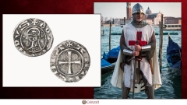
Coins of the Crusades: Cultural Hybridity, Imitation Dinars, and Economic Pragmatism in the Levant -Tuesday, 21 July 2026
The Crusades are predominantly remembered as an era of intense religious conflict, military campaigns, and ideological strife between Western Christendom and the Islamic dynasties of the Near East. However, beneath the martial confrontation lay a complex reality of economic interdependence and commercial necessity. Following the capture of Jerusalem in 1099 and the establishment of the Latin East—comprising the Kingdom of Jerusalem, the Principality of Antioch, the County of Tripoli, and the County of Edessa—European rulers confronted a sophisticated, highly monetization-driven Mediterranean economy dominated by Islamic gold and silver currencies 1. next...
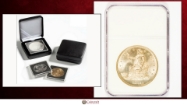
Grading Explained (PCGS vs. NGC): A Jargon-Free Guide to Professional Coin Grading -Monday, 20 July 2026
For centuries, coin collecting was a hobby built entirely on trust. A buyer had to rely on a dealer’s subjective description of a coin’s condition. One person's "Excellent" was another's "Average," and this lack of standardisation left collectors highly vulnerable to overpaying, purchasing altered pieces, or falling victim to counterfeits. next...
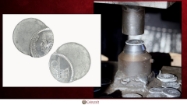
The Psychology of the "Error Coin": Why Collectors Pay Thousands for Minting Mistakes -Friday, 17 July 2026
In almost every manufacturing industry on the planet, an error is a defect—an item to be melted down, discarded, or written off as a loss. Quality control exists specifically to prevent the imperfect from reaching the consumer. Yet, in the world of numismatics (coin collecting), a mistake at the mint is not a piece of trash; it is a lottery ticket. next...
Preserving Your Legacy: A Guide to Climate-Controlled Environments -Wednesday, 15 July 2026
For the high-end collector, an acquisition is more than an asset—it is a piece of history, a work of art, or a memory captured in physical form. However, once an item is removed from its original environment, it enters a state of constant, silent decay. Light and humidity are the two most pervasive threats to the integrity of any collection. Without proper management, even the most pristine items will succumb to photochemical degradation, warping, or microbial growth. This guide outlines the essential strategies for creating a museum-grade climate-controlled environment within your home. next...
The Minting of Independence: Numismatic Transitions in the Wake of Decolonisation -Tuesday, 14 July 2026
When an empire collapses, the birth of a new nation is heralded not only by the raising of a flag and the signing of a constitution but also by the minting of its first sovereign currency. Money is one of the most immediate, tangible, and pervasive symbols of state authority. For the average citizen, holding a coin stamped with indigenous iconography rather than an imperial monarch’s bust is the first physical proof of self-determination. next...
The Naked Eye Detective: A Beginner's Guide to Spotting Counterfeit Coins Without a Microscope -Monday, 13 July 2026
The global market for rare coins and precious metal bullion is larger and more accessible than ever before. Unfortunately, this growth has been accompanied by a rise in increasingly sophisticated counterfeit coins. While high-end counterfeit operations use advanced metallurgy to fool unsuspecting buyers, the vast majority of fake coins circulating on secondary markets can be identified using basic principles of physics, simple tools, and careful observation. next...
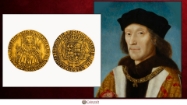
The First Sovereign -Wednesday, 08 July 2026
For over five centuries, a single gold coin has captured the political ambitions, economic dominance, and artistic heritage of the British Monarchy. Known historically as the "chief coin of the world," the English Sovereign is much more than mere currency; it is a masterclass in political propaganda, a triumph of neoclassical art, and the literal anchor of the nineteenth-century global financial system. next...
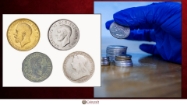
The Proper Way to Handle a Coin -Tuesday, 07 July 2026
Coins are far more than mere units of currency; they are physical touchstones of human history, art, and metallurgy. For collectors, investors, and museum curators, the condition of a coin—often referred to as its "grade"—is the primary determinant of both its historical legibility and its financial value [1]. A single fingerprint, an improper grip, or exposure to the wrong storage material can cause irreversible chemical degradation, instantly devaluing a rare specimen by hundreds or even thousands of pounds. next...
The "Key Date" Phenomenon -Monday, 06 July 2026
To the uninitiated, the value of an antique coin is intrinsically tied to its age. It is a common misconception that a coin minted in the 18th century must naturally be worth more than one struck in the 20th century. However, numismatists—those who study and collect coins—know that age is merely a secondary factor. The true arbiter of a coin's worth is scarcity, and nothing exemplifies this more perfectly than the 'key date' phenomenon. next...
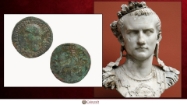
The "Mad" Coinage of Caligula -Friday, 03 July 2026
Few figures in ancient history capture the popular imagination quite like Rome’s third emperor, Gaius Julius Caesar Augustus Germanicus, universally known by his childhood nickname, Caligula ("Little Boots"). Ruling from AD 37 to 41, his brief tenure is traditionally painted as a masterclass in tyranny, excess, and mental instability. Yet, for numismatists and historical investors, the coins struck during his four-year reign tell a far more calculated, brilliant, and arguably stable story than the sensationalist texts of Suetonius or Cassius Dio suggest. next...
Get in touch icon icon

- icon
45 Great Russell St, London WC1B 3JL
- icon
