Numismatic Insights
Unlocking the historical lore, market economics, and practical wisdom behind the world's most fascinating currency! Every article delivers insider expertise to deepen your hobby—from decoding the fierce political propaganda of ancient rulers to essential guides on safely storing, valuing, and growing your collection.
Sort by
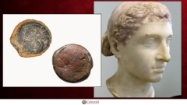
Hollywood vs. History: What Cleopatra Really Looked Like on Ancient Coins -Wednesday, 24 June 2026
For centuries, Cleopatra VII Philopator has lived in the global imagination as an exotic, drop-dead gorgeous temptress who brought the Roman Republic to its knees using nothing but her legendary physical beauty. Modern pop culture has reinforced this narrative through glamorous screen adaptations, casting Hollywood icons like Vivien Leigh (1945), Elizabeth Taylor (1963), and Gal Gadot to portray the Ptolemaic queen. next...
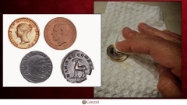
To Clean or Not to Clean? The Golden Rule of Coin Preservation -Tuesday, 23 June 2026
It is human nature to be drawn to shiny objects. When someone unearths a century-old silver dollar or inherits a box of darkened, crusty pennies from a grandparent, the immediate psychological impulse is usually to "restore" them to their former glory. Out come the toothbrushes, the baking soda, the jewelry dip, and the polishing cloths. next...
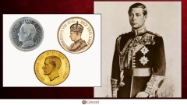
The King Who Never Was: The Mystery of Edward VIII’s 1936 Coinage -Monday, 22 June 2026
The abdication of King Edward VIII on December 11, 1936, remains one of the most disruptive constitutional crises in the modern history of the British monarchy [1]. Forced to choose between the crown and his love for the twice-divorced American socialite Wallis Simpson, the charismatic young king walked away from his birthright after a reign of just 326 days [2]. next...
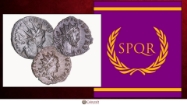
Why Are Ancient Roman Coins So Cheap? The Reality of Hoards and History -Friday, 19 June 2026
It is a common assumption that anything older than a few centuries must be incredibly rare and, consequently, exorbitantly expensive. When beginners to historical collecting discover that they can purchase an authentic, 1,600-year-old Roman coin for the price of a cup of coffee, they are often met with disbelief. How can a tangible piece of the mighty Roman Empire—held by citizens, soldiers, and merchants millennia ago—cost around or less than £10? next...
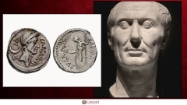
Why Was Julius Caesar's Face Depicted on Roman Coins? The Ultimate Act of Ancient Propaganda -Thursday, 18 June 2026
For nearly five centuries, the Roman Republic operated under a strict, unbending, and unwritten rule: no living man, no matter how powerful, wealthy, or victorious, was permitted to place his own face on a Roman coin. Coinage was a sacred medium of the state, strictly reserved for the gods, mythological personifications of Roman virtues, and long-dead, legendary ancestors. To mint a coin featuring your own living portrait was to declare yourself a king—and in Rome, kings were violently despised. next...
Get in touch icon icon

- icon
45 Great Russell St, London WC1B 3JL
- icon
