Articles
Sort by
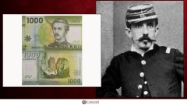
Chile Pesos Featuring Ignacio Carrera Pinto (1848–1882) -Monday, 29 June 2026
Ignacio Carrera Pinto stands as one of the most revered military figures in the history of Chile. As a captain during the War of the Pacific (1879–1884), his ultimate sacrifice at the Battle of La Concepción in the Peruvian highlands permanently etched his name into the bedrock of Chilean national identity. Alongside the seventy-six soldiers of his company, Carrera Pinto’s refusal to surrender against overwhelming odds transformed a tactical defeat into a legendary symbol of patriotic devotion. Today, his legacy is woven into the daily lives of millions of Chileans, celebrated annually on National Flag Day and immortalized on the country’s green 1,000-peso polymer banknote. next...
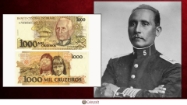
Brazil Cruzeiro Honouring Cândido Rondon (1865 - 1958) -Friday, 12 June 2026
Few figures in South South American history command the dual legacy of national builder and humanitarian pioneer quite like Marshal Cândido Mariano da Silva Rondon (1865–1958). An explorer, military engineer, and champion of Indigenous rights, Rondon mapped thousands of square miles of uncharted Amazonian wilderness, laid the communication lines that stitched a fractured young republic together, and revolutionized state interactions with uncontacted tribal societies. Guided by a strict ethical code—most famously encapsulated in his command to his soldiers: "Die if need be, never kill"—Rondon sought to reconcile the expansion of the modern nation-state with the preservation and dignity of its native peoples. next...
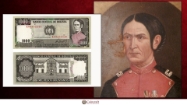
Bolivian Pesos Featuring Juana Azurduy de Padilla (1780–1862). -Monday, 08 June 2026
Often overshadowed by figures like Simón Bolívar and José de San Martín, Juana Azurduy de Padilla stands as one of the most formidable and uncompromising military leaders of the South American Wars of Independence. A woman of mestizo heritage, she defied the strict patriarchal norms of the 19th-century Spanish colonial empire to lead armies, organize guerrilla factions, and fight on the front lines for the liberation of Alto Perú (modern-day Bolivia) and the United Provinces of the Río de la Plata (modern-day Argentina). next...
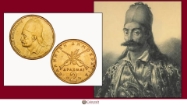
2 Drachma Coin Showcasing Georgios Karaiskakis -Thursday, 20 November 2025
If you were to picture the ultimate rebel—someone with zero respect for authority, a mouth like a sailor, and the tactical genius of a grandmaster—you’d be picturing Georgios Karaiskakis. In the pantheon of Greek revolutionary heroes, he stands out not just for his bravery, but for being completely, unapologetically wild. next...
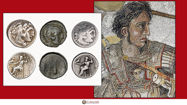
Greek coins Honouring Alexander the Great (former military commander) -Friday, 29 August 2025
Alexander the Great, one of history's most renowned figures, remains a symbol of unparalleled leadership and conquest. Born in 356 BC in Pella, the ancient capital of Macedonia, he became a legendary figure whose influence transcends time. Known for his unparalleled military prowess and strategic brilliance, he carved an empire that stretched from Greece to Egypt and as far east as India. The legacy of Alexander the Great is not just confined to his military conquests; it extends to modern leadership, offering lessons that are still relevant today. next...
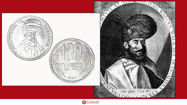
Romania 100 Dedicated to Mihai Viteazul (Former National Hero) -Tuesday, 03 June 2025
Mihai Viteazul, often referred to as Michael the Brave, is a monumental figure in Romanian history, celebrated for his unyielding spirit and strategic prowess in the unification of the Romanian territories. Born in 1558, Mihai was a prince of Wallachia, and his life was marked by a series of military campaigns that would eventually lead to the temporary unification of Wallachia, Transylvania, and Moldavia in 1600. This achievement was not only a significant military feat but also a symbolic gesture towards the idea of a united Romanian people. next...
Get in touch icon icon

- icon
45 Great Russell St, London WC1B 3JL
- icon
