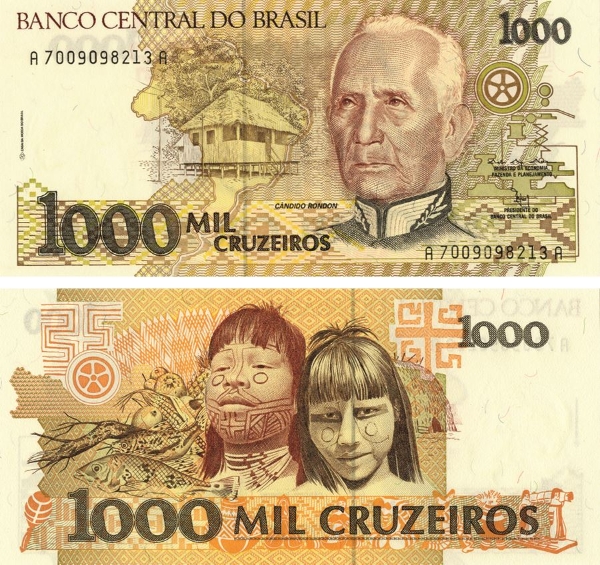
 - WBR0800.jpg)
Picture Source of Cândido Rondon: Wikipedia
Marshal Cândido Rondon: The Peacemaker of the Brazilian Wilderness
Few figures in South South American history command the dual legacy of national builder and humanitarian pioneer quite like Marshal Cândido Mariano da Silva Rondon (1865–1958). An explorer, military engineer, and champion of Indigenous rights, Rondon mapped thousands of square miles of uncharted Amazonian wilderness, laid the communication lines that stitched a fractured young republic together, and revolutionized state interactions with uncontacted tribal societies. Guided by a strict ethical code—most famously encapsulated in his command to his soldiers: "Die if need be, never kill"—Rondon sought to reconcile the expansion of the modern nation-state with the preservation and dignity of its native peoples.
Key Facts About Cândido Rondon
Category | Detail |
|---|---|
Full Name | Cândido Mariano da Silva Rondon |
Lifespan | May 5, 1865 – January 19, 1958 (Aged 92) |
Birthplace | Mimoso, Mato Grosso, Empire of Brazil |
Key Roles | Military Officer, Engineer, Explorer, Cartographer, Humanist |
Philosophical Guide | Positivism (Auguste Comte) |
Famous Expedition | Roosevelt-Rondon Scientific Expedition (1913–1914) |
Major Institutions Founded | Indian Protection Service (SPI, now FUNAI) |
Famous Motto | "Die if need be, never kill." (Morrer se preciso for, matar nunca.) |
State Named in His Honor | Rondônia, Brazil |
Key Takeaways
Pioneer of Non-Violent Exploration: Rondon demonstrated that national integration and exploration did not require the subjugation or extermination of Indigenous peoples.
Architect of Infrastructure: By installing over 4,000 miles of telegraph wire and carving roads through the wilderness, Rondon brought the Amazon into communication with the rest of the world.
Interdisciplinary Impact: He was a rare polymath who bridged military engineering, cartography, botany, and ethnography, enriching international scientific catalogs with thousands of new specimens.
Defender of Human Dignity: His foundational work with the SPI established early frameworks for Indigenous self-determination and territorial rights that continue to influence global conservation and human rights policies today.
Early Life, Ancestry, and the Positivist Influence
Cândido Mariano da Silva was born on May 5, 1865, in Mimoso, a small village in the western province of Mato Grosso, Brazil. His heritage was a microcosm of the Brazilian interior: he was of Portuguese, Spanish, and Indigenous ancestry, with lineage tracing back to the Terena, Bororo, and Guaná peoples (Diacon, 2004). Tragically orphaned before his second birthday—his father dying of smallpox and his mother shortly thereafter—he was raised by his grandparents and later an uncle, Manuel Rodrigues da Silva Rondon, whose surname he eventually adopted.
Determined to forge a path forward, Rondon taught elementary school at the age of sixteen before joining the Brazilian Army in 1881. He enrolled in the Military School of Praia Vermelha in Rio de Janeiro, where he excelled in mathematics, physical sciences, and military engineering.
It was during his academic years that Rondon embraced Positivism, the philosophical system formulated by French thinker Auguste Comte. Positivism advocated for societal evolution through empirical science, order, and universal humanitarianism, operating under the motto "Love as a principle and order as a basis; progress as a goal" (Comte, 1851). For Rondon, Positivism became a secular religion. It shaped his view of the nation-state, convincing him that Brazil’s frontier expansion should not be characterized by the violent conquests seen in other parts of the Americas, but rather by peaceful incorporation, scientific documentation, and gradual modernization (Rondon, 1946).
The Rondon Commission: Wiring the Amazon
Following the establishment of the Republic of Brazil in 1889, the new government prioritized integrating its remote, isolated borders with the administrative center of Rio de Janeiro. In 1890, Rondon was appointed as an army engineer to help construct telegraph lines across Mato Grosso.
From 1900 to 1906, and later as head of the newly formed Telegraphic Commission (commonly known as the Rondon Commission), he oversaw a Herculean task: stringing thousands of miles of wire across swampy wetlands, dense tropical rainforests, and rugged plateaus to connect Brazil’s remote western regions with Bolivia and Peru (Diacon, 2004).
The obstacles were immense:
Environmental hazards: Yellow fever, malaria, venomous snakes, and jaguar attacks plagued the expeditions.
Logistical strain: The crews operated in territories with no existing roads, relying entirely on pack mules, canoes, and manual machete clearance.
Hostile encounters: The construction projects cut directly through the ancestral homelands of formidable, uncontacted Indigenous tribes.
Despite these hardships, Rondon’s commission was a resounding success. He laid over 4,000 miles (approximately 6,400 km) of telegraph wire, mapped major rivers and geographical coordinates, and built a network of roads that transformed the interior economy (Wikipedia, 2026). His scientific teams collected thousands of biological and botanical specimens, donating them to the National Museum of Brazil. For his pioneering accomplishments, the international community lauded him, and he was later recognized as the "Father of Brazilian Telecommunications."
"Die If Need Be, Never Kill": Indigenous Protection
What distinguished Rondon from other explorers of his era was his refusal to deploy violence against the native populations he encountered. Drawing on his own Indigenous ancestry and Positivist convictions, Rondon recognized that the expansion of the telegraph lines was a direct intrusion into tribal lands.
To prevent bloodshed, Rondon enforced absolute discipline. His scouts and engineers were forbidden from using firearms for self-defense when encountering Indigenous tribes. In one famous incident, after Rondon was struck in the chest by a poisoned arrow fired by Nambikwara warriors, he forbade his men from retaliating, choosing instead to retreat peacefully (Curtius, 2016). Over time, this radical commitment to non-violence earned the trust of previously hostile groups, including the Bororo and Nambikwara, who eventually assisted the commission in laying the telegraph lines.
In 1910, Rondon’s advocacy led to the creation of the Serviço de Proteção aos Índios (SPI) (Indian Protection Service), with Rondon serving as its inaugural director. The SPI was the world’s first government-sponsored humanitarian agency dedicated entirely to defending Indigenous populations from exploitation by rubber barons, ranchers, and land speculators (Garfield, 2001). Under his guidance, the SPI established peaceful contact protocols and recognized collective land rights. Decades later, Rondon’s philosophies laid the groundwork for the establishment of the Xingu National Park in 1961—the first massive, legally protected Indigenous territory in South America.
While modern historians note that Rondon’s approach aimed at eventual assimilation—which carried its own set of cultural disruptions—his policies undeniably saved thousands of Indigenous lives from the physical extermination campaigns typical of early 20th-century frontier expansions (Garfield, 2001).
The Roosevelt-Rondon Scientific Expedition (1913–1914)
In 1913, former U.S. President Theodore Roosevelt embarked on a South American speaking tour. Seeking an arduous physical challenge following his defeat in the 1912 presidential election, Roosevelt agreed to a joint venture suggested by the Brazilian government: a scientific exploration of the Rio da Dúvida (the "River of Doubt"), a wild, completely uncharted tributary of the Amazon River whose headwaters Rondon had discovered in 1909 (Roosevelt, 1914).
Co-led by Colonel Rondon and Roosevelt, the Roosevelt-Rondon Scientific Expedition set off in December 1913. Sponosored by the American Museum of Natural History, the team consisted of Brazilian officers, American naturalists (including George Kruck Cherrie), and Roosevelt's son, Kermit.
The journey down the River of Doubt proved to be a harrowing ordeal:
Navigational Disasters: The expedition's heavy dugout canoes were repeatedly crushed by violent rapids, forcing the men to portage heavy gear through dense, hilly jungles.
Starvation and Disease: Swarms of biting insects carried malaria, which infected nearly the entire party. Foot wounds festered in the damp climate.
Loss of Life: One porter drowned in the rapids, another was murdered by a fellow expedition member suffering a mental breakdown, and the killer was left behind in the jungle (Millard, 2005).
Roosevelt himself contracted malaria and a severe leg infection from an injury, bringing him to the brink of death. He begged his son and Rondon to leave him behind to save the rest of the party, but Rondon refused. Throughout the crisis, Rondon maintained a methodical, almost detached military discipline, surveying every twist of the river using a compass and a system of manual sighting poles (Smithsonian, 2023).
The expedition successfully mapped the river, which the Brazilian government promptly renamed the Rio Roosevelt in the former president's honor. Although Roosevelt survived the journey, the physical toll was permanent, contributing directly to his death five years later in 1919.
Later Life, Legacy, and Global Recognition
In the decades following the expedition, Rondon was appointed Chief of the Brazilian Army's Corps of Engineers and charged with surveying all of Brazil's international borders (1927–1930). He also served as a highly respected international mediator, helping to peacefully resolve a tense border dispute between Colombia and Peru in the 1930s (Wikipedia, 2026).
Rondon's accomplishments garnered widespread global acclaim:
The Nobel Peace Prize: In 1925, Albert Einstein wrote to the Nobel Committee warmly recommending Rondon for the Nobel Peace Prize. He was nominated again by the Explorers Club of New York in 1957.
Marshal of Brazil: On his 90th birthday in 1955, the National Congress of Brazil awarded Rondon the lifetime rank of Marshal of the Brazilian Army.
Rondônia: In 1956, the federal territory of Guaporé was officially renamed Rondônia in his honor, making Rondon one of the few historical figures to have a federal state named after them during their lifetime.
Marshal Cândido Rondon died peacefully on January 19, 1958, in Rio de Janeiro, at the age of 92. Today, he is remembered as one of Brazil's greatest national heroes, an archetype of the noble explorer, and a founding father of modern ethnology and telecommunications.
Frequently Asked Questions (FAQs)
1. Why is the state of Rondônia named after him?
In 1956, to honor Rondon's legendary exploration, mapping, and infrastructure-building in the western Amazon basin, the Brazilian government changed the name of the Federal Territory of Guaporé to Rondônia. It officially became a Brazilian state in 1982.
2. How did Rondon's indigenous heritage influence his career?
Having Terena, Bororo, and Guaná ancestry gave Rondon a deep personal empathy for the tribal communities of the interior. Unlike many contemporary explorers who viewed indigenous peoples as obstacles or savages, Rondon viewed them as fellow citizens who deserved patience, respect, and integration into the national fabric without physical violence.
3. Did Albert Einstein really nominate Rondon for a Nobel Peace Prize?
Yes. Albert Einstein was deeply impressed by Rondon's peaceful methods of exploration and his strict refusal to use violence against uncontacted tribes. Einstein formally recommended Rondon to the Nobel Peace Prize Committee in 1925.
4. What happened to the Indian Protection Service (SPI) after Rondon's death?
Though founded with humanitarian intentions under Rondon, the SPI suffered from systemic corruption, underfunding, and bureaucracy in the mid-20th century. Following Rondon's death, reports of abuse by field agents led to its dissolution in 1967. It was replaced by FUNAI (Fundação Nacional do Índio), which remains Brazil's primary indigenous administrative body today.
References
Comte, A. (1851). System of Positive Polity. Paris: Carilian-Goeury and V. Dalmont.
Curtius, Q. (2016). Candido Rondon: Brazil's Greatest Explorer. Quintus Curtius Historical Essays.
Diacon, T. A. (2004). Stringing Together a Nation: Cândido Rondon and the Construction of a Modern Brazil, 1906–1930. Duke University Press.
Garfield, S. (2001). Indigenous Struggle at the Heart of Brazil: State Policy, Frontier Expansion, and the Xavante Indians, 1937–1988. Duke University Press.
Millard, C. (2005). The River of Doubt: Theodore Roosevelt's Darkest Journey. Doubleday.
Rondon, C. M. S. (1946). Rondonia: Esboço Geográfico-Histórico. Rio de Janeiro: Imprensa Nacional.
Roosevelt, T. (1914). Through the Brazilian Wilderness. Charles Scribner's Sons.