Articles
Sort by
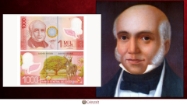
Costa Rica colones Honouring Braulio Carrillo Colina (1800-1845) -Monday, 13 July 2026
Braulio Evaristo Carrillo Colina remains one of the most polarizing yet foundational figures in Costa Rican history. Serving as Head of State during two critical periods—first from 1835 to 1837, and later as a de facto dictator from 1838 to 1842—Carrillo is widely revered as the "Architect of the Costa Rican National State" (Arquitecto del Estado Costarricense) (Obregón, 1989). next...
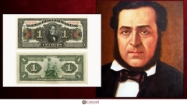
Costa Rica 1 colon dedicated to Juan Rafael Mora Porras (1814 – 1860) -Wednesday, 08 July 2026
Juan Rafael Mora Porras, affectionately remembered by generations of Costa Ricans as "Don Juanito," stands as one of the most transformative and polarizing figures in nineteenth-century Central American history. Serving as the second President of the Republic of Costa Rica from 1849 to 1859, his tenure was defined by aggressive economic modernization, structural infrastructure overhauls, and, most famously, his absolute military defiance against foreign expansionism during the Filibuster War. next...
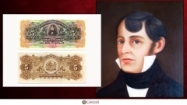
Costa Rica 5 colones Featuring Juan Mora Fernández (1784 – 1854) -Tuesday, 07 July 2026
The history of Costa Rica’s transition from an isolated, impoverished Spanish colonial province into a stable, progressive democracy is closely tied to the leadership of its first elected Head of State (Jefe de Estado), Juan Mora Fernández. Governing from 1824 to 1833, Mora Fernández did not just rule; he built the institutional framework of a fledgling state during an era when the rest of Central America was collapsing into chronic civil war and military dictatorship [1]. next...
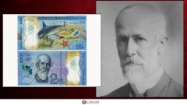
Costa Rica Coloneds Featuring Mauro Fernandez Acuna (1843 – 1905) -Monday, 06 July 2026
Mauro Fernández Acuña (1843–1905) stands as one of the most transformative figures in the history of Costa Rica. Remembered primarily as a brilliant lawyer, astute politician, and visionary educator, his legacy is deeply woven into the fabric of the nation's democratic and intellectual identity. As the mastermind behind the 1886 General Law of Common Education (Ley General de Educación Común), Fernández Acuña revolutionized the Costa Rican educational system, transitioning it from a localized, underfunded, and traditional structure into a modern, centralized, and secular framework. His belief that the strength of a republic lies in the education of its citizens fundamentally altered the developmental trajectory of Costa Rica, differentiating it from many of its Central American neighbors. next...
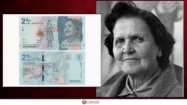
Colombian Pesos Honouring Débora Arango Pérez (1907 – 2005) -Friday, 03 July 2026
To hold a blue Colombian 2,000-peso banknote is to hold a tribute to one of the most revolutionary, rebellious, and fiercely independent voices in Latin American art. Gracing the obverse of this modern currency is the dignified, elderly face of Débora Arango Pérez. Her sharp, clear gaze is paired with a cardinal bird—a nod to her highly controversial painting Las monjas y el cardenal ("The Nuns and the Cardinal")—and a famous quote asserting that art has its own orbit, separate from restrictive moral codes. next...
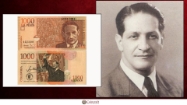
Colombian Pesos Featuring Jorge Eliécer Gaitán (1903 – 1948) -Thursday, 02 July 2026
On 9 April 1948, three gunshots fired on a bustling street in downtown Bogotá altered the course of South American history forever. The victim was Jorge Eliécer Gaitán, a charismatic lawyer, politician, and the undisputed leader of Colombia’s Liberal Party. Widely expected to win the upcoming presidential election, Gaitán was more than a mere candidate; he was a secular saint to the country’s marginalized working classes and rural peasantry. next...
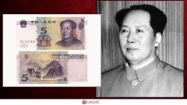
Chinese Yuan Honouring Mao Zedong (1893 - 1976) -Wednesday, 01 July 2026
Mao Zedong remains one of the most monumental and polarising figures of the twentieth century. As the chief architect of the Chinese Communist Revolution and the founding father of the People's Republic of China (PRC), his political ideology, military strategies, and radical socio-economic experiments fundamentally reshaped the course of Chinese history. From his humble beginnings as a peasant’s son in Hunan province to his absolute consolidation of power in Beijing, Mao's legacy is deeply woven into the fabric of modern East Asia. next...
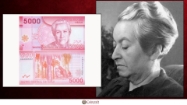
Chile Pesos Featuring Gabriela Mistral (1889 – 1957) -Tuesday, 30 June 2026
Gabriela Mistral was a woman of extraordinary firsts. As a poet, educator, diplomat, and humanist, she became the first Latin American writer to receive the Nobel Prize in Literature in 1945. Her lyrical poetry—deeply marked by themes of love, tragic loss, maternal instinct, and a fierce defense of the marginalized—elevated her from a self-taught teacher in Chile's rural valleys to one of the most prominent intellectual figures of the twentieth century (Scarpa, 1977). Today, her profound legacy is woven into the daily commerce of her homeland, where her portrait graces Chile's violet 5,000-peso polymer banknote, celebrating both her literary genius and her deep connection to the Chilean landscape. next...
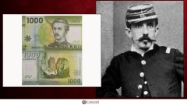
Chile Pesos Featuring Ignacio Carrera Pinto (1848–1882) -Monday, 29 June 2026
Ignacio Carrera Pinto stands as one of the most revered military figures in the history of Chile. As a captain during the War of the Pacific (1879–1884), his ultimate sacrifice at the Battle of La Concepción in the Peruvian highlands permanently etched his name into the bedrock of Chilean national identity. Alongside the seventy-six soldiers of his company, Carrera Pinto’s refusal to surrender against overwhelming odds transformed a tactical defeat into a legendary symbol of patriotic devotion. Today, his legacy is woven into the daily lives of millions of Chileans, celebrated annually on National Flag Day and immortalized on the country’s green 1,000-peso polymer banknote. next...
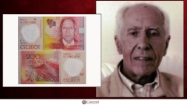
Cape Verde Escudos Featuring Henrique Teixeira de Sousa (1919 - 2006) -Friday, 26 June 2026
Henrique Teixeira de Sousa remains one of the most prolific and influential intellectuals in Cape Verdean history. Operating as both a pioneering medical doctor and a towering literary figure, his life’s work captured the sociological evolution, struggles, and identity of the Cape Verdean people during a century of profound transition. Along with the writers of the Claridade movement, Teixeira de Sousa helped steer Cape Verdean literature away from metropolitan Portuguese romanticism, anchoring it instead in the harsh, vibrant realities of the archipelago’s volcanic landscapes, social hierarchies, and ancestral heritage. next...
Get in touch icon icon

- icon
45 Great Russell St, London WC1B 3JL
- icon
