 - WCH4533.jpg)
Picture Source of Mao Zedong: Wikipedia
Mao Zedong: The Architect of Modern China and the Face of the Renminbi
Mao Zedong remains one of the most monumental and polarising figures of the twentieth century. As the chief architect of the Chinese Communist Revolution and the founding father of the People's Republic of China (PRC), his political ideology, military strategies, and radical socio-economic experiments fundamentally reshaped the course of Chinese history. From his humble beginnings as a peasant’s son in Hunan province to his absolute consolidation of power in Beijing, Mao's legacy is deeply woven into the fabric of modern East Asia.
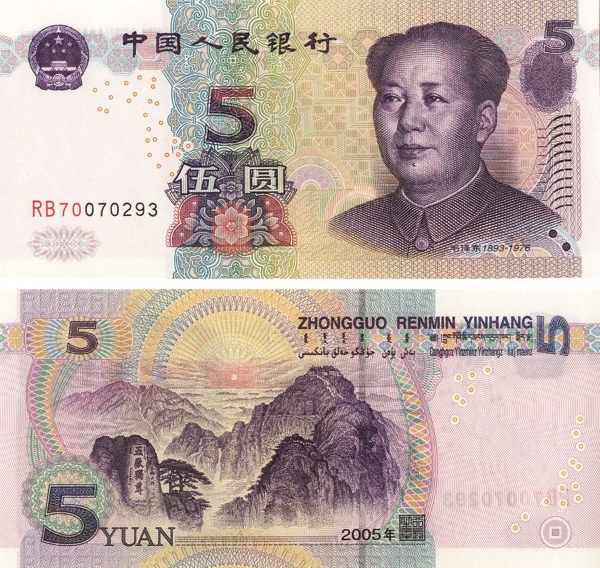
Today, his influence is encountered on a daily basis by over a billion people. His uniform portrait graces the obverse of every banknote in China's Fifth Series of the Renminbi, serving as a permanent symbol of national sovereignty and revolutionary history. This guide explores his revolutionary rise, the catastrophic realities of his political campaigns, and his transition from a guerrilla leader to a permanent currency icon.
Key Facts
Feature | Details |
|---|---|
Full Name | Mao Zedong (Mao Tse-tung) |
Born | 26 December 1893 (Shaoshan, Hunan Province, Qing Empire) |
Died | 9 September 1976 (Beijing, People's Republic of China) |
Primary Roles | Chairman of the Chinese Communist Party (1943–1976); Chairman of the PRC (1954–1959) |
Political Ideology | Maoism (Marxism-Leninism adapted for peasant-led agrarian societies) |
Major Campaigns | The Long March, The Great Leap Forward, The Great Proletarian Cultural Revolution |
Banknote Representation | Obverse portrait on all Fifth Series Renminbi banknotes (1, 5, 10, 20, 50, and 100 Yuan) |
Key Takeaways
Peasant-Led Revolution: Unlike orthodox Marxist theorists who believed urban industrial workers must lead the communist revolution, Mao pioneered the theory that the rural peasantry was the ultimate revolutionary engine for China.
The Long March Legend: Mao secured his absolute leadership over the Chinese Communist Party (CCP) during the grueling 6,000-mile military retreat known as the Long March (1934–1935), which became the founding myth of the communist state.
Catastrophic Modernisation: Mao's radical attempts to rapidly industrialise and collectivise China through the Great Leap Forward led to the Great Chinese Famine, resulting in the tragic deaths of tens of millions of citizens.
Curricular Iconography: In 1999, the People’s Bank of China transitioned from currency designs depicting diverse ethnic minorities (found on the Fourth Series) to featuring a uniform portrait of Mao Zedong on the Fifth Series, centralising his image as the absolute face of the modern Chinese nation.
Early Life and Revolutionary Foundations
Mao Zedong was born on 26 December 1893 in the rural village of Shaoshan in Hunan Province, into a relatively wealthy peasant farming family (Spence, 1999). Despite his father’s traditionalist expectations, Mao pursued an education, becoming exposed to Western political thought, nationalism, and eventually, the anti-imperialist ideas of the May Fourth Movement in 1919.
In 1921, while working as a library assistant at Peking University, Mao became one of the early founding members of the Chinese Communist Party (CCP) in Shanghai. While early Soviet advisors urged the young CCP to focus on organising urban factory workers, Mao’s field research in his home province of Hunan convinced him that the true strength of China’s revolution lay in the grievances and numbers of the exploited, rural peasantry (Short, 2001).
The Long March and Rise to Power
Following the breakdown of the alliance between the CCP and Chiang Kai-shek’s nationalist Kuomintang (KMT) in 1927, China descended into a brutal civil war. Outgunned and surrounded by nationalist forces in their southern base of Jiangxi, the communist forces made the desperate strategic decision to retreat in October 1934.
This epic military retreat, known as the Long March, covered over 6,000 miles across some of China's most treacherous mountain ranges, swamps, and rivers (Spence, 1999). Of the nearly 86,000 soldiers who set out on the journey, fewer than 8,000 survived to reach the northern sanctuary of Yan'an in Shaanxi Province.
               THE LONG MARCH & THE RISE TO HEGEMONY
┌────────────────────────────────────────────────────────────────────────┐
│  1. JIANGXI ENCIRCLEMENT (1934): Surrounded by Nationalist KMT forces. │
├────────────────────────────────────────────────────────────────────────┤
│  2. TSUNYI CONFERENCE (1935): Mao asserts military & political control.│
├────────────────────────────────────────────────────────────────────────┤
│  3. YAN'AN SANCTUARY (1935): Surviving forces build a new rural base.  │
├────────────────────────────────────────────────────────────────────────┤
│  4. CIVIL WAR VICTORY (1949): Nationalists retreat; PRC is proclaimed. │
└────────────────────────────────────────────────────────────────────────┘
Crucially, during the Tsunyi Conference in January 1935, Mao’s strategic military insights allowed him to outmanoeuvre his political rivals, successfully consolidating his absolute grip over the CCP’s military apparatus. In the isolation of Yan'an, Mao synthesised his thoughts into a cohesive political philosophy, asserting that agrarian reform and guerrilla warfare were the keys to defeating both the invading Japanese Imperial Army and the Nationalists.
The Founding of the PRC and Early Consolidation
Following the surrender of Japan in 1945, the Chinese Civil War resumed with intense ferocity. Benefiting from deep rural support and highly disciplined military tactics, Mao's People's Liberation Army pushed the Nationalist forces to the island of Taiwan.
On 1 October 1949, standing atop the Gate of Heavenly Peace (Tiananmen) in Beijing, Mao officially declared the birth of the People’s Republic of China (Short, 2001). He famously proclaimed that the Chinese people "had stood up," ending a century of foreign humiliation and domestic fragmentation.
His early years of governance yielded significant successes, including:
Land Reform: Redistributing agricultural land from wealthy landholders directly to millions of impoverished peasants.
Social Progress: Outlawing arranged marriages, child concubinage, and foot-binding, while greatly improving basic literacy rates and public hygiene.
The First Five-Year Plan: Rebuilding the war-torn economy with Soviet industrial aid, stabilising inflation, and constructing major transport networks.
Radical Experiments: Famine and Cultural Revolution
By the late 1950s, impatient with the pace of orthodox Soviet-style economic development and fearing the rise of a new bureaucratic elite, Mao embarked on a series of radical, ideological campaigns that would plunge the nation into unprecedented tragedy.
The Great Leap Forward (1958–1962)
Mao aimed to bypass traditional industrial stages, attempting to rapidly transform China into an industrial giant by organising the rural peasantry into massive agricultural communes and promoting "backyard steel furnaces." However, the campaign was plagued by highly inflated production reports, severe ecological mismanagement, and a sudden, devastating drought.
The resulting Great Chinese Famine remains one of the worst humanitarian catastrophes in human history, resulting in the starvation and death of an estimated 30 million to 45 million people (Dikötter, 2010).
The Cultural Revolution (1966–1976)
To reclaim absolute political power and purge what he saw as "bourgeois" and counter-revolutionary elements within his own party, Mao mobilised millions of fanatical youth, known as the Red Guards. Guided by the pocket-sized Quotations from Chairman Mao Tse-tung (commonly known as the Little Red Book), these groups closed schools, destroyed priceless historical temples, and persecuted teachers, intellectuals, and senior party officials alike.
The decade-long upheaval left the country's educational, cultural, and economic systems in near ruins. It only concluded with Mao's death on 9 September 1976, paving the way for pragmatic reforms under Deng Xiaoping.
The Iconography of Mao: Transition to the Fifth Series Renminbi
For numismatists, the design evolution of the Chinese Renminbi (RMB) provides a fascinating window into China’s shifting political philosophy.
Historically, during the Fourth Series of the Renminbi (introduced in the late 1980s), the Chinese government actively celebrated multi-ethnic unity. Banknotes showcased diverse pairings of ethnic minority citizens on their obverse sides—such as the Gaoshan and Manchu nationalities depicted on the 1 Jiao note.
                         THE CURRENCY ICONOGRAPHY SHIFT
┌────────────────────────────────────────────────────────────────────────┐
│  FOURTH SERIES RENMINBI (1980s-1990s):                                 │
│  - Celebrated ethnic minorities (e.g. Miao, Zhuang, Manchu, Tibetans). │
│  - Promoted a pluralistic, multi-ethnic socialist union.               │
├────────────────────────────────────────────────────────────────────────┤
│  FIFTH SERIES RENMINBI (1999-Present):                                 │
│  - Replaced ethnic portraits with a single, uniform image of Mao.      │
│  - Centralised national identity and simplified printing technology.   │
└────────────────────────────────────────────────────────────────────────┘
However, in October 1999, to mark the 50th anniversary of the founding of the PRC, the People’s Bank of China introduced the Fifth Series of the Renminbi (People's Bank of China, 1999). In a major departure from previous design traditions, the bank uniformly replaced the ethnic portraits on all major denominations (1, 5, 10, 20, 50, and 100 Yuan) with a single, highly detailed portrait of Mao Zedong, illustrated by the artist Liu Wenxi.
This numismatic shift served several key political and practical purposes:
National Unification: Placing the "Father of the Nation" on all notes consolidated a unified national identity, moving away from local ethnic distinctions.
Anti-Counterfeiting: It is significantly easier for citizens to detect subtle changes or flaws in a single, universally recognised human face than in multiple, rotating portraits. The 2005 edition of these notes further integrated advanced security elements, such as colour-shifting ink and raised printing textures, particularly on Mao’s shoulder and collar.
By pairing Mao’s iconic portrait on the front with China’s most spectacular geographical and cultural sites on the back—such as Mount Tai on the purple 5 Yuan note—the Renminbi structurally connects his political legacy to the timeless geography of China.
Frequently Asked Questions (FAQs)
Why is Mao Zedong the only person featured on China's current banknotes?
The decision was made during the release of the Fifth Series of the Renminbi in 1999 to simplify banknote design, streamline anti-counterfeiting measures, and centralise national identity around a singular, universally recognised symbol of the Chinese state.
What was the "Little Red Book"?
The "Little Red Book" is the informal name for Quotations from Chairman Mao Tse-tung. Published in the mid-1960s, this pocket-sized book contained selected political statements, military strategies, and ideological directives written by Mao. It was distributed globally by the hundreds of millions and was carried religiously by the Red Guards during the Cultural Revolution.
How is Mao Zedong viewed in China today?
The official position of the Chinese Communist Party, famously formulated by Deng Xiaoping, is that Mao was "seventy per cent correct and thirty per cent wrong." While his catastrophic domestic policies like the Great Leap Forward and the Cultural Revolution are acknowledged as grave historical errors, he is still widely revered as the visionary leader who ended foreign imperialism, unified the country, and restored national dignity to China.
Where can tourists visit memorials dedicated to Mao?
The most prominent memorial is the Chairman Mao Memorial Hall (Mausoleum), located in the centre of Tiananmen Square in Beijing, where his embalmed body lies on public display. Additionally, his birthplace in Shaoshan, Hunan, has been transformed into a major "Red Tourism" pilgrimage site, drawing millions of visitors annually.
Bibliography
BBC History. (2014). Mao Zedong (1893-1976). Historic Figures. Available at: BBC History Archive
Dikötter, F. (2010). Mao's Great Famine: The History of China's Most Devastating Catastrophe, 1958-1962. London: Bloomsbury Publishing.
Encyclopædia Britannica. (2026). Mao Zedong: Leader of the Chinese Communist Party. Biography Portal. Available at: Britannica Online Entry
People's Bank of China. (1999). Introduction to the Fifth Series of the Renminbi. PBOC Public Information Release. Beijing.
Short, P. (2001). Mao: A Life. New York: Henry Holt and Company.
Spence, J. D. (1999). Mao Zedong. Viking Lives Series. New York: Penguin Group.