Articles
Sort by
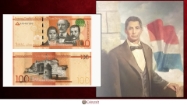
Dominican Republic Pesos Featuring Francisco del Rosario Sánchez (1817 – 1861) -Tuesday, 21 July 2026
Francisco del Rosario Sánchez stands as one of the paramount figures in Caribbean political history, revered alongside Juan Pablo Duarte and Matías Ramón Mella as one of the three Founding Fathers (Padres de la Patria) of the Dominican Republic 1. Born in Santo Domingo during a turbulent epoch characterised by shifting imperial dominance and foreign administration, Sánchez emerged not merely as an ardent activist, but as the pragmatic engine of the Dominican independence movement. When exile severed Duarte from the immediate struggle in 1843, it was Sánchez who assumed leadership of the clandestine revolutionary society La Trinitaria, orchestrating the coalition-building and strategic preparations that culminated in the historic proclamation of sovereignty at the Puerta del Conde on 27 February 1844 2. next...
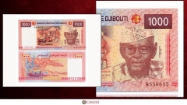
Djibouti Francs Featuring Ali Ahmed Oudoum (1913 – 1988) -Monday, 20 July 2026
The history of decolonization in the Horn of Africa is punctuated by the sacrifices and enduring visions of remarkable individuals who fought against overwhelming odds. Among these towering figures is Ali Ahmed Oudoum (1913–1988), a Djiboutian pro-independence activist, political pioneer, and cultural icon. Though his name might not echo as loudly in Western historical texts as some of his contemporaries, his legacy is indelibly woven into the fabric of the Republic of Djibouti. Today, his face graces the national currency, serving as a daily reminder to the Djiboutian people of the struggle for their national sovereignty. next...
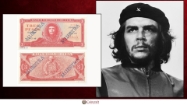
Cuba Pesos Honouring Ernesto "Che" Guevara (1928 – 1967) -Friday, 17 July 2026
Ernesto "Che" Guevara (June 14, 1928 – October 9, 1967) remains one of the most polarizing, recognizable, and deeply scrutinized figures of the 20th century. An Argentine Marxist revolutionary, physician, author, guerrilla leader, and diplomat, Guevara played a crucial role in the success of the Cuban Revolution. Following the overthrow of the Batista regime, Guevara attempted to export his revolutionary ideology and guerrilla tactics to the developing world, fighting in the Congo and ultimately meeting his demise in Bolivia (Anderson, 1997). next...
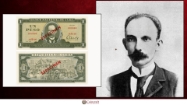
Cuban Peso Featuring José Martí (1853 - 1895) -Wednesday, 15 July 2026
José Martí (1853–1895) stands as one of the most significant figures in Latin American history. He was a polymath—a poet, essayist, journalist, philosopher, and revolutionary leader. Known as the "Apostle" of Cuban independence, Martí’s life was defined by a single, unwavering goal: the liberation of Cuba from Spanish colonial rule and the prevention of its absorption by the rising power of the United States. His legacy, however, extends far beyond Cuban borders; he is revered across Latin America as a visionary of continental unity. next...
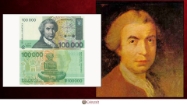
Croatian Dinar Featuring Ruđer Bošković (1711 – 1787) -Tuesday, 14 July 2026
The 100,000 Croatian Dinara banknote, pictured features the distinguished portrait of Ruđer Josip Bošković (often Anglicised as Roger Joseph Boscovich). Far from being just a national symbol, Bošković was one of the most brilliant and universal minds of the 18th-century European Enlightenment. As a physicist, astronomer, mathematician, philosopher, diplomat, and poet, his conceptual breakthroughs in atomic theory and relativity paved the way for modern quantum mechanics and field theory. next...
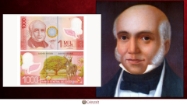
Costa Rica colones Honouring Braulio Carrillo Colina (1800-1845) -Monday, 13 July 2026
Braulio Evaristo Carrillo Colina remains one of the most polarizing yet foundational figures in Costa Rican history. Serving as Head of State during two critical periods—first from 1835 to 1837, and later as a de facto dictator from 1838 to 1842—Carrillo is widely revered as the "Architect of the Costa Rican National State" (Arquitecto del Estado Costarricense) (Obregón, 1989). next...
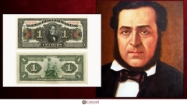
Costa Rica 1 colon dedicated to Juan Rafael Mora Porras (1814 – 1860) -Wednesday, 08 July 2026
Juan Rafael Mora Porras, affectionately remembered by generations of Costa Ricans as "Don Juanito," stands as one of the most transformative and polarizing figures in nineteenth-century Central American history. Serving as the second President of the Republic of Costa Rica from 1849 to 1859, his tenure was defined by aggressive economic modernization, structural infrastructure overhauls, and, most famously, his absolute military defiance against foreign expansionism during the Filibuster War. next...
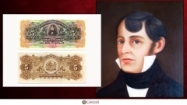
Costa Rica 5 colones Featuring Juan Mora Fernández (1784 – 1854) -Tuesday, 07 July 2026
The history of Costa Rica’s transition from an isolated, impoverished Spanish colonial province into a stable, progressive democracy is closely tied to the leadership of its first elected Head of State (Jefe de Estado), Juan Mora Fernández. Governing from 1824 to 1833, Mora Fernández did not just rule; he built the institutional framework of a fledgling state during an era when the rest of Central America was collapsing into chronic civil war and military dictatorship [1]. next...
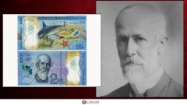
Costa Rica Coloneds Featuring Mauro Fernandez Acuna (1843 – 1905) -Monday, 06 July 2026
Mauro Fernández Acuña (1843–1905) stands as one of the most transformative figures in the history of Costa Rica. Remembered primarily as a brilliant lawyer, astute politician, and visionary educator, his legacy is deeply woven into the fabric of the nation's democratic and intellectual identity. As the mastermind behind the 1886 General Law of Common Education (Ley General de Educación Común), Fernández Acuña revolutionized the Costa Rican educational system, transitioning it from a localized, underfunded, and traditional structure into a modern, centralized, and secular framework. His belief that the strength of a republic lies in the education of its citizens fundamentally altered the developmental trajectory of Costa Rica, differentiating it from many of its Central American neighbors. next...
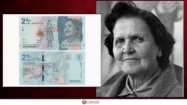
Colombian Pesos Honouring Débora Arango Pérez (1907 – 2005) -Friday, 03 July 2026
To hold a blue Colombian 2,000-peso banknote is to hold a tribute to one of the most revolutionary, rebellious, and fiercely independent voices in Latin American art. Gracing the obverse of this modern currency is the dignified, elderly face of Débora Arango Pérez. Her sharp, clear gaze is paired with a cardinal bird—a nod to her highly controversial painting Las monjas y el cardenal ("The Nuns and the Cardinal")—and a famous quote asserting that art has its own orbit, separate from restrictive moral codes. next...
Get in touch icon icon

- icon
45 Great Russell St, London WC1B 3JL
- icon
