Articles
Sort by
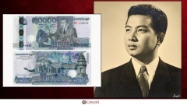
Cambodian Riels Featuring Preah Borom Ratanak Kaudh (Norodom Sihanouk) (1922-2012) -Monday, 22 June 2026
Upon his passing on October 15, 2012, King Norodom Sihanouk of Cambodia was officially bestowed the posthumous title Preah Karuna Preah Norodom Sihanouk Preah Borom Ratanak Kaudh (ព្រះបរមរតនកោដ្ឋ), meaning "The King who lies in the Supreme Golden/Diamond Urn" [1]. This title reflects the profound, almost spiritual status he held among the Khmer people. As a king, prime minister, head of state, rebel leader, exile, and filmmaker, Sihanouk's life was completely intertwined with the modern history of Cambodia [2]. He was the central pillar around which the nation revolved during the colonial, post-colonial, Cold War, and post-conflict eras. next...
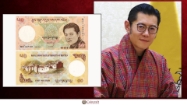
Bhutan Featuring Jigme Khesar Namgyel Wangchuck (The King) -Friday, 05 June 2026
In the heart of the Himalayas lies the Kingdom of Bhutan, a nation famous for measuring its success not by pure economic output, but by Gross National Happiness. At the helm of this unique modern state is Jigme Khesar Namgyel Wangchuck, the fifth Druk Gyalpo (Dragon King). next...
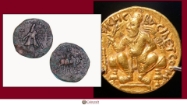
Tetradrachm Coin Featuring Vima Kadphises (100-128 A.D) -Tuesday, 05 May 2026
When we think of the great empire-builders of the ancient world, names like Alexander or Caesar usually spring to mind. But if you were traveling along the Silk Road around 100 A.D., there was one name that carried more weight than almost any other in Central Asia: Vima Kadphises. next...
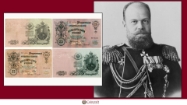
Roubles Featuring Alexander III Former Tsar of Russia -Thursday, 19 February 2026
When you think of a Russian Tsar, who comes to mind? Maybe the towering Peter the Great, or the tragic Nicholas II? But standing solidly between them is a man who was literally and figuratively a giant: Alexander III. Imagine a man who could bend silver forks into knots with his bare hands and crush a silver ruble coin between his fingers. That was Alexander III. He was a bearded colossus who looked more like a mythical folk hero than a refined European monarch. He didn't want to be a diplomat; he wanted to be the anchor that stopped Russia from drifting into chaos. next...
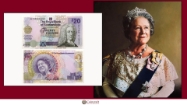
Banknotes and Coins Dedicated to the late Queen Elizabeth the Queen Mother -Monday, 16 February 2026
When we think of the British Royal Family, it’s easy to focus on the current headlines. But if you rewind the clock just a little bit, you’ll find one of the most formidable, charming, and resilient figures in royal history: Queen Elizabeth the Queen Mother. next...
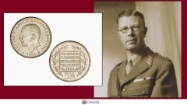
Swedish Kroner Dedicated former King Gustaf VI Adolf of Sweden -Thursday, 27 November 2025
Let’s be honest for a second: when you picture a King, what comes to mind? A figure waving from a balcony? Someone sitting stiffly in a uniform covered in medals? While King Gustaf VI Adolf of Sweden certainly did those things, he was so much more than a figurehead. He was a man who likely would have been just as happy being a university professor as he was a monarch. Known affectionately by some as the "Professor King," Gustaf VI Adolf was a serious intellectual, a world-class archaeologist, and a botanist who could identify a rhododendron species faster than most of us can identify our own cousins. next...
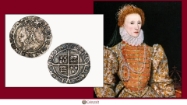
British Pounds Dedicated to Queen Elizabeth I of England -Wednesday, 29 October 2025
Queen Elizabeth I, often referred to as the Virgin Queen, stands as one of the most iconic figures in British history. Her reign, lasting from 1558 to 1603, marked a significant period known as the Elizabethan Era, characterised by flourishing arts, exploration, and a strengthened national identity. As the daughter of King Henry VIII and Anne Boleyn, Elizabeth's ascent to the throne was fraught with challenges and political intrigue. Yet, her leadership skills and determination allowed her to navigate these obstacles and leave an indelible mark on the course of history. next...
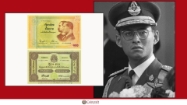
Thailand Baht Honouring former King Rama IX -Tuesday, 16 September 2025
King Bhumibol Adulyadej, known as King Rama IX, was more than just a monarch to the people of Thailand. He reigned for an impressive 70 years, making him not only the longest-reigning monarch in Thai history but also one of the most influential figures in the nation's modern era. His enduring legacy and profound impact on the country are celebrated and remembered by millions. next...
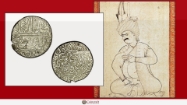
Silver 1/2 Shahi Honouring Ismail I (founder and first shah of Safavid Iran) -Monday, 15 September 2025
Ismail I, the founder of the Safavid Dynasty, stands as a pivotal figure in Persian history. His life and reign marked a turning point in the region's political, cultural, and religious landscape. Born in 1487, Ismail I's early life was steeped in the complex dynamics of the region's tribal and political factions. As a visionary monarch, his rule heralded a new era for Persia, characterised by the unification of fragmented territories and the establishment of Shia Islam as the state religion. next...
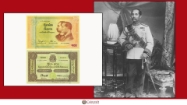
Thailand Baht Honouring former King Rama V -Friday, 12 September 2025
King Chulalongkorn, known as King Rama V, is revered as one of Thailand's most influential monarchs. Ascending to the throne in 1868, he reigned until 1910, a period marked by significant transformation and modernisation. His leadership not only moulded the future of Thailand but also left a legacy that resonates to this day. As a visionary leader, King Rama V is credited with steering the country through a time of immense change, balancing tradition with modernity. next...
Get in touch icon icon

- icon
45 Great Russell St, London WC1B 3JL
- icon
