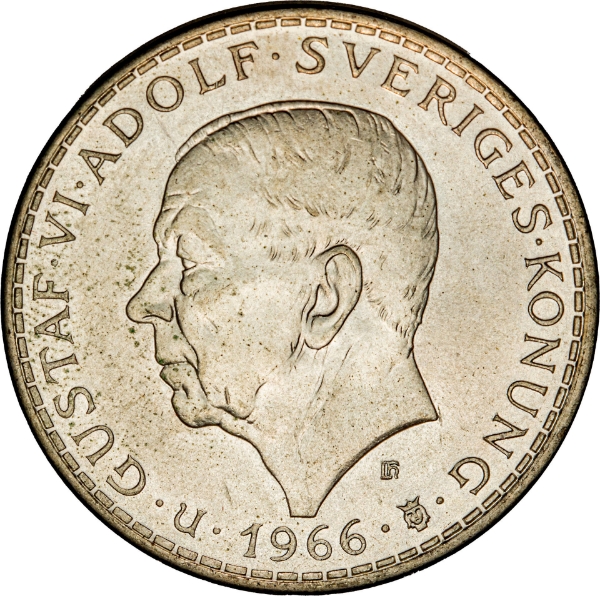
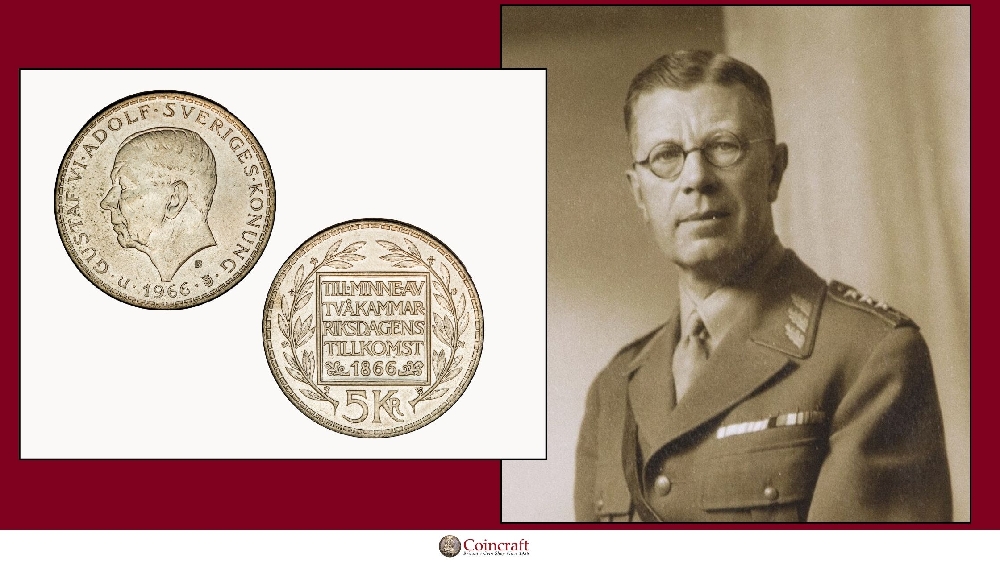
Picture Source of King Gustaf VI Adolf: Wikipedia
The Professor King: Unearthing the Life of Gustaf VI Adolf
Let’s be honest for a second: when you picture a King, what comes to mind? A figure waving from a balcony? Someone sitting stiffly in a uniform covered in medals?
While King Gustaf VI Adolf of Sweden certainly did those things, he was so much more than a figurehead. He was a man who likely would have been just as happy being a university professor as he was a monarch. Known affectionately by some as the "Professor King," Gustaf VI Adolf was a serious intellectual, a world-class archaeologist, and a botanist who could identify a rhododendron species faster than most of us can identify our own cousins.
He reigned during a time of massive social change in Sweden, bridging the gap between the old authoritarian style of monarchy and the modern, democratic institution we see today. But his story isn't just about politics; it’s about love, tragic loss, and a lifelong curiosity about the world.
So, grab a cup of coffee (or tea, in honor of his British wives), and let’s dig into the life of Sweden’s scholar king.
Key Takeaways
The Late Bloomer: He didn't become King until he was nearly 68 years old, making him the world's oldest heir apparent at the time.
A "Dirty Hands" Monarch: He was a respected archaeologist and botanist, participating in major excavations in Italy, Greece, and China.
The Modernizer: His popularity and down-to-earth nature helped save the Swedish monarchy during a time when political powers were being stripped away.
Tragic Romance: He lost his first wife, Crown Princess Margaret, tragically young—a loss that deeply humanized him in the eyes of his people.
Duty Above All: His personal motto, Plikten framför allt, defined his reign.
The Early Years: Not Just Soldiering On
Born on November 11, 1882, in Stockholm Palace, Oscar Fredrik Wilhelm Olaf Gustaf Adolf was the eldest son of King Gustaf V and Victoria of Baden¹²⁴.
In those days, a prince's path was usually pretty rigid: military training, military training, and... well, more military training. While Gustaf Adolf did rise through the ranks to become a General and an Admiral, his heart was in the books. He broke tradition by attending Uppsala University, where he studied history, economics, political science, and archaeology⁵. This wasn't just for show—he was genuinely brilliant.
Love and Loss: The Margaret Years
In 1905, the young prince found himself in Cairo, Egypt. It was there he proposed to Princess Margaret of Connaught, a granddaughter of Queen Victoria³. It was a whirlwind romance—they met, fell in love, and were engaged within weeks.
By all accounts, this was a massive success. Margaret (known as Margareta in Sweden) was lively, artistic, and incredibly popular. Together they had five children, including the father of the current King of Sweden. They were a modern couple for the time, heavily involved in creating the stunning gardens at Sofiero Palace, their summer residence⁶.
But in 1920, tragedy struck. Margaret, while eight months pregnant with their sixth child, died suddenly of sepsis following an ear infection. She was only 38. The image of the Crown Prince weeping openly at her funeral shattered the stoic royal image and endeared him to the Swedish people in a way nothing else could.
Chapter Two: Lady Louise
Life, as it does, went on. Three years later, in 1923, Gustaf Adolf married Lady Louise Mountbatten (the aunt of Prince Philip, Duke of Edinburgh)⁷.
While she could never replace Margaret, Louise was a perfect partner for the second half of his life. She was known for her eccentricity and lack of pretension—she famously carried a shopping bag that said "Queen of Sweden" on it. They didn't have children together (their only child was stillborn), but they shared a life of duty and intellect.
The Scholar Prince: Archaeology and Rhododendrons
Here is where Gustaf VI Adolf really shines. He wasn't a "dabbler." He was the real deal.
The Archaeologist
If you visit the British Museum or the Museum of Far Eastern Antiquities in Stockholm, you are looking at his legacy. He was a serious collector of Chinese art, assembling one of the world's finest private collections of ancient Chinese jade and bronzes⁴.
But he didn't just buy things. He dug for them. He spent his holidays participating in excavations, most notably in Etruria (Italy) at sites like San Giovenale and Acquarossa⁸. Picture the King of Sweden, in dusty khaki shorts, trowel in hand, carefully brushing dirt off a 2,000-year-old pot. He was respected by professional academics not because of his title, but because he actually knew his stuff.
The Gardener
At Sofiero Palace, he and Margaret (and later Louise) planted thousands of Rhododendrons. He became a leading expert on the flower, and today, the palace grounds are famous for the collection he started⁶.
The Reign (1950–1973): Duty Above All
Gustaf Adolf had to wait a long time to become King. His father, Gustaf V, lived to be 92. When Gustaf VI Adolf finally acceded to the throne in 1950, he was almost 68 years old¹.
He adopted the motto Plikten framför allt ("Duty above all")², and he lived by it.
His reign was a delicate balancing act. The political winds were blowing leftward, and many politicians wanted to abolish the monarchy entirely or strip it of all power. Gustaf VI Adolf, with his liberal views and modest lifestyle, made it very hard for them to dislike him. He was a "democratic King" who walked around Stockholm without bodyguards and stopped to chat with people.
During his final years, the politicians were drafting the 1974 Instrument of Government, a new constitution that would strip the King of all formal political power (like appointing the Prime Minister)¹. Gustaf VI Adolf passed away in 1973, just before this law came into effect. In a way, his personal popularity helped save the institution for his grandson, Carl XVI Gustaf, to inherit.
The End of an Era
King Gustaf VI Adolf died on September 15, 1973, at the age of 90, at a hospital in Helsingborg¹. His death marked the end of the "old" monarchy and the beginning of the purely ceremonial one we see today.
He is buried not in the dark, stone crypts of Riddarholm Church like his ancestors, but in the Royal Cemetery at Haga Park—under the open sky, surrounded by the nature he loved so much.
Frequently Asked Questions (FAQs)
Q: Did Gustaf VI Adolf actually do the digging at archaeological sites? A: Yes! He was not just an observer. He actively participated in excavations, particularly in Italy (Etruscan sites) and was considered a competent field archaeologist by professionals⁸.
Q: Why did he become King so late in life? A: His father, King Gustaf V, enjoyed incredible longevity, living to the age of 92. This meant Gustaf Adolf remained Crown Prince for nearly 43 years, taking the throne only weeks before his 68th birthday¹.
Q: How is he related to the current King of Sweden? A: Gustaf VI Adolf is the grandfather of the current monarch, King Carl XVI Gustaf. The current King's father (Gustaf VI Adolf's eldest son) died in a plane crash in 1947, so the crown skipped a generation¹.
References
Wikipedia. (2025). Gustaf VI Adolf. [Online]. Available at: https://en.wikipedia.org/wiki/Gustaf_VI_Adolf [Accessed 27 Nov. 2025].
Kungahuset. (2025). Gustaf VI Adolf. [Online]. Available at: https://www.kungahuset.se/english/royal-house/the-bernadotte-dynasty/gustaf-vi-adolf [Accessed 27 Nov. 2025].
Britannica, The Editors of Encyclopaedia. (2025). Gustav VI Adolf. [Online]. Available at: https://www.britannica.com/biography/Gustav-VI-Adolf [Accessed 27 Nov. 2025].
British Museum. (1972). Chinese Art from the Collection of H.M. King Gustaf VI Adolf of Sweden. London: British Museum.
Royal Central. (2022). The Monarchs of 1952: King Gustav VI Adolf of Sweden. [Online]. Available at: https://royalcentral.co.uk [Accessed 27 Nov. 2025].
Sofiero Palace. (2025). History of Sofiero. [Online]. Available at: https://www.google.com/search?q=https://sofiero.se/en/history [Accessed 27 Nov. 2025].
Unofficial Royalty. (2017). Wedding of King Gustaf VI Adolf and Lady Louise Mountbatten. [Online]. Available at: https://www.unofficialroyalty.com [Accessed 27 Nov. 2025].
Etruscan Corner. (2025). The Mysteries of Acquarossa. [Online]. Available at: https://etruscancorner.com [Accessed 27 Nov. 2025].