Articles
Sort by
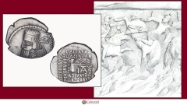
Silver Drachm Coin Featuring Artabanos IV -Thursday, 07 May 2026
Artabanos IV, was the final significant ruler of the Parthian Empire. His reign was a whirlwind of sibling rivalry, Roman betrayal, and the sudden, violent birth of a new Persian era. While history often remembers the winners, the story of Artabanos is a gripping look at a man who fought tooth and nail to keep a 400-year-old dynasty alive against the turning tides of fate. next...
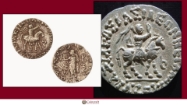
Silver Drachm Coin Featuring Azes II (circa 35–12 BCE) -Wednesday, 06 May 2026
In the heart of ancient Gandhara and the Punjab, a bustling crossroads stretching across what is now Pakistan and Afghanistan. We are setting our sights on the late 1st century BCE. This was a volatile, transformative era when the remnants of the Indo-Greek kingdoms were giving way to the expanding power of the Sakas—nomadic tribes sweeping down from the Central Asian steppes. In this dynamic geopolitical landscape, where Hellenistic, Indian, and Persian traditions collided, a powerful Indo-Scythian ruler emerged: King Azes II. next...
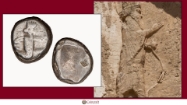
Siglos Coin Featuring Artaxerxes I (465–424 BC) -Friday, 01 May 2026
When we think of the great Persian kings, names like Cyrus or Darius usually steal the spotlight. But there’s a fascinating figure who stepped into the shoes of the legendary Xerxes I during a time of absolute chaos. His name was Artaxerxes I, and while he didn't have the "world-conquering" reputation of his grandfathers, his reign was a masterclass in diplomacy, patience, and surprisingly, tolerance. next...
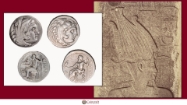
Drachma Coin Featuring Philip III Arrhidaeus (half-brother of Alexander the Great) -Tuesday, 27 January 2026
When we talk about ancient Macedonia, the spotlight naturally falls on Alexander the Great. He conquered the known world, rode a horse named Bucephalus, and generally lived life at 110% volume. But hiding in the background of Alexander’s brilliance was a figure who is often forgotten—his half-brother, Philip III Arrhidaeus. next...
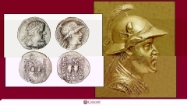
Greek Diademed Dedicated to former King Eukratides I ‘The Great' -Wednesday, 24 September 2025
Eukratides I, one of the most prominent figures in the ancient Greco-Bactrian Kingdom, ruled during the 2nd century BCE. His reign marked a period of significant transformation and expansion, leaving a lasting imprint on the region’s history. Known for his military prowess and strategic acumen, Eukratides I's legacy is a subject of great interest among historians and archaeologists alike. next...
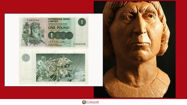
These Clydesdale £1 Honouring Robert the Bruce (Robert I) (Former King of Scots) -Wednesday, 21 May 2025
Robert the Bruce remains a towering figure in Scottish history, celebrated as one of the nation’s most iconic kings. His name evokes images of courage, resilience, and a steadfast commitment to Scotland's independence. Born in the 13th century, Robert the Bruce emerged as a pivotal leader, guiding Scotland through turbulent times and securing its place as a sovereign nation. His legacy is not just confined to the annals of history but continues to inspire generations. next...

Mongol Tugrik honouring Ghengis Khan -Thursday, 24 April 2025
Genghis Khan, born as Temüjin, is one of history's most formidable figures, renowned for his unparalleled military conquests and the vast empire he established during the 13th century. His rise from a humble nomadic background to becoming the Great Khan of the Mongol Empire is a testament to his extraordinary leadership and strategic prowess. His era, often referred to as the Mongol Century, was marked by significant developments that continue to influence contemporary society. next...

Swedish Kronor Dedicated to Gustav Vasa (Former King of Sweden) -Monday, 07 April 2025
Gustav Vasa, a pivotal figure in Swedish history, is often credited as the founder of modern Sweden. Born in 1496, he emerged as a national hero and the architect of Swedish independence. His reign marked the beginning of a new era, transforming Sweden from a fragmented state into a unified and sovereign nation. Throughout his life, Gustav Vasa was a dynamic leader who navigated numerous challenges to secure Sweden's future. next...

St Thomas & Prince 1000 Dobras Honouring Rei Amador -Friday, 28 March 2025
Rei Amador, born as Amador Vieira, stands as a pivotal figure in the history of São Tomé and Príncipe. Known as the leader of a significant slave rebellion in 1595, Amador's story is one of courage, resistance, and the fight for freedom against Portuguese colonial rule. next...
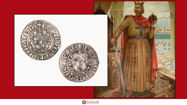
Armenian Silver Tram Dedicated to Levon I "Levon the Magnificent" (King of Cilician Armenia) -Thursday, 27 March 2025
Levon I, also known as Leo I, was a prominent historical figure who played a crucial role in the history of the Armenian Kingdom of Cilicia. Born in the late 12th century, Levon I ascended to the throne in the early 13th century during a turbulent period marked by both internal strife and external threats. As the first king of the Armenian Kingdom of Cilicia, he was instrumental in establishing the foundations of a new Armenian state that would endure for several centuries. His reign marked the beginning of a golden age for the Armenians in Cilicia, characterised by political stability, cultural flourishing, and economic prosperity. next...
Get in touch icon icon

- icon
45 Great Russell St, London WC1B 3JL
- icon
