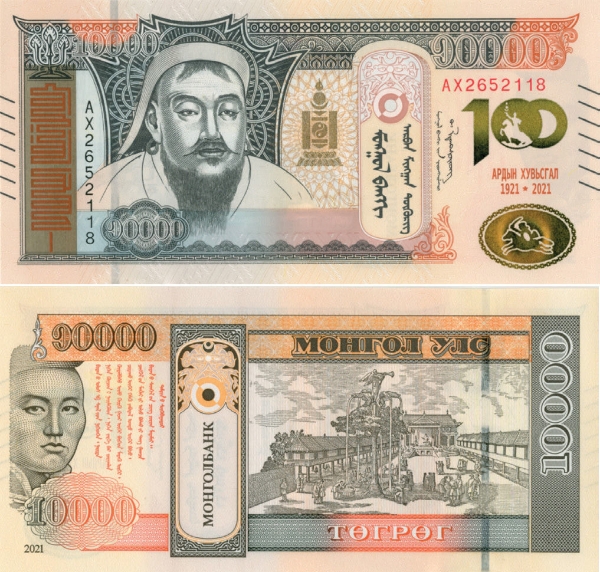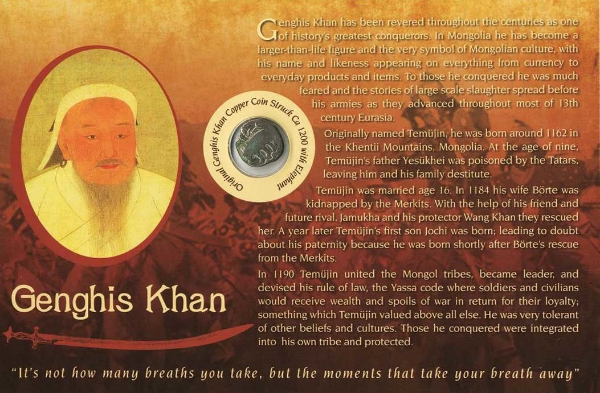
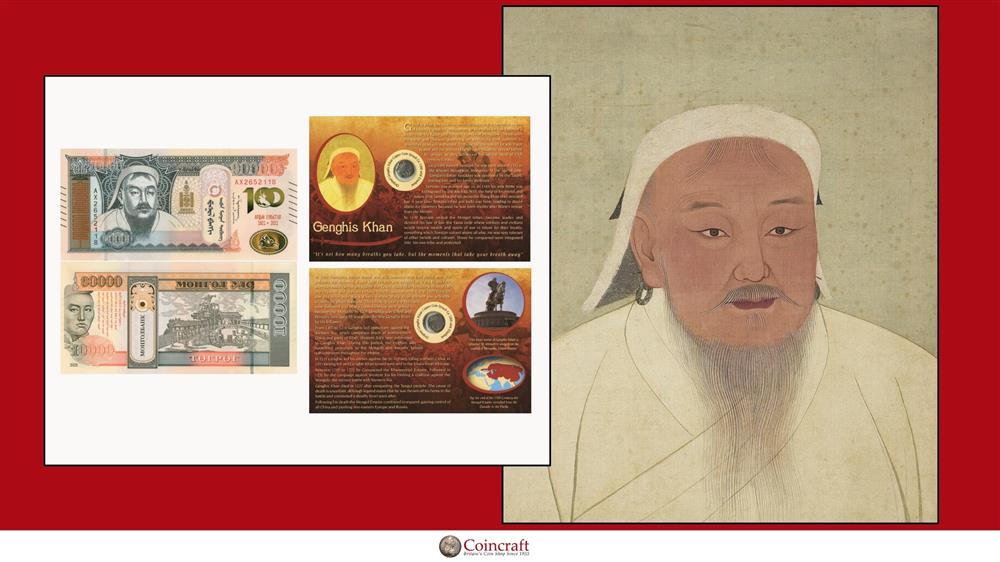
Picture Source of Genghis Khan: Wikipedia
Introduction to Genghis Khan and His Era
Genghis Khan, born as Temüjin, is one of history's most formidable figures, renowned for his unparalleled military conquests and the vast empire he established during the 13th century. His rise from a humble nomadic background to becoming the Great Khan of the Mongol Empire is a testament to his extraordinary leadership and strategic prowess. His era, often referred to as the Mongol Century, was marked by significant developments that continue to influence contemporary society.
The Mongol Empire, under Genghis Khan's command, spanned from Eastern Europe to Asia, making it the largest contiguous empire in history. This expansion was not merely about territorial acquisition but also about fostering a new world order that emphasised trade, cultural exchange, and innovation. His era laid the groundwork for globalisation long before the term was coined, influencing economic and cultural dynamics across continents.
Understanding Genghis Khan's time requires delving into the socio-political and economic conditions of the 12th and 13th centuries. The Mongol Empire's rise challenged the existing norms and reshaped the geopolitical landscape. This period was marked by significant shifts in power, economies, and cultures, creating a legacy that remains relevant today.
The Rise of Genghis Khan: Key Events and Strategies
Genghis Khan's ascent to power was not a straightforward journey. Born into a world of tribal conflicts and shifting alliances, he faced numerous challenges from a young age. His early life was fraught with adversity, including the murder of his father and the subsequent abandonment by his clan. These hardships forged a resilient and strategic thinker who would later unite the fragmented Mongolian tribes.
Key events in Genghis Khan's rise include his escape from slavery, strategic marriages, and the formation of alliances with powerful tribal leaders. He implemented innovative strategies that emphasised loyalty and meritocracy, which were revolutionary for the time. His ability to inspire loyalty and unify disparate tribes under a single banner was instrumental in his success.
Genghis Khan's strategies were not limited to military tactics; they extended to governance and societal organisation. He introduced the Yassa, a code of law that facilitated order and cohesion within his empire. His emphasis on merit-based appointments and religious tolerance further solidified his authority and laid the foundation for a stable and expansive empire.
Conquests and Expansion: Mapping the Mongol Empire
The conquests led by Genghis Khan were characterised by rapid expansion and remarkable efficiency. His military campaigns stretched across vast territories, from the steppes of Mongolia to the plains of Eastern Europe. This expansion was not merely due to superior numbers but also to innovative tactics and a deep understanding of his adversaries.
Mapping the Mongol Empire reveals a strategic mastery of geography and logistics. Genghis Khan's forces utilised speed and surprise, often covering immense distances in short periods. The empire's expansion was facilitated by a network of communication stations, known as Yam, which enabled rapid information exchange and sustained military campaigns over large areas.
The impact of these conquests was profound, reshaping borders and influencing the development of nations. The Mongol Empire's reach facilitated unprecedented interaction between East and West, setting the stage for future trade routes and cultural exchanges. The legacy of these conquests continues to be felt in the political and cultural landscapes of many modern societies.
The Impact of Genghis Khan on Trade and Economy
Genghis Khan's influence extended beyond military conquests; it significantly impacted the global economy and trade. The Mongol Empire's vast expanse created a unified economic zone that facilitated trade and commerce across continents. The Silk Road, already an ancient trade route, experienced unprecedented growth under Mongol rule, connecting Europe, the Middle East, and Asia.
The Mongol Empire's policies encouraged economic growth and stability. Genghis Khan's administration promoted trade by offering protection to merchants and ensuring safe passage across the empire. This policy not only enhanced economic interaction but also fostered cultural exchanges, as traders and travellers brought diverse ideas and innovations to different regions.
The economic policies introduced by Genghis Khan laid the groundwork for a more interconnected world. The emphasis on trade and commerce contributed to the development of markets and the exchange of goods, ideas, and technologies. This interconnectedness is a precursor to modern globalisation, highlighting Genghis Khan's long-lasting impact on the world's economic landscape.
Cultural Exchanges Fostered by the Mongol Empire
The Mongol Empire, under Genghis Khan, was a crucible for cultural exchange, bringing together diverse peoples and traditions. His conquests facilitated the movement of artists, scholars, and craftsmen across vast distances, enriching the cultures of the regions they touched. This cross-cultural interaction led to significant advancements in art, science, and technology.
One of the most notable aspects of the Mongol Empire's cultural impact was its religious tolerance. Genghis Khan's administration embraced a diversity of beliefs, allowing Buddhism, Christianity, Islam, and other religions to flourish within its borders. This openness encouraged dialogue and understanding among different faiths and cultures, fostering a spirit of coexistence.
The legacy of these cultural exchanges is evident in the fusion of artistic styles, architectural innovations, and scientific discoveries that emerged during and after the Mongol era. The blending of Eastern and Western traditions has left an indelible mark on global culture, illustrating the profound and lasting influence of Genghis Khan's empire.
Genghis Khan's Influence on Military Tactics and Warfare
Genghis Khan revolutionised military tactics and warfare, setting standards that are still studied and admired today. His strategic brilliance was evident in his use of innovative tactics, such as the feigned retreat and psychological warfare, which often caught his enemies off-guard and led to decisive victories.
The Mongol army was a formidable force, characterised by its discipline, mobility, and adaptability. Genghis Khan's emphasis on speed and flexibility allowed his troops to outmanoeuvre larger and better-equipped forces. His approach to warfare was holistic, incorporating intelligence gathering, espionage, and diplomatic manoeuvres to achieve his objectives.
The legacy of Genghis Khan's military innovations extends beyond his time, influencing the development of modern military strategies. His emphasis on adaptability, speed, and psychological tactics has been emulated by military leaders throughout history, demonstrating the enduring relevance of his approaches to warfare.
Modern Society's Perception of Genghis Khan
The perception of Genghis Khan in modern society is complex and multifaceted. He is often depicted as a ruthless conqueror, responsible for widespread destruction and loss of life. However, this view overlooks the positive aspects of his legacy, such as his contributions to trade, culture, and governance.
In recent years, there has been a growing interest in re-evaluating Genghis Khan's legacy. Historians and scholars are examining the broader impact of his conquests, recognising his role in shaping the modern world. This reassessment highlights the duality of his legacy, acknowledging both the destruction and the advancements that arose from his rule.
Understanding the multifaceted nature of Genghis Khan's legacy requires a nuanced perspective, recognising the complexity of his life and achievements. By exploring both the positive and negative aspects of his impact, modern society can gain a deeper appreciation of his contributions and the lasting effects of his conquests.
Lessons from Genghis Khan's Leadership Style
Genghis Khan's leadership style offers valuable lessons for contemporary leaders and organisations. His ability to inspire loyalty and unify diverse groups was rooted in his emphasis on meritocracy, adaptability, and innovation. These principles are as relevant today as they were during his time.
Key aspects of Genghis Khan's leadership included his focus on building a cohesive and loyal team, rewarding talent and performance, and maintaining a clear vision. His strategic acumen and willingness to embrace new ideas and technologies allowed him to adapt to changing circumstances and achieve his goals.
Modern leaders can draw inspiration from Genghis Khan's example, applying his principles to foster innovation, adaptability, and success in their own organisations. By embracing a leadership style that values diversity, merit, and strategic thinking, today's leaders can navigate the complexities of the modern world with confidence and resilience.
The Legacy of Genghis Khan in Contemporary Politics
Genghis Khan's influence extends to contemporary politics, where his legacy continues to shape geopolitical dynamics. His emphasis on unity, governance, and law laid the foundation for modern political systems, influencing the development of states and empires throughout history.
The Mongol Empire's governance model, characterised by centralised authority and regional autonomy, has been emulated by numerous political entities. Genghis Khan's emphasis on law and order, as exemplified by the Yassa, contributed to the development of legal systems that prioritise stability and justice.
Contemporary political leaders can learn from Genghis Khan's approaches to governance, recognising the importance of balancing central authority with local autonomy. By understanding the enduring impact of his legacy, modern society can better appreciate the complexities of global politics and the challenges of building cohesive and resilient political systems.