Articles
Sort by
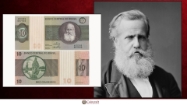
Brazil Cruzeiro Featuring Pedro II of Brazil -Wednesday, 10 June 2026
Dom Pedro II, born Pedro de Alcântara, was the second and last monarch of the Empire of Brazil. Ruling for over 58 years (1831–1889), his reign brought stability, cultural growth, and international respect to a nation previously fractured by political turmoil [1]. Often called "The Magnanimous," Pedro II is remembered as a highly intellectual ruler who prioritized education, science, and the modernization of Brazil. Despite his deep personal popularity, his commitment to peaceful evolution eventually paved the way for a bloodless military coup that ended the Brazilian monarchy, leaving behind a lasting legacy of progressive leadership and civic duty [2]. next...
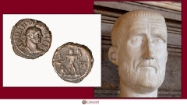
Potin Tetradrachm Coin Featuring Emperor Marcus Aurelius Probus (c. 276 – 282) -Monday, 11 May 2026
Marcus Aurelius Probus was one of the "Illyrian Emperors," a series of soldier-emperors from the Danubian provinces who played a decisive role in ending the Crisis of the Third Century. His reign was characterized by relentless military campaigning, infrastructure development, and a focus on restoring the economic viability of the provinces. next...
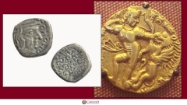
Silver Drachm Coin Featuring Kamaragupta I (c. 415 – c. 455 CE) -Friday, 08 May 2026
When we talk about the great Gupta Empire, names like Samudragupta or Chandragupta II usually hog the limelight. But if you were living in ancient India between 415 and 455 CE, you were living under the steady, capable hand of Kumaragupta I. Often called "Mahendraditya," he didn't just inherit an empire; he refined it into a cultural and academic powerhouse that changed the world forever.[1] next...
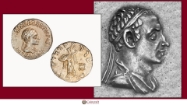
Greek Coin featuring Menander I (165/155–130 BC) -Wednesday, 29 April 2026
When we think of the great Greek conquerors, Alexander the Great usually steals the spotlight. But if you head east, past the rugged mountains of the Hindu Kush and into the heart of ancient India, you’ll find the story of a man who was arguably just as fascinating: Menander I Soter. next...
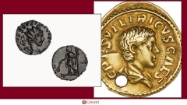
Roman Coin featuring Tetricus II (271 to 274 AD) -Monday, 27 April 2026
The story of the Roman Empire is often a saga of bloody ends and tragic downfalls, but every so often, history throws us a curveball. Enter Gaius Pius Esuvius Tetricus, better known as Tetricus II. While his father, Tetricus I, was the last "emperor" of the breakaway Gallic Empire, the younger Tetricus is a rare example of a Roman royal who stared down a conquering Emperor and lived to tell the tale—eventually retiring to a life of luxury rather than meeting the edge of a sword. next...
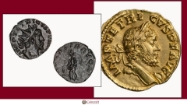
Roman Coin featuring Tetricus I (271 to 274 AD) -Friday, 24 April 2026
The 3rd century AD was a period of unprecedented crisis for the Roman Empire. Historians often define this era by its revolving door of "barracks emperors"—men elevated by the military only to be swiftly assassinated when the political winds shifted. next...
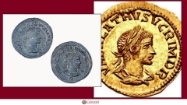
Roman Coin featuring Vaballathus (c.259 – c. 274 AD) -Thursday, 23 April 2026
In the tumultuous third century AD, the Roman Empire was fracturing under the weight of invasions, plagues, and endless civil wars. Out of this chaos rose Palmyra, an incredibly wealthy desert oasis that seized the moment to carve out its own massive empire. next...
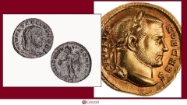
Roman Coin featuring Severus II (306 to 307) -Wednesday, 22 April 2026
In the early 4th century AD, the Roman Empire was governed by a delicate and complex power-sharing system known as the Tetrarchy. For Flavius Valerius Severus, better known to history as Severus II, ascending to the highest ranks of this system was a double-edged sword. next...
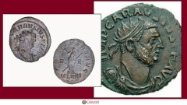
Roman Coin featuring Carausius (A.D. 286-293) -Tuesday, 21 April 2026
Have you ever heard of the Roman Emperor who basically orchestrated the very first "Brexit"? If you haven't, you are in for an absolute treat. History is packed with ambitious generals and cunning politicians, but few have a story quite as audacious as Marcus Aurelius Mausaeus Valerius Carausius. next...
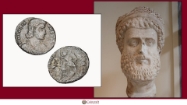
Roman Coin featuring Julian II (361 – 363) (proclaimed in February 360) -Thursday, 16 April 2026
In the mid-fourth century CE, the Roman Empire stood at a monumental crossroads, grappling with the sweeping religious transformations initiated by Constantine the Great. Imagine ascending to the throne of an empire undergoing such a profound cultural shift, only to dedicate your entire reign to reversing the tide of history and restoring the ancient ways. next...
Get in touch icon icon

- icon
45 Great Russell St, London WC1B 3JL
- icon
