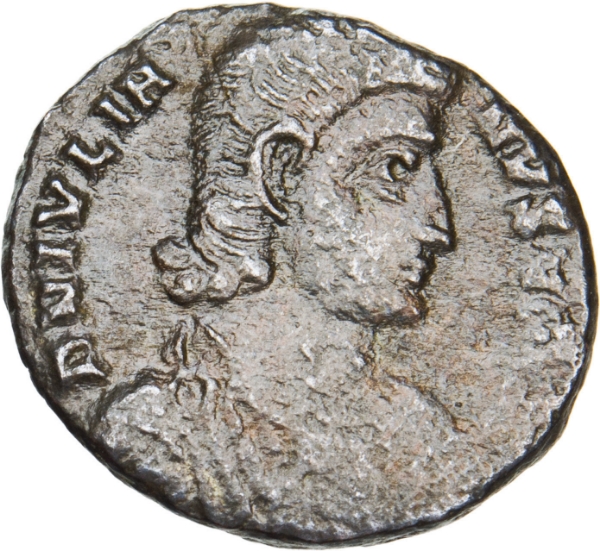
Picture Source of Julian II: Wikipedia
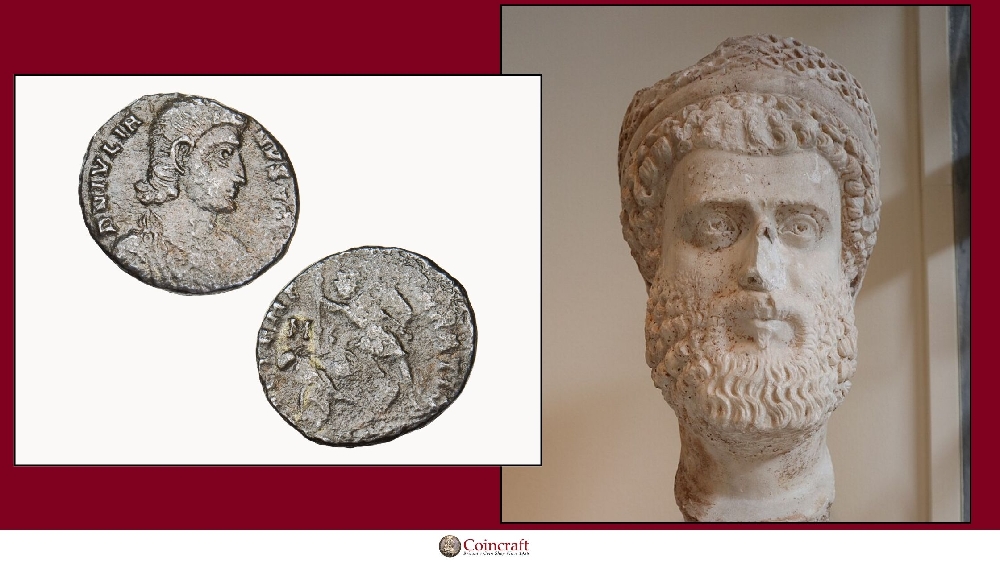
Julian II: The Philosopher-King Who Tried to Rewind the Roman Empire
In the mid-fourth century CE, the Roman Empire stood at a monumental crossroads, grappling with the sweeping religious transformations initiated by Constantine the Great. Imagine ascending to the throne of an empire undergoing such a profound cultural shift, only to dedicate your entire reign to reversing the tide of history and restoring the ancient ways.
That was the life’s mission of Flavius Claudius Julianus, better known to history as Julian the Apostate. He was the last pagan Roman Emperor, a brilliant philosopher, an unexpectedly brilliant general, and a man who tried single-handedly to roll back the Christianization of the Roman Empire. Let's explore the dramatic, action-packed, and ultimately tragic life of Julian II.
Key Takeaways
A Survivor of Royal Purges: Julian's early life was marked by the brutal assassination of his family by his own cousin, Emperor Constantius II, which fueled his lifelong distrust of the Christian imperial court.
An Unlikely Military Genius: Despite being a bookish philosophy student, Julian proved to be an incredibly effective military commander, famously securing the Rhine frontier against Germanic tribes.
The Last Pagan Emperor: Upon taking the throne, Julian attempted to revive traditional Roman polytheism (Hellenism) and strip Christianity of its imperial privileges.
A Tragic and Sudden End: His ambitious and controversial reign lasted only 20 months before he was fatally wounded during an ill-advised military campaign into Persia.
Surviving a Royal Bloodbath
Julian didn't exactly have a warm and fuzzy childhood. Born in 331 CE, he was the nephew of Constantine the Great—the emperor who famously legalized Christianity. When Constantine died in 337, Julian’s older cousin, Constantius II, decided the best way to secure his own claim to the throne was to murder almost every male relative in the family.
Julian, who was only six years old at the time, and his half-brother Gallus, were spared, likely because they were deemed too young to be a threat(1).
You can imagine the kind of psychological toll this took. Exiled to an imperial estate in Cappadocia (modern-day Turkey), Julian grew up effectively under house arrest. Surrounded by Christian tutors appointed by the very man who murdered his family, it’s no wonder Julian began to quietly resent the new religion. Instead, he found solace in the dusty scrolls of ancient Greece, secretly converting to Neoplatonism and developing a deep love for the traditional Roman gods(2). He became a total classical nerd, completely devoted to philosophy and literature.
The Reluctant General Turns Hero
In 355 CE, Emperor Constantius II found himself in a bind. The empire was facing threats on multiple fronts, and he needed a loyal family member to help manage the West. Despite having zero military experience, the 24-year-old philosophy student Julian was suddenly elevated to the rank of Caesar (junior emperor) and sent to Gaul (modern France) to fight off invading Germanic tribes(3).
Constantius probably expected Julian to fail, or at least just act as a figurehead. Instead, Julian surprised everyone—most of all the Germanic tribes.
He proved to be an adaptable, courageous, and highly capable commander. His crowning military achievement came at the Battle of Strasbourg in 357 CE, where his outnumbered Roman forces completely crushed the Alamanni confederation(2). He fought alongside his men, ate their rations, and earned their unwavering loyalty.
By 360 CE, Constantius grew jealous of Julian's success and ordered him to send his best troops out East. The troops, refusing to leave their beloved commander, famously hoisted Julian on their shields in Lutetia (modern-day Paris) and declared him Augustus—full emperor(1). A massive civil war seemed inevitable, but Constantius unexpectedly died of a fever in 361, naming Julian his legitimate successor with his dying breath.
The Emperor Who Tried to Turn Back Time
Now the sole ruler of the Roman world, Julian could finally drop the Christian act. He openly declared his adherence to the old gods, earning him the nickname "The Apostate" (one who abandons their religion) from later Christian writers.
But Julian wasn't a cartoonish villain who just wanted to throw Christians to the lions. He was much smarter than that. He issued an Edict of Toleration in 362 CE, which reopened pagan temples, restored confiscated temple lands, and recalled exiled Christian bishops of various sects—a sly move designed to cause infighting among the Christians(4).
His most controversial move, however, was his edict on education. Julian decreed that Christian teachers could no longer teach classical literature. His logic was simple: how can you teach Homer or Virgil if you think the gods they write about are demons? This effectively barred Christians from the upper echelons of Roman education and society, a bureaucratic move that threatened the religion more than physical persecution ever did(3). He also attempted to organize paganism into a structured "church" with charitable wings to directly compete with Christian welfare systems.
A Fatal Ambition in the Desert
Julian's ambition was boundless. He wanted to rival the legendary Alexander the Great, which led him to organize a massive, incredibly expensive invasion of the Sassanid Persian Empire in 363 CE.
Initially, the campaign was a success. He marched his massive army all the way to the Persian capital of Ctesiphon. However, unable to breach the city's walls and facing a scorched-earth retreat by the Persians, the Roman army found itself starving and bogged down in the desert heat(1).
During a chaotic skirmish on June 26, 363, Julian rushed into battle without fastening his breastplate. He was struck in the side by a spear—whether thrown by a Persian or a disgruntled Christian soldier in his own ranks remains one of history's great mysteries(2).
He died shortly after in his tent, discussing the nobility of the soul with his philosophers, just like his idol, Socrates. He was only 31. With him died the last serious threat to a Christianized Europe.
Frequently Asked Questions (FAQs)
Why is he called "Julian the Apostate"? "Apostasy" means the formal disaffiliation from or abandonment of a religion. Because Julian was baptized and raised as a Christian but later publicly renounced it to worship the traditional Roman and Greek gods, Christian historians branded him "The Apostate."
Did Julian actually persecute Christians? Not in the traditional sense of executing them or feeding them to lions, like earlier emperors (e.g., Nero or Diocletian). Julian preferred bureaucratic persecution. He removed their political privileges, banned them from teaching classical literature, and subtly encouraged infighting among different Christian sects.
What were Julian's legendary last words? Christian tradition claims his last words were "Vicisti, Galilaee" ("Thou hast conquered, Galilean," referring to Jesus). However, historians generally agree this was invented by later Christian writers to frame his death as divine justice. Contemporaries state he died having a calm, philosophical discussion with his friends.