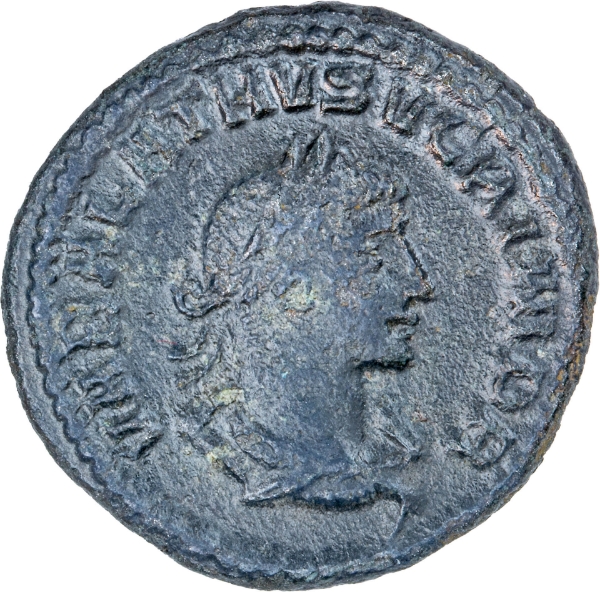
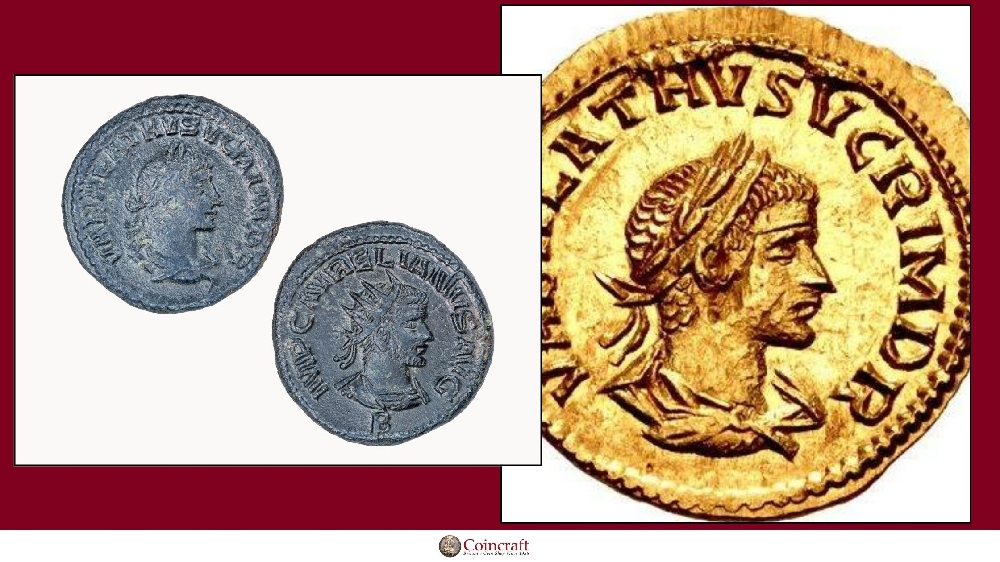
Picture Source of Vaballathus: Wikipedia
Introduction: A Kid in a Golden Crown
In the tumultuous third century AD, the Roman Empire was fracturing under the weight of invasions, plagues, and endless civil wars. Out of this chaos rose Palmyra, an incredibly wealthy desert oasis that seized the moment to carve out its own massive empire. At the absolute center of this unprecedented power grab wasn't a grizzled general or a seasoned politician, but an eight-year-old boy named Vaballathus. While history often focuses its lens on his legendary mother, Queen Zenobia, who orchestrated their defiance of Rome, the story of this young 'King of Kings' offers a fascinating glimpse into the cutthroat politics and shifting loyalties of the ancient world. Let’s unearth the incredible—and somewhat tragic—life of the child emperor who briefly stood toe-to-toe with the mightiest empire on earth.
Key Takeaways
Thrust into Power: Vaballathus became the ruler of the Palmyrene Empire as a young boy after the shocking assassination of his father.
The Ultimate Stage Mom: Due to his young age, his mother, Queen Zenobia, held the actual reins of power, serving as regent and expanding the empire's borders.
Playing Both Sides: For a time, Vaballathus's government tried to keep the peace with Rome, famously minting coins that featured both the boy king and the Roman Emperor.
A Golden Defeat: After fully breaking away from Rome, his forces were crushed. He and his mother were captured, paraded through Rome in chains, and eventually granted a quiet retirement.
A Royal Childhood Cut Short
To understand Vaballathus, we have to look at the world he was born into. Born around 259 AD, his native Aramaic name was Wahballāt, which carries the beautiful meaning "Gift of Allāt" (a prominent Arabian goddess) (1). In the Greek-speaking world, he was sometimes known as Athenodorus.
His family ruled Palmyra, an incredibly wealthy oasis city in modern-day Syria that thrived on the lucrative Silk Road trade. His father, Odaenathus, was a heroic figure—a Roman client-king who had successfully protected the Eastern Roman borders from Persian invasions (2).
But royal courts are dangerous places. In 267 AD, tragedy struck. Odaenathus and his eldest son (Vaballathus's half-brother) were assassinated in a murky plot allegedly orchestrated by a disgruntled relative (2). Almost overnight, the crown was placed on the head of young Vaballathus, forever ending his childhood (1).
Queen Zenobia's Grand Strategy
Obviously, a child couldn't negotiate with emperors or command armies. This is where his mother, the legendary Queen Zenobia, stepped onto the world stage to act as his regent (3).
While Vaballathus was the official "King of Kings" and "Governor of all the East," Zenobia was the true architect of the empire's next moves (1). And she didn't just maintain the status quo; she went on the offensive. By 270 AD, Zenobia had dramatically expanded Palmyrene territory, sweeping into Roman Egypt, Arabia, and Anatolia (3).
Despite this aggressive expansion, the Palmyrenes initially played a highly sophisticated diplomatic game. Zenobia ordered the creation of clever coinage: one side featured the boy king Vaballathus wearing a laurel wreath, while the reverse side displayed the newly minted Roman Emperor Aurelian wearing his radiate crown (1). It was a brilliant, passive-aggressive way of claiming immense regional power while still technically acknowledging Rome's ultimate authority.
The Rebellion and the Triumphal March
However, trying to outsmart the Roman Empire rarely ends well. Emperor Aurelian, a fierce military commander determined to reunite the fractured Roman world, eventually lost his patience.
By 271 AD, Zenobia and Vaballathus officially dropped the charade. They declared complete independence from Rome, elevating Vaballathus to the supreme title of Imperator Caesar Augustus (3). Aurelian immediately marched his legions east. After a series of brutal battles, the Roman forces besieged Palmyra. Desperate, Vaballathus and his mother tried to escape on camels to seek aid from the Persians, but Roman cavalry intercepted them at the Euphrates River (1).
In 274 AD, the story of the boy king reached its dramatic climax in the streets of Rome. Aurelian threw a massive triumphal parade to celebrate his conquests. The teenage Vaballathus and Queen Zenobia were marched through the roaring crowds, reportedly bound in heavy golden chains (1). But unlike many Roman stories that end in executions, Aurelian showed surprising mercy. The boy who was once the King of the East was spared, and historical accounts suggest he and his mother were allowed to live out their remaining years peacefully on an estate in Tibur, Italy (1).
FAQs
Why is he sometimes called Athenodorus? In the ancient world, names were often translated to match different cultures. His native Aramaic name, Wahballāt ("Gift of Allāt"), was translated into Greek as Athenodorus, because the Arabian goddess Allāt was often equated with the Greek goddess Athena.
Did Vaballathus ever make his own decisions as king? It is highly unlikely. Because he came to power at roughly eight years old and was defeated by the Romans while still a teenager, his mother Queen Zenobia was the undisputed shot-caller for the entirety of his reign.
Was Vaballathus killed by the Romans? No, he survived! While being paraded in golden chains through Rome was certainly a humiliating defeat, Emperor Aurelian granted Vaballathus and his mother clemency. They were sent into a comfortable exile on an Italian estate.
References
Wikipedia. (2025). Vaballathus. [Online]. Available at: https://en.wikipedia.org/wiki/Vaballathus [Accessed 23 April 2026].
Geneanet. (n.d.). ODAENATHUS SEPTIMIUS. [Online]. Available at: https://gw.geneanet.org/cousinjeanne?lang=en&n=septimius&p=odaenathus [Accessed 23 April 2026].
Britannica. (n.d.). Wahballat | king of Palmyra. [Online]. Available at: https://www.britannica.com/biography/Wahballat [Accessed 23 April 2026].