 - AWB1018.jpg)
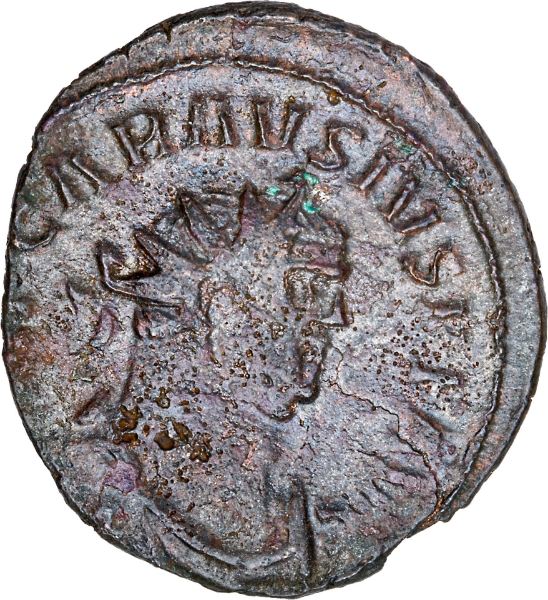
Picture Source of Carausius: Wikipedia
The Pirate Who Stole Britain: The Wild Life of Emperor Carausius (A.D. 286-293)
Have you ever heard of the Roman Emperor who basically orchestrated the very first "Brexit"? If you haven't, you are in for an absolute treat. History is packed with ambitious generals and cunning politicians, but few have a story quite as audacious as Marcus Aurelius Mausaeus Valerius Carausius.
He wasn't born into royalty. He didn't inherit an empire. Instead, this humble maritime pilot clawed his way up the Roman military ladder, became a celebrated pirate-hunter, went rogue, and eventually stole the entire province of Britain right out from under the noses of the most powerful men in the world. Let’s dive right into the rebellious, coin-minting, and dramatic life of Carausius.
Key Takeaways
Humble Beginnings: Born in the Menapian region (modern-day Belgium/Netherlands), Carausius rose from a lowly marine pilot to a high-ranking Roman naval commander.
The Pirate Hunter Turned Pirate: Tasked with stopping Saxon and Frankish pirates, he was accused of letting them raid first so he could steal their looted treasure for himself.
The First 'Brexit': Facing execution for his crimes, he boldly declared himself the independent Emperor of Britain and Northern Gaul in A.D. 286.
Master of Propaganda: Carausius used highly sophisticated, pure silver coinage filled with literary references to legitimize his reign and win over the British populace.
A Bloody End: His brilliant, defiant seven-year run ended in betrayal when his own finance minister assassinated him in A.D. 293.
From the Sea to the Stars: A Humble Beginning
Unlike the aristocratic emperors who ruled from the marble halls of Rome, Carausius came from incredibly modest stock. He was a Menapian, hailing from the coastal regions of Gallia Belgica (around modern-day Belgium and the Netherlands)(1).
His early life was intimately tied to the unforgiving waters of the North Sea, where he worked as a humble marine pilot. But Carausius was ambitious, tough, and fiercely capable. He joined the Roman military and quickly distinguished himself through his sheer grit, particularly during Maximian's land campaigns against a rebel group in Gaul known as the Bagaudae(2). His background as a sailor, combined with his newfound reputation as a military heavyweight, made him the perfect candidate for a daunting new job.
The Classis Britannica: Hunting Pirates (Or Joining Them?)
By A.D. 285, the Roman Empire was dealing with a massive piracy problem. Frankish and Saxon raiders were devastating the coasts of Gaul and Britain. The Emperor Maximian (co-ruler with Diocletian) decided he needed a tough guy to clean up the English Channel. He appointed Carausius to command the Classis Britannica—the Roman fleet operating in the region(1).
Carausius was highly effective, but his methods were, let's say, highly suspicious. Instead of intercepting the pirates on their way to attack coastal towns, he had a funny habit of waiting until after they had raided the settlements. He would then ambush the pirates on their way home, slaughter them, and seize the stolen loot(2).
The problem? He wasn't exactly returning the treasure to its rightful owners, nor was he sending it to the imperial treasury in Rome. Maximian soon caught wind that his star admiral was getting incredibly rich off the empire's misfortunes. Furious, the emperor ordered his execution<sup>3</sup>.
The Ultimate Power Move: Usurping an Empire
If you’re a rogue admiral facing a death sentence from the Roman Emperor, what do you do? If you are Carausius, you steal an island.
In late A.D. 286 (or early 287), Carausius got wind of the execution order. He didn't flee into obscurity; he took his loyal fleet, sailed to Britain, and convinced the legions stationed there to back him. He boldly declared himself the Augustus (Emperor) of an independent state comprising Britain and parts of northern Gaul(4). Rome tried several times to send fleets to crush him, but Carausius—a master of the sea—repelled them so effectively that by A.D. 290, Rome essentially threw its hands up and formed a grudging, unofficial truce with him(1).
The Golden Age of the North: Propaganda and Prosperity
What makes Carausius so fascinating isn't just his rebellion; it's how incredibly well he ran his stolen empire. He knew that to keep the loyalty of the army and the British merchants, he had to prove he was a legitimate ruler, not just a warlord.
His greatest weapon was his coinage. During the 3rd century, Roman money had become terribly debased and virtually worthless. Carausius cunningly set up mints in London and Colchester and started pumping out high-quality, pure silver coins—something Rome hadn't seen in generations (2).
He was also a genius at propaganda. He minted coins referring to Diocletian and Maximian as his "brothers," hilariously trying to force them to accept him as an equal (4). Even more remarkably, he stamped his coins with quotes from the great Roman poet Virgil, like Expectate Veni ("Come, O expected one") and RSR (standing for Redeunt Saturnia Regna—"The Golden Age is back")(5). He wanted the people to believe that he wasn't just a usurper, but a savior bringing traditional Roman glory back to Britain.
Betrayal and the Fall of the Pirate Emperor
For seven years, Carausius was untouchable. He was the "Emperor of the North," reigning over a prosperous, independent, and secure Britain. But the Roman Empire has a long memory.
In A.D. 293, the Romans appointed a new, highly capable junior emperor named Constantius Chlorus (who happened to be the father of the future Constantine the Great). Constantius aggressively laid siege to Carausius's vital mainland base at Boulogne (Gesoriacum) and captured it (1).
Losing his European foothold was a devastating blow to Carausius's prestige. In the chaotic aftermath, the man who had outsmarted the entire Roman Empire was undone by the oldest political trick in the book: a knife in the back. His trusted finance minister and deputy, Allectus, assassinated him and seized the throne for himself (3).
Allectus lacked his predecessor's charm and military genius, and three years later, Rome successfully invaded Britain, bringing the rebel empire to a permanent end (5). While his reign was short, Carausius remains one of history’s greatest mavericks—a pirate, a rebel, and a man who proved that sometimes, fortune really does favor the bold.
Frequently Asked Questions
1. Was Carausius actually a pirate? While he is often dubbed the "Pirate Emperor," Carausius began as an official Roman naval commander tasked with hunting pirates. However, because he allegedly kept the recovered pirate loot for himself to fund his rise to power, the Roman authorities branded him a pirate and a thief.
2. Why are his coins considered so historically important? Carausius's coins are the main source of historical information we have about his reign! Not only did he reintroduce high-purity silver coinage to stabilize the economy, but he was also the first (and only) Roman emperor to use explicit literary quotes from poets like Virgil on his coins to spread political propaganda.
3. What happened to his rebel empire after he died? His assassin, Allectus, ruled the breakaway Britannic Empire for three years (A.D. 293-296). Eventually, Roman forces led by Constantius Chlorus invaded Britain, defeated and killed Allectus, and reabsorbed Britain back into the official Roman Empire.
References
Britannica Editors, 2026. Marcus Aurelius Mausaeus Carausius. [online] Encyclopedia Britannica. Available at: https://www.britannica.com/biography/Marcus-Aurelius-Mausaeus-Carausius [Accessed 21 April 2026].
Clayson, A., 2010. Ahead of his time: Carausius was a pirate, a rebel and the first ruler of a unified Britain. [online] The Independent. Available at: https://www.independent.co.uk/life-style/history/ahead-of-his-time-carausius-was-a-pirate-a-rebel-and-the-first-ruler-of-a-unified-britain-2039008.html [Accessed 21 April 2026].
British Museum, n.d. Carausius. [online] British Museum Collection. Available at: https://www.britishmuseum.org/collection/term/BIOG140651 [Accessed 21 April 2026].
Wikipedia Contributors, 2026. Carausius. [online] Wikipedia, The Free Encyclopedia. Available at: https://en.wikipedia.org/wiki/Carausius [Accessed 21 April 2026].
History Guild, 2023. How a third-century Roman soldier named Carausius was behind the first 'Brexit'. [online] History Guild. Available at: https://historyguild.org/how-a-third-century-roman-soldier-named-carausius-was-behind-the-first-brexit/ [Accessed 21 April 2026].