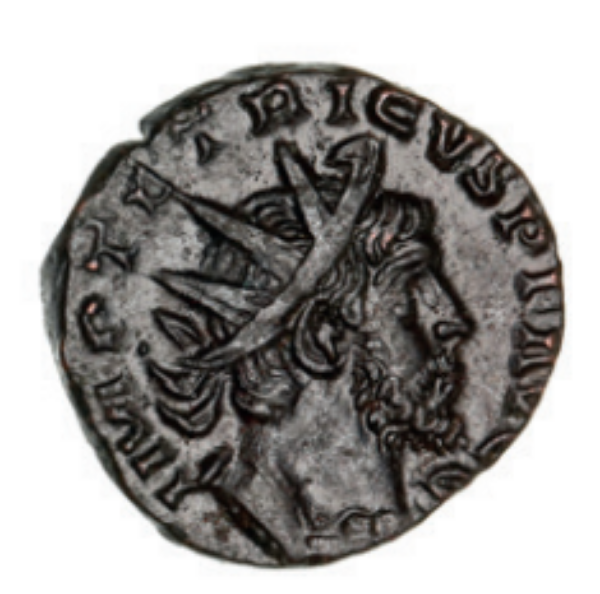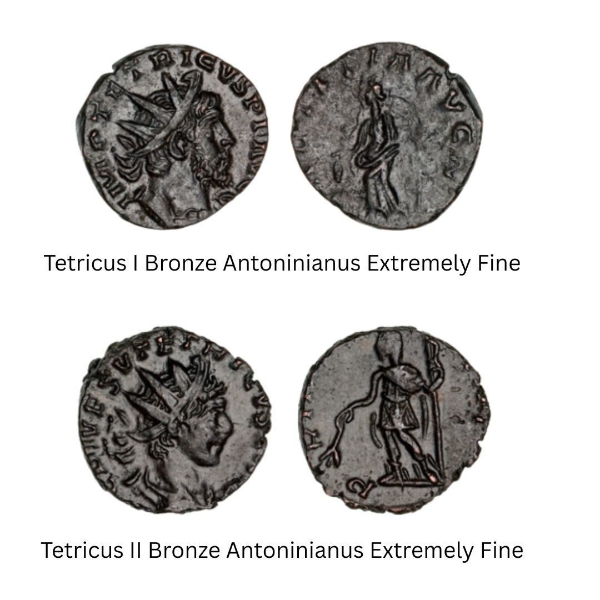
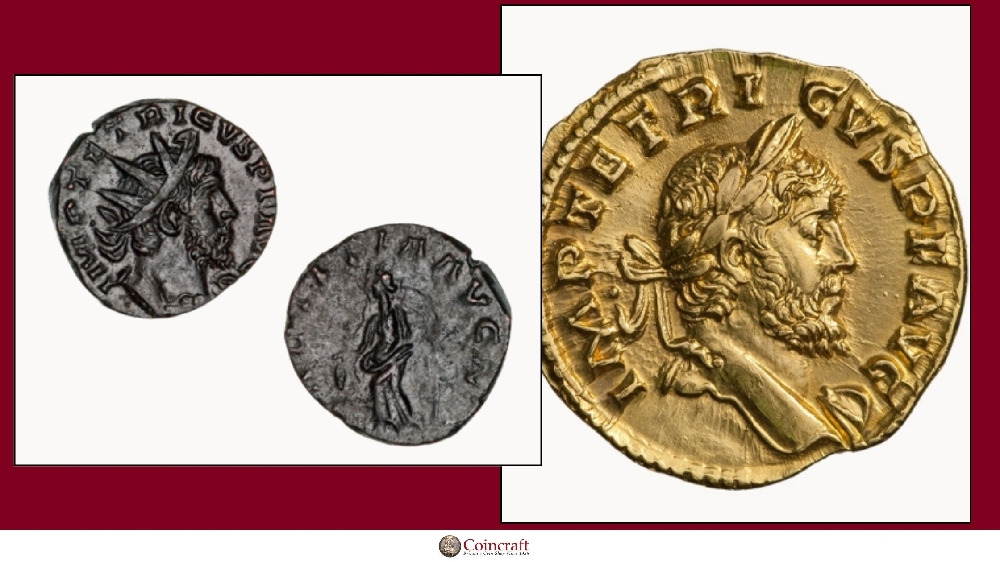
Picture Source of Tetricus I: Wikipedia
Tetricus I: The Gallic Emperor Who Lived to Tell the Tale
The 3rd century AD was a period of unprecedented crisis for the Roman Empire. Historians often define this era by its revolving door of "barracks emperors"—men elevated by the military only to be swiftly assassinated when the political winds shifted. Amidst this backdrop of constant civil war, economic collapse, and external invasions, a breakaway state known as the Gallic Empire emerged in the west. Today, we are exploring the remarkable life of Tetricus I, the final emperor of this splinter state. Unlike so many of his contemporaries who met violent ends, Tetricus navigated the treachery of his time and achieved something truly extraordinary: he survived.
Key Takeaways
The Last Gallic Emperor: Tetricus I ruled the Gallic Empire (which included Gaul and Britain) from 271 to 274 AD.
A Strategic Surrender: Facing a mutinous army and the unstoppable Roman Emperor Aurelian, Tetricus surrendered at the Battle of Châlons to save his own life.
A Rare Retirement: Instead of being executed after his defeat, he was pardoned by Aurelian and lived out his days peacefully as a high-ranking Roman official in Italy.
The Reluctant Ruler of a Splintered Empire
To understand Tetricus, we have to understand the world he was handed. By 271 AD, the Roman Empire was fractured. A massive chunk of the western provinces had broken off to form the "Gallic Empire." When the Gallic Emperor Victorinus was assassinated by one of his own officers, the throne was suddenly empty.
Enter Gaius Pius Esuvius Tetricus. He wasn't a bloodthirsty general; he was a provincial governor in Aquitania (modern-day southwestern France) with noble roots and administrative experience. He was actually elevated to the throne through the political maneuvering of Victorinus's mother, Victoria, who paid off the army to secure his position[1]. Tetricus didn't seize power—it was effectively dropped into his lap.
A Crown Heavy with Trouble
If Tetricus thought being emperor was going to be glamorous, he was quickly disappointed. He set up his capital in Trier and immediately had to deal with waves of Germanic tribes crossing the Rhine to raid his territories.
While he successfully repelled some of these invasions, his real problems were internal. The Gallic Empire was shrinking. Spain had already rejoined the central Roman Empire, and his own troops were incredibly restless. In 273 AD, he elevated his son, Tetricus II, to the rank of Caesar to try and establish a stable dynasty, but the military wasn't impressed. By late 273 AD, a usurper named Faustinus initiated a rebellion against him right inside his own capital[2]. Tetricus was trapped between an angry, mutinous army and an even bigger threat looming on the horizon.
The Showdown with Aurelian
That looming threat was Aurelian, the legitimate Roman Emperor. Aurelian was a military powerhouse who had just finished conquering the breakaway Palmyrene Empire in the east. Now, his sights were set on the west. He wanted the Roman Empire whole again.
In 274 AD, Aurelian marched his legions into Gaul. Tetricus led his army to meet him at the Battle of Châlons. But here is where the story takes a legendary twist. Tetricus, terrified of his own rebellious troops and knowing he couldn't beat Aurelian's battle-hardened veterans, allegedly struck a secret deal. According to ancient historians, Tetricus quoted the poet Virgil in a letter to Aurelian, writing: "Eripe me his, invicte, malis" (Rescue me, O invincible one, from these troubles)[3].
When the battle began, Tetricus and his son quietly abandoned their troops and surrendered to Aurelian. Left without their leader, the Gallic army was completely crushed.
A Rare Happy Ending
If you surrender to a conquering emperor in the ancient world, you usually lose your head. But Aurelian was a pragmatist. To celebrate his reunification of the empire, Aurelian held a massive triumph in Rome. Tetricus and his son were paraded through the streets as captives, wearing lavish Gallic trousers and purple cloaks.
But once the parade was over, Aurelian surprised everyone. He pardoned Tetricus. Recognizing his administrative skills and appreciating his bloodless surrender, Aurelian appointed him as the corrector (governor) of Lucania, a pleasant region in southern Italy[1]. Tetricus I lived out the rest of his life in wealth, comfort, and peace, dying of old age. In the bloody, chaotic landscape of the 3rd Century, Tetricus pulled off the ultimate victory: he survived.
Frequently Asked Questions (FAQs)
Did Tetricus I betray his own army? Historically, yes. Most ancient sources agree that he actively defected to Aurelian before or during the Battle of Châlons because he feared assassination by his own mutinous troops more than he feared Aurelian.
Who was Tetricus II? Tetricus II was the son of Tetricus I. He was appointed Caesar (junior emperor) by his father to establish a dynasty. Like his father, he survived the surrender to Aurelian and went on to enjoy a successful senatorial career in Rome.
What happened to the Gallic Empire after Tetricus? Following the Battle of Châlons and Tetricus's surrender, the Gallic Empire was officially dissolved. Gaul and Britain were reincorporated into the central Roman Empire, completing Aurelian's goal of restoring the Roman borders.
References
Southern, P., 2001. The Roman Empire from Severus to Constantine. London: Routledge.
Watson, A., 1999. Aurelian and the Third Century. London: Routledge.
Drinkwater, J.F., 1987. The Gallic Empire: Separatism and continuity in the north-western provinces of the Roman Empire, A.D. 260-274. Stuttgart: Franz Steiner Verlag.