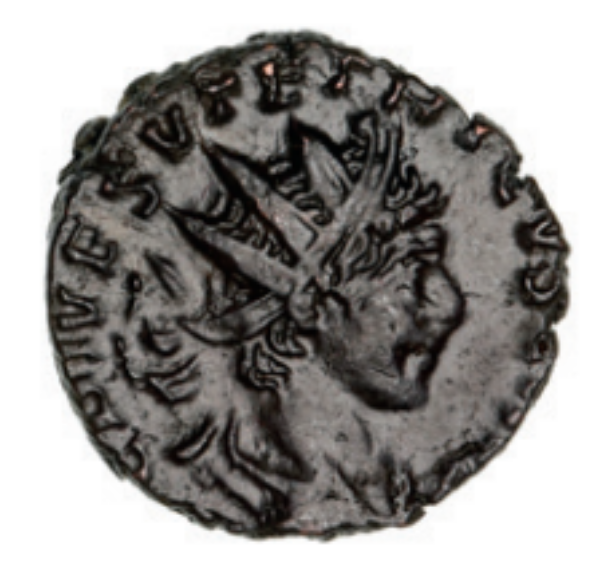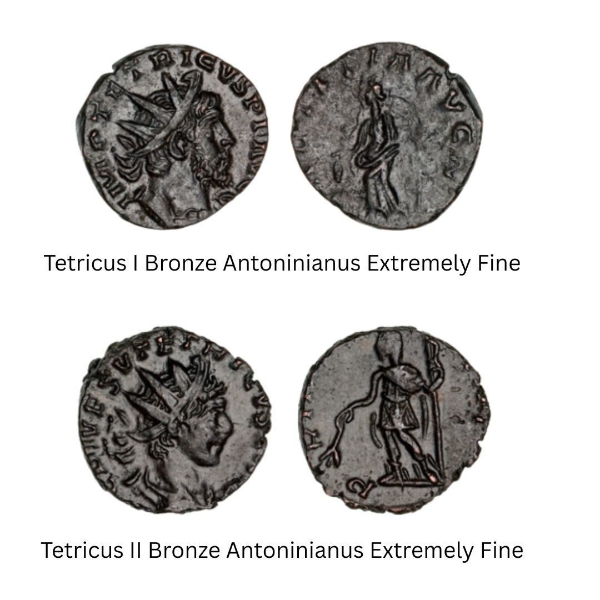
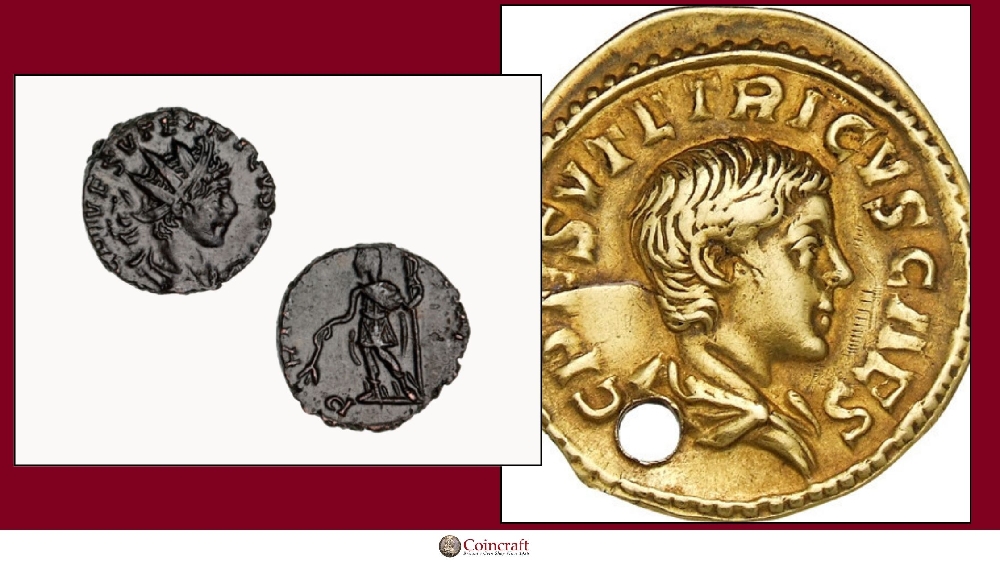
Picture Source of Tetricus II: Wikipedia
Tetricus II: A Prince Among Rebels
The story of the Roman Empire is often a saga of bloody ends and tragic downfalls, but every so often, history throws us a curveball. Enter Gaius Pius Esuvius Tetricus, better known as Tetricus II. While his father, Tetricus I, was the last "emperor" of the breakaway Gallic Empire, the younger Tetricus is a rare example of a Roman royal who stared down a conquering Emperor and lived to tell the tale—eventually retiring to a life of luxury rather than meeting the edge of a sword.
Key Takeaways
Heir to a Breakaway State: Tetricus II was the son and heir of Tetricus I, the final ruler of the Gallic Empire (a separatist state covering Gaul, Britannia, and Hispania).
Elevated Young: He was named "Caesar" in 273 AD to solidify his father's dynasty during a time of extreme political instability[1].
Surrender at Châlons: After the Gallic forces were defeated by Emperor Aurelian in 274 AD, Tetricus II and his father famously surrendered.
A Rare Pardon: Unlike many usurpers, Tetricus II was pardoned by Aurelian, allowed to march in a triumph, and later held high-ranking senatorial positions in Rome[2].
The Making of a Caesar
Tetricus II was born into a world of chaos. By the mid-3rd century, the Roman Empire had split into three pieces. His father, a high-ranking governor, was proclaimed emperor of the Gallic fragment in 271 AD following the murder of the previous ruler, Victorinus[3].
As the "Crisis of the Third Century" raged on, Tetricus I knew he needed to establish a clear line of succession. In 273 AD, he elevated his son to the rank of Caesar. This wasn't just a fancy title; it was a signal to the legions that the Esuvii family was here to stay. Coins from this era depict a young, youthful Tetricus II, often with the title Princeps Iuventutis (Prince of Youth), symbolizing the hope for a stable future for the Gallic provinces[4].
The Fall of the Gallic Empire
The dream of a separate Gallic state didn't last long. The legitimate Roman Emperor, Aurelian, was on a mission to "Restore the World" (Restitutor Orbis). After defeating the Palmyrene Empire in the East, he turned his sights West.
In 274 AD, the Roman and Gallic armies met at the Battle of Châlons. Legend has it that Tetricus I and II, tired of the constant mutinies from their own soldiers, actually conspired with Aurelian to surrender. Some accounts suggest the father and son fled the battlefield early, leaving their troops to be slaughtered so they could secure their own safety[5].
Life After the Crown
What happened next is one of the most interesting "happy endings" in Roman history. Usually, a defeated usurper was executed immediately. Instead, Aurelian led the Tetrici in his grand triumphal procession through Rome. While they were technically prisoners, they weren't treated like criminals for long.
Aurelian, impressed by their willingness to end the civil war, pardoned them both. While his father was made a governor in southern Italy, Tetricus II was allowed to keep his senatorial rank. He went on to have a distinguished career in Rome, proving that sometimes, surrendering is the smartest move a politician can make[6].
FAQs
Was Tetricus II ever a full Emperor? While he was Caesar (heir apparent) and may have been briefly promoted to "Augustus" (co-emperor) in the final months of 274 AD, history generally remembers him as the Caesar of the Gallic Empire.
What happened to his family? The Esuvii family remained wealthy and influential. History suggests Tetricus II lived a long life as a respected senator, and his family home on the Caelian Hill in Rome was still standing generations later[7].
Why did Aurelian spare him? Aurelian was known for his pragmatism. By sparing the Tetrici, he encouraged other rebels to surrender peacefully, helping to stabilize the reunited empire without further bloodshed.
References
Polfer, M. (2000). Tetricus II (Caesar 273-274 AD). De Imperatoribus Romanis.
British Museum. (n.d.). Tetricus II: Details. British Museum Collection.
Wikipedia. (2024). Tetricus I. Wikipedia - Tetricus I.
Romanorum. (n.d.). Tetricus II - Roman Biography. Romanorum Coinage.
Livius.org. (2020). Tetricus. Livius.org - Tetricus History.
Markowitz, M. (2024). Breakaway Empire: Coins of the Gallic Emperors. CoinWeek.
Historia Augusta. (n.d.). The Life of Aurelian. LacusCurtius Translation.