Articles
Sort by
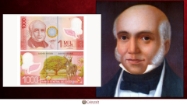
Costa Rica colones Honouring Braulio Carrillo Colina (1800-1845) -Monday, 13 July 2026
Braulio Evaristo Carrillo Colina remains one of the most polarizing yet foundational figures in Costa Rican history. Serving as Head of State during two critical periods—first from 1835 to 1837, and later as a de facto dictator from 1838 to 1842—Carrillo is widely revered as the "Architect of the Costa Rican National State" (Arquitecto del Estado Costarricense) (Obregón, 1989). next...
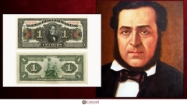
Costa Rica 1 colon dedicated to Juan Rafael Mora Porras (1814 – 1860) -Wednesday, 08 July 2026
Juan Rafael Mora Porras, affectionately remembered by generations of Costa Ricans as "Don Juanito," stands as one of the most transformative and polarizing figures in nineteenth-century Central American history. Serving as the second President of the Republic of Costa Rica from 1849 to 1859, his tenure was defined by aggressive economic modernization, structural infrastructure overhauls, and, most famously, his absolute military defiance against foreign expansionism during the Filibuster War. next...
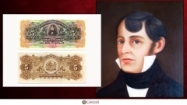
Costa Rica 5 colones Featuring Juan Mora Fernández (1784 – 1854) -Tuesday, 07 July 2026
The history of Costa Rica’s transition from an isolated, impoverished Spanish colonial province into a stable, progressive democracy is closely tied to the leadership of its first elected Head of State (Jefe de Estado), Juan Mora Fernández. Governing from 1824 to 1833, Mora Fernández did not just rule; he built the institutional framework of a fledgling state during an era when the rest of Central America was collapsing into chronic civil war and military dictatorship [1]. next...
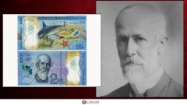
Costa Rica Coloneds Featuring Mauro Fernandez Acuna (1843 – 1905) -Monday, 06 July 2026
Mauro Fernández Acuña (1843–1905) stands as one of the most transformative figures in the history of Costa Rica. Remembered primarily as a brilliant lawyer, astute politician, and visionary educator, his legacy is deeply woven into the fabric of the nation's democratic and intellectual identity. As the mastermind behind the 1886 General Law of Common Education (Ley General de Educación Común), Fernández Acuña revolutionized the Costa Rican educational system, transitioning it from a localized, underfunded, and traditional structure into a modern, centralized, and secular framework. His belief that the strength of a republic lies in the education of its citizens fundamentally altered the developmental trajectory of Costa Rica, differentiating it from many of its Central American neighbors. next...
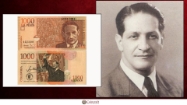
Colombian Pesos Featuring Jorge Eliécer Gaitán (1903 – 1948) -Thursday, 02 July 2026
On 9 April 1948, three gunshots fired on a bustling street in downtown Bogotá altered the course of South American history forever. The victim was Jorge Eliécer Gaitán, a charismatic lawyer, politician, and the undisputed leader of Colombia’s Liberal Party. Widely expected to win the upcoming presidential election, Gaitán was more than a mere candidate; he was a secular saint to the country’s marginalized working classes and rural peasantry. next...
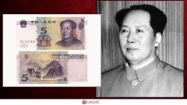
Chinese Yuan Honouring Mao Zedong (1893 - 1976) -Wednesday, 01 July 2026
Mao Zedong remains one of the most monumental and polarising figures of the twentieth century. As the chief architect of the Chinese Communist Revolution and the founding father of the People's Republic of China (PRC), his political ideology, military strategies, and radical socio-economic experiments fundamentally reshaped the course of Chinese history. From his humble beginnings as a peasant’s son in Hunan province to his absolute consolidation of power in Beijing, Mao's legacy is deeply woven into the fabric of modern East Asia. next...
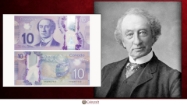
Canada Dollars Honouring Sir John A. Macdonald (1815-1891) -Wednesday, 24 June 2026
Sir John Alexander Macdonald was the dominant political figure of 19th-century Canada and the nation’s first prime minister. Serving from 1867 to 1873 and again from 1878 until his death in 1891, Macdonald spent nearly half a century in public office. He was the primary architect of Canadian Confederation, overseeing the expansion of Canada from a small group of British colonies into a vast, transcontinental federation spanning from the Atlantic to the Pacific. next...
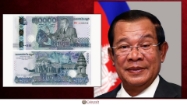
Cambodian Riels Featuring Techo Hun Sen (1952 - ) -Friday, 19 June 2026
Techo Hun Sen (born 1952) is a towering and highly polarizing figure in modern Southeast Asian history. Serving as the Prime Minister of Cambodia from 1985 to 2023, he was one of the longest-serving heads of government in the world [1]. Throughout his nearly four decades in power, Hun Sen oversaw Cambodia’s transition from the ashes of the Khmer Rouge genocide and civil war to a period of rapid economic growth and regional integration. However, his tenure was equally defined by the systematic dismantling of democratic institutions, the suppression of political opposition, and the consolidation of an authoritarian regime backed by the Cambodian People’s Party (CPP) [2]. next...
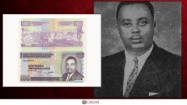
Burundi Francs Prince Louis Rwagasore (1932 - 1961) -Thursday, 18 June 2026
If you examine the obverse of the modern Burundi 100 Francs banknote, you are greeted by the calm, dignified portrait of a man in a sharp suit and tie. To a casual observer, he might look like a standard mid-century politician. But this is Prince Louis Rwagasore, the crown prince of Burundi, a fierce anti-colonial revolutionary, and the founding father of his nation. next...
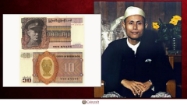
Burma Kyats Honouring Aun Sang (1915 -1947) -Wednesday, 17 June 2026
In the turbulent history of 20th-century Southeast Asia, few figures loom as large or cast as enduring a shadow as General Aung San. Revered affectionately as Bogyoke (Major General) by the people of Myanmar (formerly Burma), Aung San is widely considered the undisputed "Father of the Nation" [1]. In a tragically brief life that ended at the age of 32, he transitioned from a radical student activist to a revolutionary military commander, and finally to a brilliant statesman who successfully negotiated his country's freedom from British colonial rule [2]. next...
- 1
- 2
Get in touch icon icon

- icon
45 Great Russell St, London WC1B 3JL
- icon
