 - WBU2035.jpg)
Picture Source of Aun Sang: Wikipedia
Aung San: The Architect of Modern Burma and the Tragic Price of Independence
In the turbulent history of 20th-century Southeast Asia, few figures loom as large or cast as enduring a shadow as General Aung San. Revered affectionately as Bogyoke (Major General) by the people of Myanmar (formerly Burma), Aung San is widely considered the undisputed "Father of the Nation" [1]. In a tragically brief life that ended at the age of 32, he transitioned from a radical student activist to a revolutionary military commander, and finally to a brilliant statesman who successfully negotiated his country's freedom from British colonial rule [2].
Aung San’s legacy is defined by his intense pragmatism, shifting alliances during World War II to secure Burmese sovereignty, and his unparalleled ability to unite Burma's fractured ethnic minorities. Though he was assassinated mere months before witnessing the dawn of the independence he secured, his political vision remains the fundamental benchmark for democratic and unified governance in Myanmar today [3].
Key Facts
Birth and Death: Born February 13, 1915, in Natmauk, Magway Province, British Burma; Assassinated July 19, 1947, in Rangoon (Yangon).
Historical Titles: Bogyoke (Major General), Father of Modern Burma, Father of the Tatmadaw (Myanmar Armed Forces).
Major Organizations Founded: The Anti-Fascist People's Freedom League (AFPFL), the Burma Independence Army (BIA), and the Communist Party of Burma (CPB, though he later distanced himself).
Defining Achievement: Successfully negotiating the Aung San-Attlee Agreement (1947), which guaranteed Burma's independence from Britain, and the Panglong Agreement (1947), which united the frontier ethnic regions with the majority Bamar population.
Famous Lineage: He is the father of Aung San Suu Kyi, the Nobel Peace Prize laureate and globally recognized leader of Myanmar's modern democratic movement.
Key Takeaways
Radical Pragmatism over Ideology: Aung San was neither a strict communist nor a fascist, despite temporarily allying with both factions at different points in his life. His sole, unwavering ideology was the complete independence of Burma, and he allied with whoever could help him achieve that goal at the time [4].
The Importance of Unity: He recognized early on that a post-colonial Burma could not survive without the consent and cooperation of its diverse ethnic minorities (Shan, Kachin, Chin, Karen, etc.). The Panglong Agreement remains his greatest political masterstroke and a testament to his diplomatic skill.
A Vacuum of Leadership: His assassination in 1947 deprived Burma of the only leader possessing the charisma, military backing, and cross-cultural trust necessary to hold the newly independent nation together, directly contributing to the decades of civil war that followed his death [5].
Early Life and the Stirrings of Rebellion
Aung San was born Htein Lin in 1915 to a rural, middle-class family in Natmauk, located in the dry zone of central Burma [6]. His family had a strong anti-colonial pedigree; his great-uncle, Bo Min Yaung, had fought against the British annexation of Upper Burma in 1885 and was subsequently executed by colonial forces [7].
Aung San proved to be a brilliant, if introverted and highly intense, student. He entered Rangoon University in 1933, a hotbed of anti-colonial sentiment. He quickly immersed himself in student politics, becoming the editor of the Oway (Peacock's Call) student magazine and joining the Dobama Asiayone (We Burmans Association) [8]. Members of this nationalist group addressed each other as Thakin ("Master"), a deliberate subversion of the term the British demanded the Burmese use when addressing colonizers.
In 1936, Thakin Aung San, alongside a fellow student leader named U Nu (who would later become Burma's first Prime Minister), orchestrated a massive university strike that effectively paralyzed the colonial educational system and vaulted Aung San into the national spotlight as a rising star of the independence movement [9].
The Thirty Comrades and the Japanese Alliance
When World War II broke out in 1939, Aung San saw a strategic opportunity. Recognizing that British forces were tied down in Europe, he co-founded the Freedom Bloc to demand absolute independence in exchange for Burmese cooperation in the war effort. The British responded by issuing a warrant for his arrest [10].
In August 1940, Aung San fled Burma on a ship bound for China, hoping to solicit support from the Chinese Communist Party. Instead, he was intercepted in Amoy by Japanese intelligence agents [11]. The Japanese Empire, eager to cut off the British supply route to China (the Burma Road), offered Aung San military backing. Operating on the principle that "my enemy's enemy is my friend," Aung San accepted.
He secretly returned to Burma, recruited 29 other young revolutionaries, and smuggled them out to Japanese-occupied Hainan Island for rigorous, brutal military training [12]. This legendary group became known as the Thirty Comrades. They formed the nucleus of the Burma Independence Army (BIA). When Japan invaded Burma in 1941-1942, Aung San and the BIA marched alongside the Japanese forces, driving the British colonial administration out of the country [13].
The Turning Point: Resistance Against Fascism
The honeymoon with Imperial Japan was short-lived. The Japanese declared Burma a nominally independent state in 1943, appointing Aung San as Minister of War. However, it quickly became apparent to Aung San that Japanese "independence" was a facade; the Japanese military administration was far more brutal and economically exploitative than the British had been [14].
Displaying his characteristic pragmatism, Aung San secretly reached out to British intelligence and Lord Mountbatten, the Supreme Allied Commander in Southeast Asia [15]. He spent months secretly organizing an underground resistance, uniting various political factions, communists, and socialists into a powerful coalition known as the Anti-Fascist People’s Freedom League (AFPFL) [16].
On March 27, 1945, Aung San led the Burmese National Army in a spectacular mutiny against the Japanese, openly declaring war on fascist forces and fighting alongside the returning British [17]. This bold maneuver ensured that when the Allies recaptured Rangoon, Aung San was viewed not as a defeated Axis collaborator, but as an Allied military commander and the undisputed political leader of the Burmese people.
The Road to Independence and the Panglong Agreement
Following the end of WWII, the British returned to Burma with intentions to slowly transition the country to self-rule over several years. Aung San, leveraging the massive popular support of the AFPFL and the veiled threat of an armed uprising by his veteran soldiers, demanded immediate independence [18].
In January 1947, he traveled to London and negotiated the Aung San-Attlee Agreement with British Prime Minister Clement Attlee, which guaranteed Burma's independence within a year [19].
However, his greatest hurdle remained at home. The British had governed the ethnic minority border regions (the Frontier Areas) separately from central Burma. The leaders of the Shan, Kachin, and Chin peoples were hesitant to join a new state dominated by the Bamar majority [20]. Aung San traveled to the Shan States and, deploying immense personal charm, diplomatic guarantees of regional autonomy, and absolute sincerity, convinced the ethnic leaders to join the Union of Burma. The resulting Panglong Agreement, signed on February 12, 1947, is still celebrated today as Union Day in Myanmar [21]. It was the first and only time the diverse ethnic groups of Burma agreed to a unified political destiny.
Tragedy at the Secretariat: The Assassination
By the summer of 1947, Aung San had achieved the impossible. The AFPFL had won a landslide victory in the April elections, and he was actively drafting the constitution for the new, independent Union of Burma [22].
Tragically, he would never live to see the flag of independent Burma raised. On the morning of July 19, 1947, while Aung San was holding a meeting of the Executive Council at the Secretariat building in Rangoon, armed paramilitaries wearing military uniforms burst into the chamber. They opened fire with submachine guns, killing Aung San and six of his cabinet ministers, along with a bodyguard and a civil servant [23]. He was 32 years old.
The assassination was masterminded by U Saw, a pre-war conservative Prime Minister of Burma and a bitter political rival of Aung San, who believed that by wiping out the transitional government, the British would hand power over to him. Instead, U Saw was arrested, tried, and executed by hanging [24].
An Enduring Legacy
Burma officially gained its independence on January 4, 1948. However, the loss of Aung San created a massive leadership vacuum. Without his unifying presence and the trust he had cultivated with ethnic minorities, the Panglong Agreement quickly unraveled. Within a year of independence, Burma plunged into a multi-front civil war that continues in various forms to this day [25].
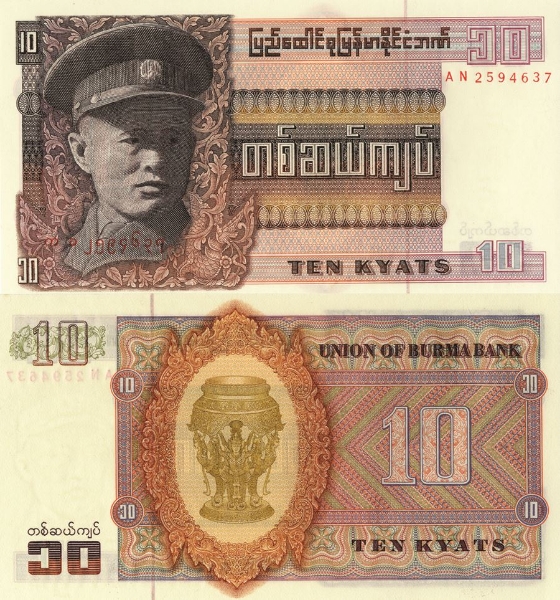
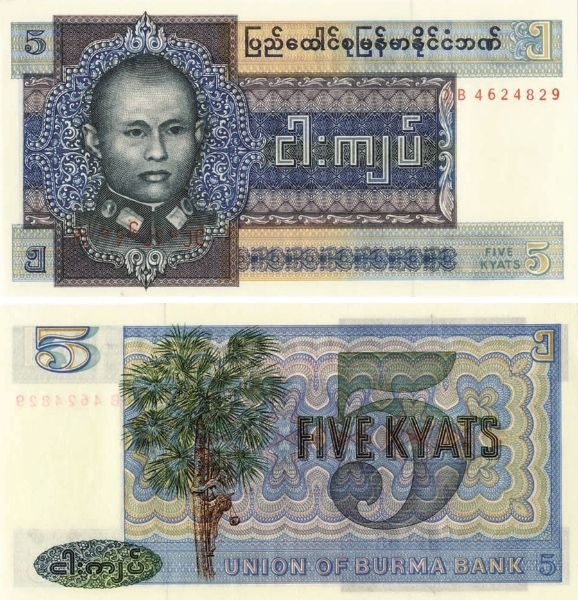
Today, Aung San is venerated with almost religious fervor in Myanmar. His image is ubiquitous on currency, in homes, and in public squares. July 19 is mourned annually as Martyrs' Day. Furthermore, his legacy was carried forward by his daughter, Aung San Suu Kyi, who was only two years old when he was killed. She would go on to lead the National League for Democracy, spending 15 years under house arrest while fighting the military junta to restore the democratic ideals her father died trying to establish [26].
Aung San remains the ultimate symbol of what Myanmar could be—a unified, independent, and democratic federation.
Frequently Asked Questions (FAQs)
Q: Did Aung San fight for or against the British during World War II? A: He fought against them and with them. From 1941 to 1944, he allied with Imperial Japan to drive the British out of Burma. However, realizing the Japanese had no intention of granting true independence, he switched sides in March 1945 and fought alongside the British Allies to expel the Japanese forces.
Q: Who killed Aung San and why? A: He was assassinated on the orders of U Saw, a rival Burmese politician and former pre-war Prime Minister. U Saw was jealous of Aung San's immense popularity and believed that by assassinating the Executive Council, he could step into the power vacuum and rule the newly independent country. U Saw was caught and executed for the crime.
Q: What is the Panglong Agreement? A: Signed in February 1947, it was a crucial treaty negotiated by Aung San between the majority Bamar government and the ethnic minority leaders (Shan, Kachin, and Chin). It guaranteed these minority regions full autonomy in internal administration in exchange for joining the Union of Burma. It remains the foundational document for the concept of a federal, unified Myanmar.
Q: How is Aung San related to Aung San Suu Kyi? A: Aung San is the father of Aung San Suu Kyi. She was born in 1945 and was just two years old when her father was assassinated. She later became the face of Myanmar's pro-democracy movement in the late 20th and early 21st centuries.
References
[1] Silverstein, J. (1993). The Political Legacy of Aung San. Cornell University Southeast Asia Program.
[2] Naw, A. (2001). Aung San and the Struggle for Burmese Independence. Silkworm Books.
[3] Thant Myint-U. (2006). The River of Lost Footsteps: Histories of Burma. Farrar, Straus and Giroux.
[4] Lintner, B. (1990). Outrage: Burma's Struggle for Democracy. Review Publishing Company.
[5] Smith, M. (1991). Burma: Insurgency and the Politics of Ethnicity. Zed Books.
[6] Maung Maung. (1962). Aung San of Burma. Yale University Press.
[7] Naw, A. (2001). Aung San and the Struggle for Burmese Independence.
[8] Seekins, D. M. (2006). Historical Dictionary of Burma (Myanmar). Scarecrow Press.
[9] Cady, J. F. (1958). A History of Modern Burma. Cornell University Press.
[10] Lintner, B. (1990). Outrage: Burma's Struggle for Democracy.
[11] Yoon, W. Z. (1973). Japan's Scheme for the Liberation of Burma: The Role of the Minami Kikan and the "Thirty Comrades". Ohio University Center for International Studies.
[12] Ibid.
[13] Callahan, M. P. (2003). Making Enemies: War and State Building in Burma. Cornell University Press.
[14] Silverstein, J. (1993). The Political Legacy of Aung San.
[15] Mountbatten, L. (1951). Report to the Combined Chiefs of Staff by the Supreme Allied Commander, South-East Asia, 1943-1945. HMSO.
[16] Maung Maung. (1962). Aung San of Burma.
[17] Thant Myint-U. (2006). The River of Lost Footsteps.
[18] Tinker, H. (1983). Burma: The Struggle for Independence, 1944–1948. HMSO.
[19] Appadorai, A. (1981). The Domestic Roots of India's Foreign Policy, 1947-1972. Oxford University Press.
[20] Walton, M. J. (2008). Ethnicity, Conflict, and History in Burma: The Myths of Panglong. Asian Survey, 48(6), 889-910.
[21] Ibid.
[22] Cady, J. F. (1958). A History of Modern Burma.
[23] Kyaw Zaw, B. (2007). From the Commandant's Desk.
[24] Maung Maung. (1962). Aung San of Burma.
[25] Smith, M. (1991). Burma: Insurgency and the Politics of Ethnicity.
[26] Aung San Suu Kyi. (1991). Freedom from Fear. Penguin Books.