 - WCO0584.jpg)
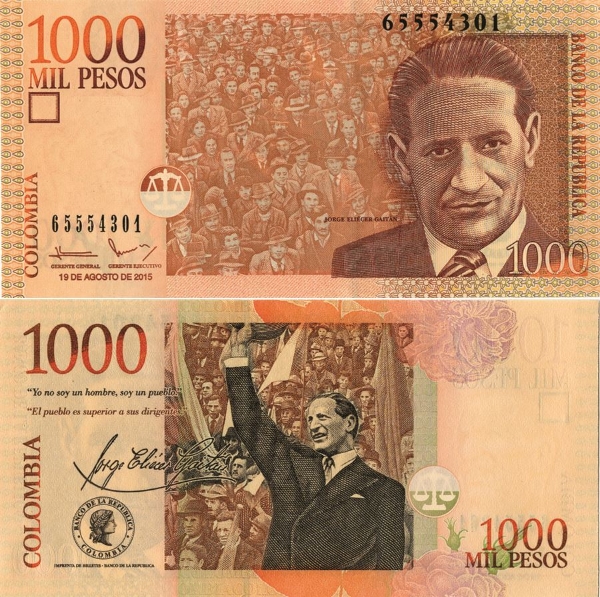
Picture Source of Jorge Eliécer Gaitán (1903 – 1948): Wikipedia
Jorge Eliécer Gaitán: The Voice of the Colombian Masses
On 9 April 1948, three gunshots fired on a bustling street in downtown Bogotá altered the course of South American history forever. The victim was Jorge Eliécer Gaitán, a charismatic lawyer, politician, and the undisputed leader of Colombia’s Liberal Party. Widely expected to win the upcoming presidential election, Gaitán was more than a mere candidate; he was a secular saint to the country’s marginalized working classes and rural peasantry.
His assassination did not just terminate a promising political career; it shattered a collective national hope. Within hours of his death, Colombia’s capital erupted into a cataclysmic wave of riots, looting, and arson known as the Bogotazo, which left parts of the city in smoking ruins. The violence of that day acted as the primary catalyst for La Violencia, a decade-long partisan civil war that claimed over 200,000 lives and laid the structural foundation for Colombia's modern armed conflict. This article explores Gaitán's humble origins, his crusade against the political "oligarchy," the tragedy of his death, and his enduring legacy.
Key Facts
Feature / Metric | Details |
|---|---|
Full Name | Jorge Eliécer Gaitán Ayala |
Born | 23 January 1898 (or 1903, due to conflicting birth records), Bogotá, Colombia |
Died | 9 April 1948 (Assassinated in Bogotá, aged 45 or 50) |
Political Alignment | Colombian Liberal Party (Left-wing); briefly founded UNIR (National Leftist Revolutionary Union) |
Primary Roles | Mayor of Bogotá (1936–1937), Minister of Education (1940), Minister of Labour (1943–1944), Leader of the Liberal Party (1947–1948) |
Famous Quote | "Yo no soy un hombre, soy un pueblo." ("I am not a man, I am a people.") |
Triggered Event | The Bogotazo (9 April 1948 riots) and La Violencia (1948–1958) |
Current Currency Portrait | Featured on the historical 1,000 Colombian Peso banknote |
Key Takeaways
The Voice of the Outcasts: Gaitán transformed Colombian politics by shifting the national discourse away from traditional, abstract sectarian rivalries and focusing instead on deep-seated class inequality, agrarian reform, and labour rights.
The Banana Massacre Investigator: He rose to national prominence in 1929 after conducting a courageous, relentless congressional investigation into the Santa Marta Banana Massacre, exposing the collusion between the American multinational United Fruit Company and the Colombian military.
Champion of the "National Country": Gaitán famously divided Colombia into two distinct entities: the "political country" (the elite oligarchs of both the Liberal and Conservative parties who hoarded power) and the "national country" (the exploited working class who deserved structural economic franchise).
The Spark of Modern Conflict: His murder is widely regarded as the ultimate "turning point" in twentieth-century Colombian history. It permanently closed the avenue for peaceful, progressive electoral reform, directly prompting the rise of rural peasant self-defence groups that eventually coalesced into modern guerrilla movements.
Early Life and Academic Foundations
Jorge Eliécer Gaitán was born in Bogotá to parents who maintained a precarious, tenuous foothold in the lower middle class (Sharpless, 1978). His father, Eliécer Gaitán, was a history teacher and second-hand bookseller, while his mother, Manuela Ayala, was a progressive schoolteacher. Though raised in Las Cruces, a modest, working-class neighbourhood of the capital, Gaitán was exposed to poverty, social stratification, and the daily struggles of Bogotá's poorest residents from an early age.
Despite his family's financial hardships, Gaitán's parents fiercely prioritized his education. He proved to be an academically brilliant yet rebellious student who frequently clashed with orthodox religious and school authorities over their strict, elitist disciplines (Sharpless, 1978).
Against his father's initial wishes, Gaitán enrolled at the National University of Colombia in Bogotá to study law. In 1924, he graduated after presenting a highly controversial and progressive graduation thesis entitled Las ideas socialistas en Colombia ("Socialist Ideas in Colombia"). Rather than adopting traditional legal conservatism, Gaitán argued that the state had a moral and legal obligation to actively intervene in the economy to protect workers and redistribute wealth (Gaitán, 1924).
Determined to master penal law, Gaitán travelled to Italy to pursue post-graduate studies at the Royal University of Rome under the tutelage of Enrico Ferri, a world-renowned criminologist and socialist theorist (Colombia Reports, 2018). It was during his time in Rome that Gaitán observed the rise of European political movements. He was deeply fascinated by crowd psychology, mass mobilization, and the theatrical, highly physical oratory techniques used to captivate large publics. Gaitán took these lessons back to South America, refining a unique, thunderous oratorical style characterized by sharp hand gestures, dramatic pauses, and a guttural, passionate delivery that resonated deeply with the illiterate and working-class masses.
The Banana Massacre: Champion of the Peasantry
Upon returning to Colombia in 1928, Gaitán established a highly successful law practice and was quickly elected to the House of Representatives. That same year, a major labour dispute erupted in the coastal region of Ciénaga, near Santa Marta. Thousands of Colombian workers employed on the vast plantations of the American-owned United Fruit Company went on strike, demanding basic human rights: sanitary housing, medical care, and payment in cash rather than company scrip.
Fearing that the strike would disrupt American trade interests, the Conservative Colombian government deployed military forces under the command of General Cortés Vargas. On 6 December 1928, the military opened fire on a dense, peaceful assembly of striking workers and their families gathered in the town square. The death toll was heavily suppressed by officials, but local accounts estimated that hundreds, if not thousands, of workers were slaughtered (Sater, 2007).
                      THE 1928 BANANA MASSACRE SPIRAL
┌────────────────────────────────────────────────────────────────────────┐
│  1. DEMAND: United Fruit Company workers strike for cash & healthcare. │
├────────────────────────────────────────────────────────────────────────┤
│  2. REPRESSION: Government deploys army; troops slaughter strikers.    │
├────────────────────────────────────────────────────────────────────────┤
│  3. EXPOSURE: Gaitán launches an independent congressional probe.     │
├────────────────────────────────────────────────────────────────────────┤
│  4. RISE: Public outrage over the cover-up propels Gaitán to fame.    │
└────────────────────────────────────────────────────────────────────────┘
In 1929, Gaitán travelled to the banana zone to conduct an independent, dangerous investigation. Returning to Congress, he delivered a series of devastating, high-profile speeches that lasted for over a week. Armed with physical evidence, including the skeletal remains of victims and military telegrams, he exposed how the state military had functioned as a private mercenary force for a foreign multinational corporation.
His speeches shook the country, permanently undermining the legitimacy of the ruling Conservative regime and catapulting Gaitán into the national spotlight as the supreme defender of Colombian sovereignty and worker dignity (Colombia Reports, 2018).
"I Am Not a Man, I Am a People"
As his popularity surged, Gaitán grew increasingly frustrated by the rigid, closed nature of Colombia's two-party system. In 1933, believing that both the Conservative and Liberal leadership were mere factions of a singular, self-serving oligarchy, he broke from the Liberal Party to form his own dissident political movement: the Unión Nacional Izquierdista Revolucionaria (UNIR). UNIR championed agrarian cooperatives, secular education, and state-backed social security.
However, after experiencing political violence and recognizing that the electoral machinery was entirely monopolized by the traditional parties, Gaitán returned to the Liberal Party in 1935, intending to reform it from the inside out (Sharpless, 1978).
Throughout the late 1930s and early 1940s, Gaitán served in several high-profile public roles:
Mayor of Bogotá (1936–1937): He implemented progressive urban reforms, including paving roads, establishing municipal dining halls, and attempting to professionalize public services, though his initiatives frequently ran into fierce resistance from the wealthy elites.
Minister of Education (1940): He launched a nationwide literacy campaign, established school lunch programmes for impoverished children, and distributed free shoes to students.
Minister of Labour (1943–1944): He codified basic union protections, standardized minimum wage regulations, and legally recognized the right to collective bargaining.
Gaitán's political philosophy was beautifully simple and intensely polarizing. He bypassed traditional sectarian slogans, arguing that the real division in Colombia was not between rank-and-file Liberals and Conservatives, but between the wealthy oligarchy (the "political country") and the exploited masses (the "national country") (Encyclopedia.com, 2026). His rallies drew hundreds of thousands of disciplined, silent, or roaring crowds to Bogotá's Plaza de Bolívar. He would look over the massive assembly and shout, "I am not a man, I am a people!" and the crowd would respond in unison, "We are Gaitán!"
The 1946 Election and the Path to 1950
By 1945, Gaitán's populist crusade had made him a terrifying figure to the traditional elites of both parties. When the Liberal Party hierarchy refused to support his presidential candidacy for the 1946 election, choosing instead the moderate oligarch Gabriel Turbay, Gaitán ran as an independent, populist Liberal.
This division proved fatal for the Liberals. The split vote allowed the Conservative Party candidate, Mariano Ospina Pérez, to win the presidency with a minority of the popular vote (Sater, 2007).
                       THE 1946 PRESIDENTIAL SPLIT
┌────────────────────────────────────────────────────────────────────────┐
│  Mariano Ospina Pérez (Conservative Winner)   ──> 40% of the vote      │
├────────────────────────────────────────────────────────────────────────┤
│  Gabriel Turbay (Official Liberal Candidate) ──> 32% of the vote      │
├────────────────────────────────────────────────────────────────────────┤
│  Jorge Eliécer Gaitán (Populist Independent) ──> 27% of the vote      │
└────────────────────────────────────────────────────────────────────────┘
Despite the electoral loss, Gaitán's political position was fundamentally strengthened. He had proven his immense voter draw, and following Turbay's subsequent death, Gaitán was officially recognized as the absolute leader of the Liberal Party. When the Liberals won a resounding victory in the March 1947 congressional elections under his guidance, it became an undisputed political consensus that Gaitán would easily capture the presidency in the next election, scheduled for 1950 (Encyclopedia.com, 2026).
9 April 1948: The Assassination and El Bogotazo
As the prospect of a Gaitán presidency loomed, political tensions in the Colombian countryside escalated rapidly. Local Conservative authorities, fearing a loss of patronage and power, began a campaign of systematic violence against Liberal peasants. In response, Gaitán organized the legendary March of Silence (Marcha del Silencio) in February 1948, where over 100,000 people marched through Bogotá in absolute, haunting silence, carrying black flags to protest the rural violence.
Two months later, Bogotá hosted the Ninth International Conference of American States—a high-profile diplomatic summit attended by US Secretary of State George Marshall to establish the Organization of American States (OAS).
On Friday, 9 April 1948, at approximately 1:05 PM, Gaitán stepped out of his law office in downtown Bogotá to go for lunch with a group of close friends. As he walked toward the street, a young, solitary drifter named Juan Roa Sierra stepped forward and fired three shots from a revolver. Gaitán was struck in the head and chest, collapsing onto the pavement (Braun, 1985). He was rushed to the nearby Central Clinic, where he died shortly after.
The reaction of the public was instantaneous and terrifying. An enraged, heartbroken mob cornered Roa Sierra at a nearby drugstore, beat him to death, and dragged his stripped, mutilated corpse to the gates of the Presidential Palace (Casa de Nariño).
Within minutes, radio stations sympathetic to Gaitán took over the airwaves, calling for an immediate popular revolution against the Conservative government. Bogotá exploded into a state of absolute anarchy known as the Bogotazo (Alape, 1987). Angry mobs looted hardware stores, armed themselves, and set fire to historical buildings, churches, and government offices. Over the next forty-eight hours, the capital burned. The military was ordered to restore order, resulting in intense street battles. Similar riots erupted in major cities across the country, including Medellín, Cali, and Barranquilla. By the time the fires were finally extinguished, an estimated 3,000 to 5,000 Colombians lay dead, and the historic centre of Bogotá was structurally decimated (Garcia Marquez, 2002).
Legacy and the Spark of La Violencia
The death of Jorge Eliécer Gaitán closed a vital chapter in Colombian history. For the working class, his murder confirmed that the ruling oligarchy would never allow a peaceful, democratic transition of power that favored the poor (Gallego, 2018).
The immediate consequence of his death was La Violencia (1948–1958)—a decade of intense, rural, partisan warfare between Liberal and Conservative militias that tore the Colombian countryside apart. To survive the military and Conservative repressions, many Liberal peasants fled deep into the eastern plains (Llanos) and southern Andes, forming armed self-defence enclaves.
By 1964, marginalized by the traditional political elites who subsequently formed a power-sharing coalition (the National Front) that excluded third-party voices, these self-defence groups aligned themselves with Marxist-Leninist ideologies. Led by Manuel Marulanda, they formed the Revolutionary Armed Forces of Colombia (FARC), launching a civil conflict that would endure for over half a century (Gallego, 2018).
Today, Gaitán's memory remains preserved in the daily life of Colombia. His face graced the country’s red 1,000-peso banknote for decades, and his former home in Bogotá has been preserved as a national museum. He remains an enigmatic, titanic figure: to some, a dangerous, populist demagogue who played with the passions of the poor; to the vast majority, the lost savior of a nation who dared to dream of a fair and equal Colombia.
Frequently Asked Questions (FAQs)
Who actually killed Jorge Eliécer Gaitán, and why?
The physical assassin was Juan Roa Sierra, a 26-year-old, unemployed mystic with a history of mental instability. Because Roa Sierra was immediately killed and mutilated by an enraged mob on the street, his exact motives were never legally established. While the Conservative government claimed he was part of a coordinated communist plot to disrupt the Pan-American Conference, and others suspected a conspiracy by the CIA or elite political cartels, successive independent investigations suggest that Roa Sierra likely acted alone, driven by personal delusions of grandeur and psychological distress (Braun, 1985).
What was the Bogotazo?
The Bogotazo refers to the massive, highly destructive wave of rioting, looting, and civil unrest that occurred in Bogotá and other major Colombian cities immediately following Gaitán’s assassination on 9 April 1948. It resulted in the destruction of over a hundred major buildings in Bogotá’s historic centre and the tragic deaths of thousands of citizens.
How did Gaitán's death lead to the formation of guerrilla groups like the FARC?
Gaitán’s murder shattered the faith of the working-class and rural peasantry in peaceful, democratic electoral processes. The ensuing partisan civil war (La Violencia) forced peasant communities to organize armed self-defence militias to protect themselves from state-backed Conservative violence. In 1964, these isolated, armed rural communities consolidated into the FARC, initiating a long-term guerrilla war against the centralized state.
Where is Gaitán buried?
Unlike other national figures who are buried in public cemeteries, Gaitán’s family, fearing that his grave would be desecrated or weaponized by the political establishment, buried him inside his own family home in the Teusaquillo neighbourhood of Bogotá. Today, his house is a national monument and museum (Exploratorio Nacional), where visitors can view his tomb, which remains kept under perpetual custody.
Bibliography
Alape, Arturo. (1987). El Bogotazo: Memorias del olvido. Bogotá: Editorial Pluma.
Braun, Herbert. (1985). The Assassination of Gaitán: Public Life and Urban Violence in Colombia. Madison: University of Wisconsin Press.
Colombia Reports. (2018). Jorge Eliécer Gaitán: Profile and Legacy. Colombia Reports Biography Archives. Available at: Colombia Reports Portal
Encyclopædia Britannica. (2026). Jorge Eliécer Gaitán: Colombian Leader and Political Reformer. Britannica Biography Registry. Available at: Britannica Biography Entry
Encyclopedia of World Biography. (2026). Jorge Eliécer Gaitán Biography. Encyclopedia.com World History Database. Available at: Encyclopedia.com entry
Garcia Marquez, Gabriel. (2002). Vivir para contarla. Bogotá: Editorial Norma.
Sharpless, Richard E. (1978). Gaitán of Colombia: A Political Biography. Pittsburgh: University of Pittsburgh Press.