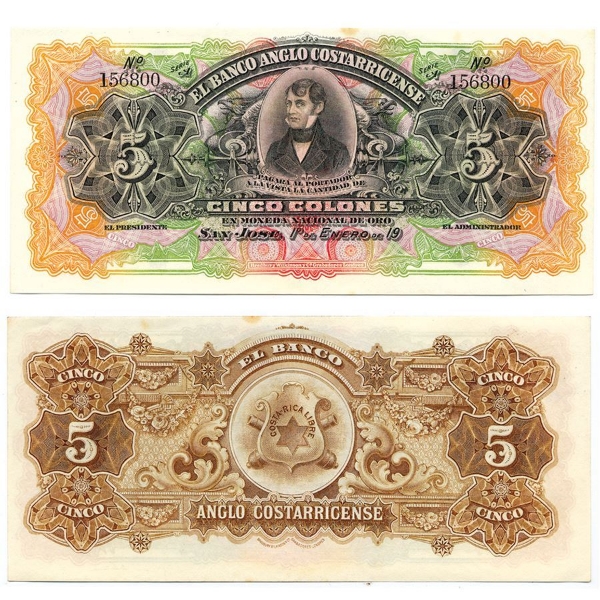
Picture Source of Juan Mora Fernández (1784 – 1854): Wikipedia
 - .jpg)
Architect of the Republic: The Life, Leadership, and Legacy of Juan Mora Fernández
The history of Costa Rica’s transition from an isolated, impoverished Spanish colonial province into a stable, progressive democracy is closely tied to the leadership of its first elected Head of State (Jefe de Estado), Juan Mora Fernández. Governing from 1824 to 1833, Mora Fernández did not just rule; he built the institutional framework of a fledgling state during an era when the rest of Central America was collapsing into chronic civil war and military dictatorship [1].
Known for his civilian spirit, moderate liberal politics, and commitment to education and economic diversification, Mora Fernández fostered a national identity rooted in peace and progress rather than militarism. This biography examines his life, key historical reforms, enduring legacy, and how his governance paved the way for modern Costa Rica.
1. Key Facts About Juan Mora Fernández
Below is a summary of the essential biographical data of Costa Rica’s first Head of State:
Category | Details |
|---|---|
Full Name | Juan Mora Fernández |
Date of Birth | July 12, 1784 [2] |
Place of Birth | San José, Costa Rica |
Date of Death | November 16, 1854 (Aged 70) [3] |
Offices Held | First Head of State of Costa Rica (1824–1833); Magistrate and President of the Supreme Court of Justice (1850–1854); Member of the Congress [2][3] |
Political Alignment | Moderate Liberal |
Key Accomplishments | Introduced the first printing press; founded the country's first national coin mint; initiated major land reforms for coffee production; oversaw the integration of Guanacaste; established foundational schools [1][4]. |
National Honors | Declared Benemérito de la Patria (Well-deserving of the Fatherland) in 1848 [2]. |
2. Key Takeaways
Civilian Leadership over Caudillismo: While other Central American countries fell into decades of military rule led by regional warlords, Mora Fernández set a peaceful, institutionalist, civilian precedent for Costa Rica’s executive office [1].
Education-Led Governance: As a former schoolteacher, his deep conviction that education was the foundation of freedom led to the establishment of key schools (such as the foundation for the Casa de Enseñanza de Santo Tomás) and the importation of the first printing press [2][4].
Economic Foresight: By implementing land grants and tax breaks for coffee cultivation, he successfully catalyzed Costa Rica’s primary export industry, lifting the country out of colonial poverty [4].
Territorial Integrity: His calm, diplomatic handling of the incorporation of Guanacaste secured a vital province for Costa Rica without resorting to military conquest [1].
3. Early Life, Education, and Path to Power
Juan Mora Fernández was born in San José on July 12, 1784, to Mateo Mora Valverde and Lucía Encarnación Fernández Umaña [2]. Unlike many Latin American leaders of his generation who pursued military careers, Mora Fernández’s background was rooted in academia, public administration, and commerce.
He studied Latin grammar, humanities, and philosophy in León, Nicaragua—the closest academic center for young Costa Ricans during the late colonial period [2]. Upon returning to Costa Rica, he worked as a teacher and principal in Alajuela and San José. This background as an educator profoundly shaped his future governance, instilling a life-long belief that an educated populace was a prerequisite for self-governance and democracy.
When Central America declared independence from Spain in September 1821, Costa Rica faced sudden political isolation and internal divisions. Local factions clashed over whether to join the Mexican Empire of Agustín de Iturbide or to establish an independent republic [1]. Mora Fernández actively participated in these early debates. He served as the secretary of the first municipal council (Ayuntamiento) of San José and was elected to the Junta Superior Gubernativa (the early governing junta) between 1821 and 1824 [2].
His reputation for moderate diplomacy, administrative efficiency, and moral integrity made him an ideal compromise candidate. In 1824, the newly assembled Constituent Assembly appointed him as provisional Head of State. He was subsequently elected to a full term in 1825 and re-elected in 1829, serving consecutive terms until 1833 [3][4].
4. Nation-Building and Constitutional Stability (1824–1829)
Mora Fernández’s first term was defined by the complex task of organizing a sovereign state inside the larger framework of the newly formed Federal Republic of Central America (which included Guatemala, El Salvador, Honduras, Nicaragua, and Costa Rica).
The First Constitution
Under his leadership, Costa Rica enacted its first formal constitution, the Ley Fundamental del Estado de Costa Rica (Fundamental Law of the State of Costa Rica), in 1825 [1]. This document established a clear separation of powers, outlined citizen rights, and designed a legislative process that favored consensus over personalist rule (caudillismo).
Annexation of Guanacaste
One of Mora Fernández’s most significant diplomatic triumphs occurred in 1825. Under Spanish colonial rule, the Partido de Nicoya (now the province of Guanacaste) operated with relative administrative independence. Fearing the political instability and civil wars raging in Nicaragua, the inhabitants of Nicoya voted in 1824 to annex themselves to Costa Rica.
Mora Fernández navigated this delicate transition with political tact. He convinced the federal Congress of Central America to formally approve the annexation on July 25, 1825 [1]. This move expanded Costa Rica’s territory, enriched its cultural identity, and added valuable agricultural lands.
5. Socio-Economic and Cultural Modernization (1829–1833)
If his first term focused on legal and administrative structures, Mora Fernández’s second term was dedicated to transforming Costa Rica’s material reality. He recognized that economic self-sufficiency was the only way to safeguard political independence.
                  ┌────────────────────────────────────────┐
                  │   Mora Fernández's Economic Strategy   │
                  └───────────────────┬────────────────────┘
                                      │
            ┌─────────────────────────┼─────────────────────────┐
            ▼                         ▼                         ▼
┌───────────────────────┐ ┌───────────────────────┐ ┌───────────────────────┐
│     Land Reforms      │ │    First Currency     │ │   Export Promotion    │
│ Distributed state     │ │ Established the       │ │ Initiated coffee and  │
│ lands to smallholders │ │ "Casa de la Moneda"   │ │ brazilwood exports    │
│ for coffee planting.  │ │ to stabilize trade.   │ │ to Europe.            │
└───────────────────────┘ └───────────────────────┘ └───────────────────────┘
The Coffee Revolution
During the late colonial era, Costa Rica’s economy was isolated and subsistence-based. While coffee plants had been brought from Cuba in 1808, production remained minimal [5]. Mora Fernández saw the bean's massive potential.
To stimulate growth, his administration instituted a series of progressive land reforms:
He granted free public lands (tierras baldías) to citizens who committed to cultivating coffee [4].
He provided tax exemptions for coffee production and exports.
This policy laid the groundwork for the "Golden Grain" (el grano de oro) export boom, transforming Costa Rica into a major global coffee producer and creating a stable national economy [4].
Introduction of the Printing Press
In 1830, Mora Fernández acquired Costa Rica’s first printing press (la imprenta) [3][4]. He used it to publish the country's first official newspaper, Noticioso Universal, earning him the title of "Father of Costa Rican Journalism." This technological advancement allowed the government to publish laws, educational manuals, and public debates, breaking the monopoly on information and boosting civic literacy.
Currency and Trade
Before his presidency, Costa Rica relied on Spanish colonial money or foreign silver, which was scarce. In 1828, Mora Fernández established the Casa de la Moneda (the National Mint) [4]. The production of Costa Rica’s first national currency stabilized local commerce and assertively declared the state's economic autonomy within Central America.
6. Later Years, Legacy, and Death
After peacefully handing over power in 1833, Mora Fernández remained active in public service. He served as a judge, a multi-term congressman, and briefly as Vice President during the short-lived administration of Manuel Aguilar [1].
However, Costa Rica's political stability was temporarily fractured. When the authoritarian leader Braulio Carrillo overthrew Manuel Aguilar in 1838, Mora Fernández was forced into exile [1]. He spent several years in El Salvador and Guatemala before returning to Costa Rica, where his public stature remained untarnished.
In 1848, the Constitutional Congress declared him a Benemérito de la Patria (Well-deserving of the Fatherland), recognizing his fundamental role in constructing the nation [2]. From 1850 until shortly before his death, he served with distinction as the Magistrate and President of the Supreme Court of Justice [2]. He passed away peacefully in San José on November 16, 1854, at the age of 70 [2].
7. Frequently Asked Questions (FAQ)
Q1: Is Juan Mora Fernández the same person as Juan Rafael Mora Porras?
No. This is a very common historical point of confusion.
Juan Mora Fernández (1784–1854) was Costa Rica’s first Head of State (1824–1833), focused on domestic institution-building, education, and initiating the coffee industry.
Juan Rafael Mora Porras (1814–1860) was a later President of Costa Rica (1849–1859). He is famous for leading Costa Rica during the National Campaign (1856–1857) against the American filibuster William Walker [1].
Q2: Why was he called "Head of State" instead of "President"?
During his rule, Costa Rica was formally a member state of the Federal Republic of Central America. Within this federal system, the national leaders of individual provinces were designated as "Heads of State" (Jefes de Estado), while the overall federal leader in Guatemala was the President [1][3]. Costa Rica did not formally declare itself a completely sovereign republic with its own "President" until 1848, under Dr. José María Castro Madriz [1].
Q3: What were the long-term consequences of his land reforms?
While his land reforms successfully jump-started the coffee economy and created a robust middle class of farmers, they also inadvertently led to the concentration of wealth. Over the subsequent decades, a powerful class of elite "coffee barons" emerged. This oligarchy gained massive political leverage, frequently influencing presidential successions and staging coups in the mid-to-late 19th century [2].
Q4: How did he manage to avoid the civil wars that devastated the rest of Central America?
Mora Fernández adopted a policy of deliberate isolationism regarding federal Central American conflicts. He kept Costa Rica as distant as possible from military power struggles in Guatemala and El Salvador while building trade ties directly with European powers, primarily Great Britain [1].
8. Bibliography and Sources
[1] Díaz-Arias, David, Ronny Viales Hurtado, and Juan José Marín Hernández. Historical Dictionary of Costa Rica. Rowman & Littlefield, 2018.
[2] "Mora Fernández, Juan (1784–1854)." Encyclopedia of Latin American History and Culture. Encyclopedia.com, 2026. https://www.encyclopedia.com.
[3] Busey, James L. "The Presidents of Costa Rica." The Americas, vol. 18, no. 1, 1961, pp. 55–70. JSTOR, doi:10.2307/979752.
[4] Murphy, Paul. Insight Guide: Costa Rica. Langenscheidt Publishing Group, 2003.
[5] Villa Alba Coffee. "History of Coffee in Costa Rica." Villa Alba Coffee Historical Archives, 2013.