 - WCO3860.jpg)
Picture Source of Mauro Fernandez Acuna (1843 – 1905): Wikipedia
Mauro Fernández Acuña: The Architect of Costa Rican Public Education
Mauro Fernández Acuña (1843–1905) stands as one of the most transformative figures in the history of Costa Rica. Remembered primarily as a brilliant lawyer, astute politician, and visionary educator, his legacy is deeply woven into the fabric of the nation's democratic and intellectual identity. As the mastermind behind the 1886 General Law of Common Education (Ley General de Educación Común), Fernández Acuña revolutionized the Costa Rican educational system, transitioning it from a localized, underfunded, and traditional structure into a modern, centralized, and secular framework. His belief that the strength of a republic lies in the education of its citizens fundamentally altered the developmental trajectory of Costa Rica, differentiating it from many of its Central American neighbors.
Key Facts
Birth: November 22, 1843, in San José, Costa Rica.
Death: 1905.
Profession: Lawyer, Judge, Politician, and Educator.
Major Political Role: Minister of Public Instruction and Minister of Finance under President Bernardo Soto Alfaro (appointed 1885).
Greatest Achievement: Authoring and implementing the Ley General de Educación Común (General Law of Common Education) in 1886.
Institutions Founded: Liceo de Costa Rica (1887) and the Colegio Superior de Señoritas (1888).
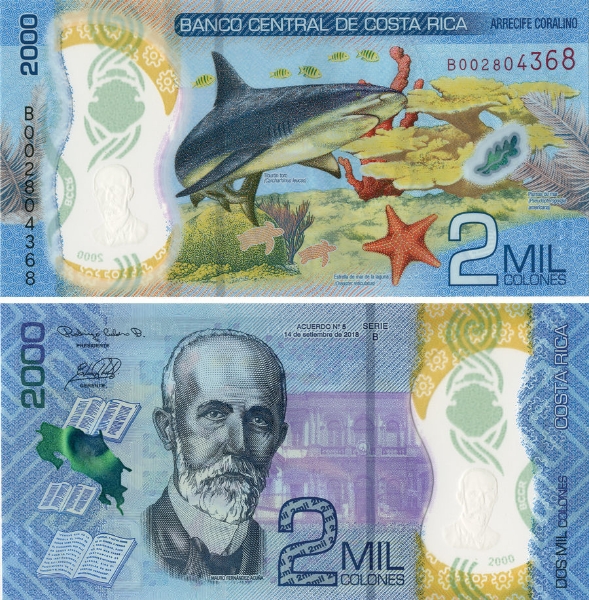
National Honors: Costa Rican Teachers' Day is celebrated on his birthday (Nov 22). He is featured on the blue 2,000 colones bill.
Key Takeaways
Dual Power of Finance and Vision: Fernández Acuña's success was largely due to his simultaneous control over educational policy (Ministry of Instruction) and state funding (Ministry of Finance).
Positivist Influence: His exposure to European positivism led him to prioritize applied sciences, secular civic duty, and rationalism over traditional religious instruction in Costa Rican schools.
Prioritizing the Base: He made the difficult decision to close the nation's only university (Santo Tomás) to redirect all state funding toward building a robust, universal primary and secondary school system.
Empowering Women: By establishing the Colegio Superior de Señoritas, he fundamentally altered the social trajectory of Costa Rican women, allowing them entry into professional life, primarily as educators.
Early Life and Intellectual Awakening
Mauro Fernández Acuña was born on November 22, 1843, in the capital city of San José, Costa Rica (AnydayGuide, 2026). His early life was marked by tragedy; he lost his father at a relatively young age. In the absence of a patriarchal figure, his sisters took on the responsibility of guiding and financing his early education. This early reliance on the strength and dedication of women likely influenced his later political policies, particularly his fierce advocacy for women's higher education.
He pursued higher education at the University of Santo Tomás, Costa Rica's premier institution of higher learning at the time, graduating with a law degree in 1869 (Salazar, 1986). Following his graduation, Fernández Acuña embarked on a formative journey to Europe. In 1870, he resided in London, England, where he was heavily exposed to the tenets of English Positivism, particularly the utilitarian and evolutionary ideas of Herbert Spencer. The following year, he traveled to Spain, where he encountered Spanish Krausism, a philosophical movement championed by thinkers like Francisco Giner de los Ríos, which emphasized academic freedom, rationalism, and the moral development of the individual through education (Salazar, 1986).
These European experiences profoundly shaped his worldview. Fernández Acuña returned to Costa Rica convinced that the progress of a nation was entirely dependent on a systematic, rational, and scientifically grounded educational system rather than military prowess or mere economic extraction.
The Liberal State and Political Ascent
During the late 19th century, Costa Rica was governed by a generation of politicians pushing the "Liberal Reform" (Reforma Liberal), a political and economic project aimed at modernizing the state, secularizing institutions, and integrating the country into the global coffee market. Fernández Acuña quickly ascended the ranks within this liberal environment.
Before reaching the pinnacle of his political career, he held several prestigious legal and civic roles. He served as a judge and a district attorney in the Supreme Court of Justice, an official of the Congress, and the head of the legal department at his alma mater, the University of Santo Tomás (Costa Rica Tourism Board, n.d.).
His decisive political moment arrived in 1885 when President Bernardo Soto Alfaro appointed him to a dual cabinet position: Minister of Public Instruction and Minister of Finance (Hacienda). This dual appointment was a masterstroke of governance. As Carlos Salazar (1986) notes, Fernández Acuña possessed the visionary political will derived from the Ministry of Instruction, perfectly coupled with the budgetary authority derived from the Ministry of Finance. He had both the blueprint for reform and the financial means to execute it.
The Great Reform: Ley General de Educación Común (1886)
The crowning achievement of Fernández Acuña's life was the promulgation of the Ley General de Educación Común in 1886. Prior to this reform, public instruction in Costa Rica was decentralized, largely left to the whims and meager budgets of local municipalities, and heavily influenced by the Catholic Church (Sandoval Vásquez, 2009).
Fernández Acuña’s reform fundamentally restructured this system:
Centralization and State Control: The law stripped municipalities of their absolute control over education, centralizing authority under the national Ministry of Public Instruction. It established local Education Boards (Juntas de Educación) to manage administrative duties, but pedagogical direction came from the state.
Secularization and Modernization: Heavily influenced by his positivist background, Fernández Acuña removed mandatory courses in religion and sacred history from the public curriculum. He replaced them with a curriculum focused on applied sciences, civic duties, and experimental learning methodologies (Sandoval Vásquez, 2009).
Financial Commitment: The state treasury assumed a growing responsibility for the costs of national education, increasing teachers' salaries and establishing a robust infrastructure project to build modern schools across the country.
One of his most controversial, yet impactful, decisions was the closure of the University of Santo Tomás in 1888. Fernández Acuña argued that a developing nation like Costa Rica did not yet need a humanistic university catering to a tiny elite. Instead, the country's limited resources needed to be funneled into building a broad, foundational base of primary, secondary, and technical education (Salazar, 1986).
Expanding Access: New Institutions
To implement his vision of a modern, educated populace, Fernández Acuña oversaw the creation of several landmark educational institutions that remain prestigious to this day:
Liceo de Costa Rica (1887): Founded to provide rigorous secondary education for boys, focusing on modern sciences and humanities, preparing them for civil leadership and technical professions.
Colegio Superior de Señoritas (1888): A groundbreaking institution that marked the beginning of state-sponsored higher learning for Costa Rican women. It provided women with access to secondary education and included a "Normal Section" specifically designed to train women as professional teachers (Costa Rica Tourism Board, n.d.).
Instituto de Alajuela and Normal Schools: He also championed regional education centers and normal schools (teacher-training academies) in provinces like Heredia, ensuring that his modern pedagogical methods would be disseminated nationwide by properly trained educators.
As Fernández Acuña famously stated, "The school is the supreme good of Costa Rica, because in it democracy and culture are deliberately pursued. It is the place where the citizen must be formed: there one learns to love the homeland and its institutions" (Wikipedia, 2023).
Legacy and Honors
Mauro Fernández Acuña died in 1905, but his architectural framework for the Costa Rican mind survived him. The fruits of his labor became evident in the 20th century, as Costa Rica boasted one of the highest literacy rates in Latin America, fostering a robust middle class and a stable democracy that avoided the military dictatorships common in neighboring countries.
His contributions have been institutionalized in the nation's culture. In October 1915, President Alfredo González Flores issued a decree officially establishing November 22—Fernández Acuña's birthday—as the national Día del Maestro (Teachers' Day) in Costa Rica (AnydayGuide, 2026). On this day annually, students across the country honor their educators, keeping the memory of the great reformer alive.
Furthermore, his likeness is featured on the 2,000 Costa Rican colones banknote, a daily reminder of his indelible impact on the nation's identity (Costa Rica Star News, 2017). His monument stands proudly in San José, a silent guardian over the educated republic he helped build.
Frequently Asked Questions (FAQs)
Q: Why is Teachers' Day in Costa Rica celebrated on November 22? A: Teachers' Day (Día del Maestro) in Costa Rica is celebrated on November 22 to honor the birthdate of Mauro Fernández Acuña. The holiday was officially established by a government decree in 1915 to recognize his monumental contributions to the nation's educational system.
Q: Why did Mauro Fernández Acuña close the University of Santo Tomás? A: He closed the university in 1888 because he believed its curriculum was outdated and overly humanistic, serving only a small elite. Guided by utilitarian philosophy, he felt the state's limited funds were better spent on establishing widespread, high-quality primary and secondary education, as well as technical schools, to build a broader educated citizenry.
Q: Which Costa Rican banknote features Mauro Fernández Acuña? A: His portrait is featured on the blue 2,000 Costa Rican colones bill. The bill pays homage to his legacy as a reformer, and the reverse side highlights Costa Rica's rich biodiversity (specifically marine fauna like the bull shark).
Q: What was the Ley General de Educación Común? A: Passed in 1886, it was a sweeping legislative reform that centralized Costa Rica's public education under the national government, secularized the curriculum, standardized teaching methods, and secured state funding for the expansion of public schools.
Bibliography
AnydayGuide. (2026). Teachers' Day in Costa Rica / November 22, 2026. Retrieved from AnydayGuide Calendar.
Costa Rica Star News. (2017). The History and Colors of Costa Rica's Bills. News.co.cr.
Costa Rica Tourism Board. (n.d.). Historical walks through San José. VisitCostaRica.com.
Sandoval Vásquez, A. F. (2009). El Desarrollo Educativo Costarricense: De la Colonia a la Reforma Educativa de 1886. Revista Humanitas, Universidad Católica de Costa Rica.
Salazar, C. (1986). Don Mauro Fernandez Acuña y la Ley General de Educacion Comun (En el Centenario de su promulgación). Asamblea Legislativa de Costa Rica. (Print Resource)
Wikipedia contributors. (2023). Mauro Fernández Acuña. Wikipedia, The Free Encyclopedia.