 - WCA2860.jpg)
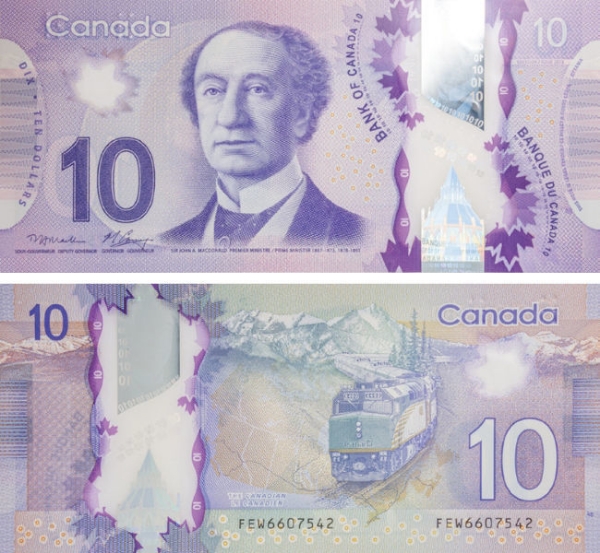
Picture Source of Sir John A. Macdonald: Wikipedia
Sir John A. Macdonald: The Architect and Shadow of Canadian Confederation
Sir John Alexander Macdonald was the dominant political figure of 19th-century Canada and the nation’s first prime minister. Serving from 1867 to 1873 and again from 1878 until his death in 1891, Macdonald spent nearly half a century in public office. He was the primary architect of Canadian Confederation, overseeing the expansion of Canada from a small group of British colonies into a vast, transcontinental federation spanning from the Atlantic to the Pacific.
Yet, Macdonald’s legacy is profoundly complex. While he is celebrated as Canada's primary "Founding Father," his nation-building projects relied on policies that caused systemic harm to Indigenous populations, the state-sponsored suppression of the Métis, and discriminatory immigration measures. Today, his historical status is a subject of intense public debate, balanced between his monumental political achievements and the darker consequences of his policies.
Key Facts
Fact Category | Details |
|---|---|
Birth Date & Place | January 10 or 11, 1815 |
Death Date & Place | June 6, 1891 (Age 76) |
Prime Ministership | 1st PM of Canada: July 1, 1867 – November 5, 1873; October 17, 1878 – June 6, 1891 |
Political Party | Conservative Party of Canada |
Key Legislative Acts | British North America Act (1867), National Policy (1879), Chinese Immigration Act (1885), Electoral Franchise Act (1885) |
Nicknames | "Old Tomorrow" (for his tendency to delay difficult decisions), "The Old Chieftain" |
Resting Place | Cataraqui Cemetery, Kingston, Ontario |
Key Takeaways
Unification of Canada: Macdonald was the driving political force behind Canadian Confederation, uniting fractured British colonies into a unified dominion.
Geographical Expansion: Under his premiership, Canada expanded transcontinentally to include Manitoba, British Columbia, Prince Edward Island, and the Northwest Territories.
The National Policy: His signature economic framework of protective tariffs, railway expansion, and western settlement shaped Canada’s economic development for generations.
Systemic Colonial Harm: Macdonald directed policies that used food starvation to coerce Plains Indigenous peoples, initiated the state-funded Indian Residential School system, and enacted the Chinese Head Tax.
Louis Riel's Execution: His insistence on executing Métis leader Louis Riel in 1885 caused deep, lasting divisions between English and French Canada.
Early Life, Emigration, and Legal Career
John Alexander Macdonald was born in Glasgow, Scotland, on January 10 or 11, 1815 (his father’s journal recorded January 11, while his official birth registry noted January 10). Facing financial ruin, his father, Hugh Macdonald, emigrated with his family to Kingston, Upper Canada (now Ontario) in 1820 (Pope, 1915).
Macdonald grew up in the Kingston area and was educated at the local Royal Grammar School. At age fifteen, he began articling in a Kingston law office under George Mackenzie. By 1835, even before being formally admitted to the bar, he was managing his own legal practice in Picton (Encyclopedia.com, 2026).
He established a reputation as a brilliant, charismatic trial lawyer. In 1838, during the Upper Canada Rebellions, Macdonald defended several high-profile clients, including Nils von Schoultz, an American-Polish sympathizer who led an invasion of Canada (Queen's University, 2021). Though von Schoultz was ultimately executed, Macdonald's spirited, highly publicized defense cemented his status as a rising star in Upper Canada’s legal and civic circles.
The Road to Confederation (1844–1867)
In 1844, Macdonald entered provincial politics, winning election to the Legislative Assembly of the Province of Canada as a conservative representative for Kingston. He quickly distinguished himself through political pragmatism and a gift for compromise. Recognizing that British North America was deeply divided along sectarian, linguistic, and regional lines, Macdonald realized that stable governance required cross-cultural alliances. In 1854, he helped forge the Liberal-Conservative coalition with French-Canadian leader George-Étienne Cartier (The Canadian Encyclopedia, 2021).
By 1864, the Province of Canada was trapped in political deadlock, with governments collapsing in rapid succession. Recognizing the crisis, Macdonald entered into a historic "Great Coalition" with his fierce political rival, George Brown, leader of the reformist Clear Grits. The coalition's objective was to seek a federal union of all British North American colonies.
As the chief legal and political mind during the Charlottetown, Quebec, and London Conferences (1864–1866), Macdonald drafted the majority of the 72 resolutions which served as the foundation for the British North America Act (BNA Act). On July 1, 1867, the BNA Act took effect, officially birthing the Dominion of Canada. Queen Victoria knighted Macdonald for his instrumental role, and he was appointed the country's first Prime Minister.
First Premiership and the Pacific Scandal (1867–1873)
Macdonald's immediate challenge was turning a fragile constitutional framework into a functional, cohesive state. He set out to secure Canada’s geographical sovereignty, fearing American annexation. He acquired Rupert's Land and the North-Western Territory from the Hudson’s Bay Company in 1870, oversaw the creation of Manitoba in 1870, and successfully brought British Columbia (1871) and Prince Edward Island (1873) into Confederation (Dictionary of Canadian Biography, 2023).
To entice British Columbia to join, Macdonald promised to build a transcontinental railway linking the Pacific coast with the eastern provinces within ten years. However, this monumental project nearly ended his career.
In 1873, the "Pacific Scandal" broke. Evidence emerged that Macdonald’s Conservative Party had received massive political campaign donations from Sir Hugh Allan, a shipping magnate, in exchange for the lucrative charter to build the Canadian Pacific Railway (CPR). Facing a vote of non-confidence, Macdonald’s government resigned in disgrace in November 1873, and the Liberal Party under Alexander Mackenzie took office (The Canadian Encyclopedia, 2021).
The National Policy and Return to Power (1878–1891)
During his five years in opposition, Macdonald bided his time and formulated a brilliant political strategy. A severe global economic depression had hit Canada, making the Liberal government's free-trade policies unpopular. In response, Macdonald introduced the National Policy in 1876, which became his platform for the 1878 federal election.
The National Policy rested on three pillars:
High Protective Tariffs: Shielding nascent Canadian manufacturing industries from American competition.
The Completion of the Transcontinental Railway: Driving economic integration and physical security.
Immigration and Western Settlement: Populating the Prairies to establish agricultural markets.
The platform was a resounding success. Macdonald was swept back into power with a massive majority in 1878. The Canadian Pacific Railway (CPR) was completed in November 1885 under severe financial and engineering strains, serving as the spine of Macdonald's national vision.
The Darker Legacy: Indigenous Policies and the Chinese Head Tax
In recent decades, historians and the public have re-evaluated Macdonald’s legacy through the lens of colonial violence, racism, and human rights violations.
1. Indigenous Starvation and Forced Relocation
To clear the western plains for the construction of the Canadian Pacific Railway and European settlement, Macdonald’s government undertook aggressive measures. When the buffalo herds collapsed in the late 1870s, leaving tens of thousands of Plains Indigenous people facing starvation, Macdonald's government systematically withheld food rations to force resistant bands onto reserves and compel them to sign treaties (Daschuk, 2013). This "policy of submission shaped by a policy of starvation" resulted in thousands of deaths.
2. The Indian Residential School System
In 1883, Macdonald authorized the creation of the first government-funded, church-run residential schools in western Canada. Macdonald explained his policy to the House of Commons in 1883, asserting that when a child is educated on a reserve, they remain "simply a savage who can read and write," whereas removing them to central training schools allowed them to "acquire the habits and modes of thought of white men" (Hamilton Centre for Civic Inclusion, 2021). This system, which forcibly separated over 150,000 Indigenous children from their families, was later labeled a "cultural genocide" by the Truth and Reconciliation Commission of Canada (TRC, 2015).
3. The Chinese Head Tax
During the construction of the CPR, Macdonald welcomed thousands of Chinese laborers to provide cheap, dangerous labor. Once the railway was completed in 1885, however, his government moved to halt Asian immigration. Macdonald defended this by expressing explicit white supremacist views in Parliament, warning that the "Aryan character" of British America would be destroyed by racial "amalgamation" (Queen's University, 2021). The Chinese Immigration Act of 1885 introduced a $50 "Head Tax" on Chinese immigrants, a discriminatory fee designed to keep families out, which was subsequently raised in later decades (The Canadian Encyclopedia, 2020).
The Execution of Louis Riel (1885)
In 1885, Métis leader Louis Riel led the North-West Resistance on the Prairies, protesting the Canadian government's encroachment on Métis land and sovereignty. Macdonald utilized the newly built CPR to rapidly dispatch federal troops to crush the rebellion. Riel was captured, tried for high treason, and sentenced to hang.
Despite intense pressure from Quebec, where Riel was viewed as a defender of French-Catholic rights, Macdonald refused to commute the sentence, famously stating, "Riel shall hang though every dog in Quebec bark in his favour." Riel was executed on November 16, 1885. This decision deeply alienated French Canadians, dealing a blow to the Conservative Party's standing in Quebec that persisted for generations.
Final Years and Death
Macdonald fought his last federal election campaign in 1891 at the age of 76. Running on a platform of unyielding loyalty to the British Empire and opposition to free trade with the United States, he rallied voters under the slogan, "A British subject I was born, a British subject I will die."
He won the election but was physically exhausted. On June 6, 1891, Macdonald suffered a stroke and died in office. He was buried in Cataraqui Cemetery in his beloved home city of Kingston, Ontario.
Frequently Asked Questions (FAQs)
Why was John A. Macdonald nicknamed "Old Tomorrow"?
Macdonald earned the nickname "Old Tomorrow" because of his strategic habit of delaying difficult decisions until the political climate was more favorable, waiting for issues to reach what he termed "ripeness."
What was the Pacific Scandal?
The Pacific Scandal of 1873 was Canada's first major post-Confederation political crisis. Macdonald’s government was accused of accepting substantial bribes and campaign donations from Sir Hugh Allan in exchange for the contract to construct the Canadian Pacific Railway. The scandal forced Macdonald’s resignation.
How did Macdonald handle the collapse of the buffalo herds?
Rather than treating the famine as a humanitarian emergency, Macdonald's government used the collapse of the buffalo herds to systematically withhold rations from starving Plains Indigenous groups until they agreed to sign treaties and move onto government-allocated reserves.
What was Macdonald's role in the Residential School system?
While industrial day schools existed before Confederation, Macdonald officially authorized the expansion of the church-run, federally funded Indian Residential School system in 1883 to forcibly assimilate Indigenous children and strip them of their culture and language.
Why is Macdonald's legacy being re-examined today?
In recent years, statues of Macdonald have been removed, and public institutions have changed their names to distance themselves from his legacy. This re-examination is driven by his documented white-supremacist statements, the introduction of the Chinese Head Tax, and the severe, generational trauma caused by his Indigenous policies.
Bibliography & References
Creighton, Donald (1952). John A. Macdonald: The Young Lion. University of Toronto Press. Agendabookshop Link
Daschuk, James (2013). Clearing the Plains: Disease, Politics of Starvation, and the Loss of Aboriginal Life. University of Regina Press. Cited in Uncomfortable Oxford Review
Encyclopedia.com (2026). Sir John Alexander Macdonald. Encyclopedia.com Reference Entry
Hamilton Centre for Civic Inclusion (2021). Timeline of Canadian Policy & Law - Sir John A. Macdonald. HCCI PDF Document
Library and Archives Canada (2023). Sir John A. Macdonald - Dictionary of Canadian Biography, vol. 12. University of Toronto/Université Laval. Dictionary of Canadian Biography Profile
Pope, Sir Joseph (1915). The Day of Sir John Macdonald: A Chronicle of the First Prime Minister of the Dominion. Toronto: Glasgow, Brook & Company. Gutenberg eBook
Queen’s University Faculty of Education (2021). Sir John A. Macdonald Fact Sheet. Queen's University Faculty Fact Sheet
The Canadian Encyclopedia (2020). Chinese Head Tax in Canada (Plain-Language Summary). The Canadian Encyclopedia Article
The Canadian Encyclopedia (2021). Sir John A. Macdonald. The Canadian Encyclopedia Biography