Articles
Sort by
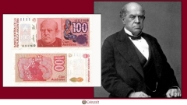
Argentina australes featuring Domingo Sarmiento -Monday, 18 May 2026
Imagine a boy born into the dust and political chaos of early 19th-century South America—just as Argentina was embarking on its bloody struggle for independence from Spanish colonial rule. Deprived of formal schooling in a nation deeply fractured by civil strife and provincial warlords, he would nevertheless teach himself multiple languages, write Latin America's most influential literary masterpiece of the century, and eventually steer his entire nation as president. next...
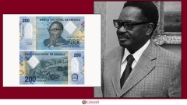
Angola Kwanzas Honouring Dr Antonio Agostinho Neto -Thursday, 14 May 2026
Dr. Antonio Agostinho Neto was far more than just a political leader; he was the heartbeat of the Angolan independence movement. A man who mended bodies as a doctor and stirred souls as a poet, Neto navigated the treacherous waters of colonial resistance to become the first President of the Republic of Angola. next...
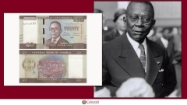
Liberian Dollars Honouring William V S Tubman -Monday, 15 December 2025
If you were to walk down the streets of Monrovia in the humid, salt-tinged air of the 1950s, you would eventually encounter a presence that seemed as permanent as the tides and as inevitable as the tropical rain. He might be found waving from a convertible, holding court at his farm in Totota, or staring down from a portrait in a government office, invariably dressed in a tailcoat and Homburg hat, a cigar often clamped firmly between his teeth. This was William Vacanarat Shadrach Tubman—"Uncle Shad" to the masses, "The Old Man" to his inner circle, and the undisputed President of Liberia for twenty-seven years.1 next...
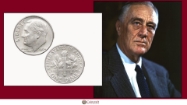
US Dollars Commemorating former President Franklin D. Roosevelt -Friday, 21 November 2025
Franklin Delano Roosevelt stands as a towering figure in American history, a leader who defined the 20th century through his stewardship of the United States during two of its most profound crises: the Great Depression and World War II. next...
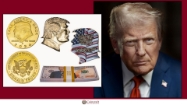
Medals & Pseudo Banknotes Dedicated to the President of the United States, Donald Trump -Wednesday, 22 October 2025
Donald John Trump was born on June 14, 1946, in Queens, New York, as the fourth of five children to Frederick “Fred” Christ Trump and Mary Anne MacLeod Trump. His mother was a Scottish immigrant who came to the United States in 1930, while his father was a successful real estate developer born to German immigrants. Trump grew up in the affluent Jamaica Estates neighborhood in Queens, where his family lived in relative comfort due to his father’s successful real estate business. next...
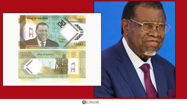
Namibia 60 Dollars Dedicated to Dr Hugo Gottfried Geingob (former first president & third president) -Tuesday, 19 August 2025
Dr. Hage Gottfried Geingob (August 3, 1941 - February 4, 2024) was a towering figure in Namibian politics who served as the third president of Namibia from 2015 until his death in 2024. His life journey from a farm boy to becoming the nation's leader exemplifies dedication, perseverance, and unwavering commitment to his country's independence and prosperity. next...
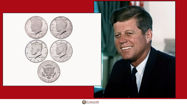
US Dollars Dedicated to John F Kennedy (former US president) -Tuesday, 12 August 2025
John F. Kennedy, often referred to by his initials JFK, remains one of the most iconic figures in American history. His presidency, though tragically cut short, left an indelible mark on the nation and the world. As the 35th President of the United States, Kennedy's legacy is a complex blend of visionary leadership, profound challenges, and transformative policies. This article delves into the multifaceted legacy of John F. Kennedy and examines how his contributions continue to shape modern America. next...
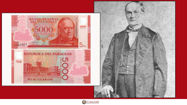
Paraguay Guaranies Honours Don Carlos Antonio Lopez (First President of Paraguay) -Wednesday, 04 June 2025
Carlos Antonio Lopez was born on November 4, 1790, in Asunción, Paraguay, to poor parents of Indian and Spanish descent. His journey from humble beginnings to becoming Paraguay’s influential leader is a testament to his political acumen and ambition. next...
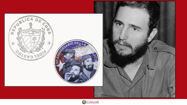
Cuba Honouring Fidel Castro (Former president of Cuba) -Friday, 30 May 2025
Fidel Castro remains one of the most iconic and controversial figures of the 20th century, entwined deeply with the history of Cuba. As the leader of the Cuban Revolution and later the head of state, his influence extended well beyond the island nation's borders, leaving an indelible mark on global politics. next...
Get in touch icon icon

- icon
45 Great Russell St, London WC1B 3JL
- icon
