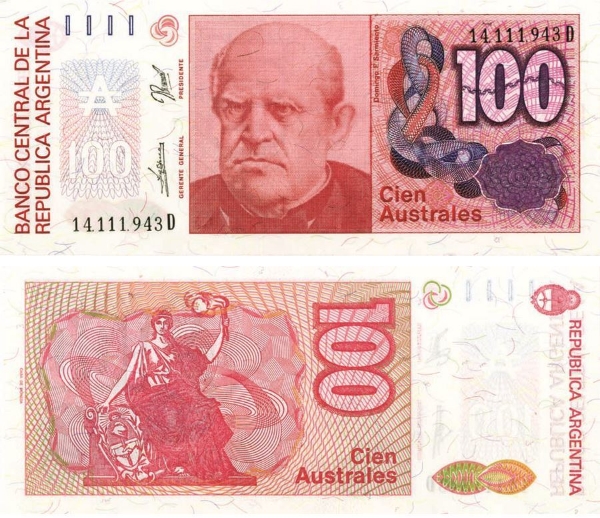
Picture Source of Domingo Sarmiento: Wikipedia
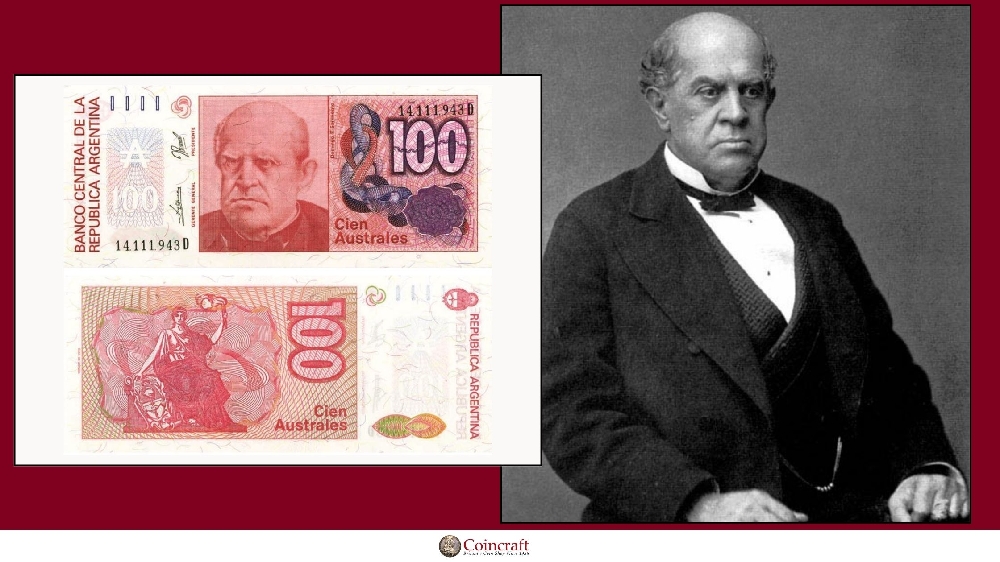
Domingo Faustino Sarmiento: The "Schoolmaster President" Who Built Modern Argentina
Imagine a boy born into the dust and political chaos of early 19th-century South America—just as Argentina was embarking on its bloody struggle for independence from Spanish colonial rule. Deprived of formal schooling in a nation deeply fractured by civil strife and provincial warlords, he would nevertheless teach himself multiple languages, write Latin America's most influential literary masterpiece of the century, and eventually steer his entire nation as president.
This isn't a fairy tale—it is the real life of Domingo Faustino Sarmiento, fondly known today as the "Father of the Classroom." Throughout a life of exile, fierce political battles, and tireless activism, Sarmiento became the architect of Argentina's modernization, fighting the forces of chaos with the power of the alphabet. Let's dive into his incredible journey.
Key Takeaways
The Educational Pioneer: Sarmiento founded over 800 schools and quadrupled elementary school enrollment during his presidency, believing education was the ultimate cure for national lawlessness[3].
The "Accidental" President: He was elected President of Argentina in 1868 while traveling home from a diplomatic mission to the United States[1].
A Master Writer: His 1845 masterpiece Facundo: Civilization and Barbarism remains one of the most significant works of Spanish-American literature[4].
Legacy of Teachers: He is so revered for his educational reforms that his death date, September 11, is commemorated annually as Teacher’s Day in Argentina[1].
Early Struggles and a Lifelong Passion for Books
Born on February 15, 1811, in the rugged province of San Juan, Sarmiento entered a world of immense poverty and political upheaval[1]. Argentina was transitioning into independence from Spanish colonial rule, a shift that quickly descended into bloody civil conflicts between local warlords (caudillos)[3].
Despite his humble surroundings, young Domingo had a superpower: an insatiable curiosity. Taught to read at the age of four by his father and uncle, he quickly exhausted the books in his local community[1]. By age fifteen, since San Juan lacked higher education facilities, Sarmiento was already working as a rural schoolmaster in neighboring San Luis, learning as he taught[4]. He was a classic autodidact, devouring everything from the biographies of Benjamin Franklin to classic literature, teaching himself French, English, and Italian along the way[1][5].
"From my first steps in life, I have felt almost continuously at my side a desire for something greater... absorbed from youth in an ideal which had made me live within myself."
— Domingo Faustino Sarmiento
The Power of the Pen: Exile, Journalism, and Facundo
Sarmiento’s outspoken, independent nature eventually got him into hot water. In 1831, local federalist caudillo Facundo Quiroga seized control of the region, forcing the young intellectual into his first exile in Chile[1]. There, he worked various odd jobs—even laboring as a miner—while continuing his self-education[5].
Upon returning to San Juan in 1836, he co-founded the political and literary newspaper El Zonda[1]. Sarmiento believed journalism was a vital tool for civic engagement. However, his sharp-tongued criticisms of the regional authorities and the national dictator, Juan Manuel de Rosas, quickly led to censorship and forced him back into Chilean exile by 1840[3].
It was during this second Chilean exile that Sarmiento wrote his magnum opus, Facundo: Civilization and Barbarism (1845)[2]. Written first in daily newspaper installments, the book was a searing critique of Rosas wrapped in a biography of the late caudillo Facundo Quiroga[5]. Sarmiento argued that Argentina was locked in a battle between "civilization" (represented by European cities, education, and order) and "barbarism" (represented by the wild pampas, uneducated gauchos, and brutal warlords)[3].
Horace Mann and the Quest for Global Educational Secrets
Recognizing his brilliant mind, the Chilean government sent Sarmiento on a three-year mission to study educational systems around the world, taking him through Europe, North Africa, and North America[1][4].
The defining moment of his travels came in the United States, where he met the pioneering educational reformers Horace Mann and his wife, Mary Peabody Mann[3]. The meeting was electric. Sarmiento realized that public, state-funded, non-sectarian schools—like the ones Mann was building in Massachusetts—were the key to creating a stable democracy[4]. Armed with these new blueprints (and a lifelong friendship with Mary Mann), Sarmiento returned to South America determined to overhaul Argentine education[3].
Sarmiento's Recipe for National Progress:
   [ Education for All ] ---> [ Modern Infrastructure ] ---> [ Stable Democracy ]
Sarmiento's Presidency: Translating Vision into a Modern Nation
After helping military forces finally overthrow the dictator Rosas in 1852, Sarmiento stepped directly into Argentina's political spotlight[4]. He served as Governor of San Juan and as Ambassador to the United States before the ultimate political surprise found him[1][4]. In 1868, while literally on a boat returning from the U.S., Sarmiento was elected the 7th President of Argentina[1].
During his presidency (1868–1874), Sarmiento operated with boundless energy[5]. Finding that almost 75% of Argentines were illiterate during his first national census in 1869, he launched a massive literacy campaign[3]. He established:
Over 800 new elementary schools, alongside high schools and specialized training academies[1].
South America's first normal schools (teacher-training institutions), bringing in dozens of American female teachers recruited with the help of Mary Mann[3][4].
The Astronomical Observatory of Córdoba and the national Military and Naval academies to instill professional and scientific standards[1].
Sarmiento also realized that a modern nation needed physical connections. He built thousands of miles of telegraph lines and railways, encouraging foreign investment and European immigration to help populate the vast Argentine interior[1][3].
Later Years and an Enduring Educational Legacy
Even after leaving the presidency in 1874, Sarmiento did not slow down. He continued to serve in public office, editing educational journals and ensuring the implementation of the historic Law 1420, which established free, secular, and compulsory primary education for all Argentine children.
Due to failing health, he moved to the warmer climate of Asunción, Paraguay, where he peacefully passed away on September 11, 1888, at the age of 77[1]. Today, he lies buried in the historic Recoleta Cemetery in Buenos Aires, but his truest monument is found in every classroom across Argentina.
Frequently Asked Questions (FAQs)
Q: Why is Domingo Sarmiento called the "Schoolmaster President"?
A: This nickname reflects his lifelong devotion to education. Before becoming president, he worked as a rural schoolmaster, and during his presidency, his primary focus remained the complete overhaul and expansion of Argentina's public school system[3][4].
Q: Did Sarmiento have any controversial ideas?
A: Yes. While celebrated as a progressive modernizer, modern historians often critique Sarmiento's views on the indigenous populations of South America. His push for "civilization" over "barbarism" led him to advocate for European immigration while expressing highly dismissive, and at times hostile, views toward Native Argentine cultures and traditional rural gauchos[2][6].
Q: What is the significance of Facundo?
A: Facundo: Civilization and Barbarism is considered a cornerstone of Latin American literature[4]. It was not just a political attack on a dictator, but an early sociological attempt to understand the unique cultural identity, challenges, and geography of Argentina[3].
References
Casa Rosada (2024). Eternal Legacy: 213th Anniversary of the Birth of Domingo Faustino Sarmiento. Available at: https://www.casarosada.gob.ar/international/latest-news/50360-eternal-legacy-213th-anniversary-of-the-birth-of-domingo-faustino-sarmiento (Accessed: 18 May 2026). [1]
Google Arts & Culture (n.d.). Domingo Faustino Sarmiento. Available at: https://artsandculture.google.com/entity/domingo-faustino-sarmiento/m021xpj?hl=en (Accessed: 18 May 2026). [2]
EBSCO Research Starters (2024). Domingo Faustino Sarmiento | History. Available at: https://www.ebsco.com/research-starters/history/domingo-faustino-sarmiento (Accessed: 18 May 2026). [3]
Britannica, T. Editors of Encyclopaedia (2024). Domingo Faustino Sarmiento | Argentine President & Educator. Encyclopedia Britannica. Available at: https://www.britannica.com/biography/Domingo-Faustino-Sarmiento (Accessed: 18 May 2026). [4]
Kenworthy, L. S. (1945). Domingo Sarmiento: the Schoolmaster President- Citizen of the New World. Available at: https://leonardkenworthy.net/wp-content/uploads/2014/06/1945-domingo-sarmiento-the-schoolmaster-president-citizen-of-the-new-world.pdf (Accessed: 18 May 2026). [5]
University of London (2012). Two Hundred Years of Sarmiento: Looking Backwards and Forwards. Available at: https://liberalism-in-americas.blogs.sas.ac.uk/2012/01/23/two-hundred-years-of-sarmiento-looking-backwards-and-forwards/ (Accessed: 18 May 2026). [6]