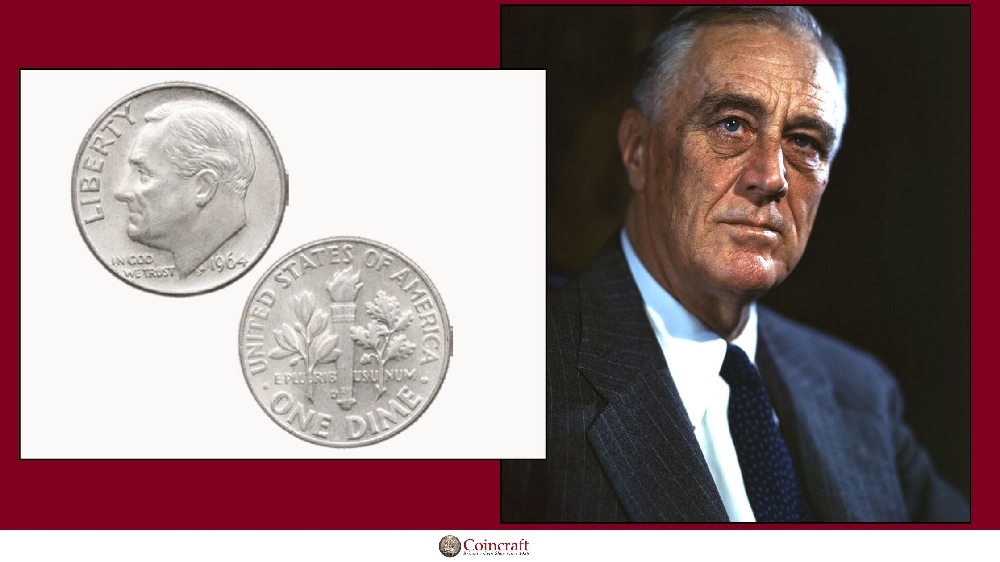
Picture Source of Franklin D. Roosevelt: Wikipedia
Franklin D. Roosevelt: A Legacy of Resilience and Leadership
Franklin Delano Roosevelt stands as a towering figure in American history, a leader who defined the 20th century through his stewardship of the United States during two of its most profound crises: the Great Depression and World War II.
Assuming the presidency at a time of unprecedented economic collapse and global instability, Roosevelt—often referred to by his initials, FDR—demonstrated a unique capacity for leadership. His tenure was marked not only by sweeping legislative reform and military strategy but also by a personal battle with physical disability that forged his character. His ability to project confidence and empathy transformed the relationship between the American public and their government.
Below, we explore the life and enduring legacy of the only President of the United States to be elected to four terms.
Key Takeaways
Unprecedented Tenure: FDR remains the only U.S. president to serve more than two terms, winning four consecutive elections and leading the nation for 12 pivotal years¹.
Resilience Amidst Adversity: After contracting polio at age 39 and losing the use of his legs, Roosevelt channeled his personal struggle into a source of profound empathy and political strength².
The New Deal: His administration revolutionized the federal government's role in the economy, establishing lasting social safety nets such as the Social Security Administration³.
Global Leadership: Roosevelt served as a central figure among the Allied powers, guiding the strategic victory in World War II and positioning the U.S. as a global superpower⁴.
Innovation in Communication: He pioneered the use of mass media in politics with his "Fireside Chats," utilizing radio to speak directly to citizens and quell public anxiety⁵.
Early Life and Political Beginnings
Born on January 30, 1882, in Hyde Park, New York, Franklin D. Roosevelt was born into a life of privilege and ease. As the only child of James and Sara Delano Roosevelt, he benefited from private tutoring and extensive European travel, which broadened his worldview from a young age¹.
Roosevelt attended the prestigious Groton School and later Harvard University. While his academic record was respectable, it was his charisma and social standing that distinguished him. During this period, he courted his distant cousin, Anna Eleanor Roosevelt. The couple married in 1905, with the bride being given away by her uncle, President Theodore Roosevelt. FDR deeply admired his cousin Theodore, and his early career—spanning the New York State Senate and the role of Assistant Secretary of the Navy—was modeled closely after Theodore’s own path to the presidency⁶.
The Turning Point: Confronting Polio
By 1920, Roosevelt was an ascending figure in the Democratic Party. However, in the summer of 1921, his trajectory was abruptly altered. While vacationing at Campobello Island, he contracted poliomyelitis. Within days, the athletic 39-year-old was paralyzed from the waist down².
For many, such a diagnosis would have signaled the end of a public career. However, supported by his wife Eleanor and his political advisor Louis Howe, Roosevelt refused to retreat from public life. He dedicated years to rehabilitation, eventually establishing a therapeutic center at Warm Springs, Georgia. Although he never regained the ability to walk unaided, the experience fundamentally changed him. The once patrician politician developed a deepened capacity for empathy and an understanding of struggle that would later define his connection with the American electorate⁷.
Return to Politics and the Governorship
Roosevelt successfully re-entered the political arena in 1928, winning the governorship of New York. Four years later, the United States faced an economic crisis of catastrophic proportions. The stock market crash of 1929 had precipitated the Great Depression, leaving millions unemployed and the national mood in despair.
Campaigning for the presidency in 1932, Roosevelt promised a "New Deal" for the American people. Breaking with tradition to accept the nomination in person, he signaled a readiness for decisive action. He won the election in a landslide victory, carrying a mandate for change³.
Presidency: Crisis and Command
The New Deal Era
Upon taking office in 1933, Roosevelt famously asserted in his inaugural address, "The only thing we have to fear is fear itself." Moving quickly to stabilize the nation, he orchestrated the "First Hundred Days," a period of intense legislative activity designed to reform the banking system, create public works jobs, and provide direct relief.
His administration established numerous agencies—often referred to as the "Alphabet Soup"—including the Civilian Conservation Corps (CCC), the Works Progress Administration (WPA), and the Tennessee Valley Authority (TVA). While economists debate the total efficacy of every program, the New Deal undeniably restored public confidence and established the principle that the federal government bears a responsibility for the economic welfare of its citizens⁵.
World War II
As the U.S. economy began a slow recovery, geopolitical tensions escalated in Europe and Asia. Roosevelt initially navigated a policy of neutrality while seeking to aid Great Britain against Nazi aggression. However, the Japanese attack on Pearl Harbor on December 7, 1941, thrust the United States into the conflict.
Roosevelt proved to be an adept wartime strategist and diplomat. He forged a critical alliance with British Prime Minister Winston Churchill and Soviet Premier Joseph Stalin. Under his leadership, the U.S. mobilized as the "Arsenal of Democracy," providing the material and military strength necessary to defeat the Axis powers. His strategic vision was instrumental in maintaining Allied unity, even as his physical health began to decline significantly⁴.
The Final Years and Legacy
Roosevelt secured a fourth term in the 1944 election, but the immense strain of his tenure and chronic health issues had taken their toll. On April 12, 1945, while resting at Warm Springs, he suffered a massive cerebral hemorrhage and passed away. His death came only months before the final conclusion of the war he had fought so hard to win⁸.
The nation mourned the loss of a leader who had guided them through the darkest years of the century. For a generation of Americans, he was the only president they had ever known.
Frequently Asked Questions (FAQs)
Q: How was it possible for FDR to serve four terms? A: Prior to 1951, the United States Constitution did not impose term limits on the presidency; the two-term limit was merely a tradition established by George Washington. Amidst the global crisis of World War II, Roosevelt believed continuity of leadership was essential, and the electorate agreed. The 22nd Amendment was subsequently ratified to limit future presidents to two terms¹.
Q: Was the general public aware of the extent of his disability? A: generally, they were not. A "gentleman's agreement" existed between the White House and the press corps. Photographers avoided capturing images of the President in a wheelchair. For public appearances, Roosevelt utilized heavy steel leg braces and a cane to simulate walking short distances, projecting an image of physical strength that the media helped preserve².
Q: Did the New Deal successfully end the Great Depression? A: The answer is nuanced. While the New Deal did not completely end the Depression—it was the industrial mobilization for World War II that ultimately restored full employment—Roosevelt's policies significantly reduced unemployment and created essential safeguards, such as the Social Security system, which protect against similar economic collapses today³.
References
National Park Service (n.d.) Brief Biography of Franklin D. Roosevelt. Available at: https://www.nps.gov/hofr/learn/historyculture/fdr-biography.htm (Accessed: 21 November 2025).
FDR Presidential Library & Museum (n.d.) FDR and Polio. Available at: https://www.fdrlibrary.org/polio (Accessed: 21 November 2025).
Library of Congress (n.d.) President Franklin Delano Roosevelt and the New Deal. Available at: https://www.loc.gov/classroom-materials/united-states-history-primary-source-timeline/great-depression-and-world-war-ii-1929-1945/franklin-delano-roosevelt-and-the-new-deal/ (Accessed: 21 November 2025).
Khan Academy (n.d.) FDR and World War II. Available at: https://www.khanacademy.org/humanities/us-history/rise-to-world-power/us-wwii/a/fdr-and-world-war-ii (Accessed: 21 November 2025).
History Bombs (2025) 5 Important Facts about Franklin D. Roosevelt. Available at: https://historybombs.com/2025/03/5-important-facts-about-franklin-d-roosevelt/ (Accessed: 21 November 2025).
Biography.com (n.d.) 7 Facts About Franklin D. Roosevelt. Available at: https://www.biography.com/political-figures/a65191884/franklin-d-roosevelt-facts (Accessed: 21 November 2025).
University of Arizona Libraries (n.d.) Franklin D. Roosevelt - Disability and deception. Available at: https://lib.arizona.edu/hsl/materials/collections/secret-illness/fdr (Accessed: 21 November 2025).
George W. Bush White House Archives (n.d.) Biography of Franklin D. Roosevelt. Available at: https://georgewbush-whitehouse.archives.gov/history/presidents/fr32.html (Accessed: 21 November 2025).


