.jpg)
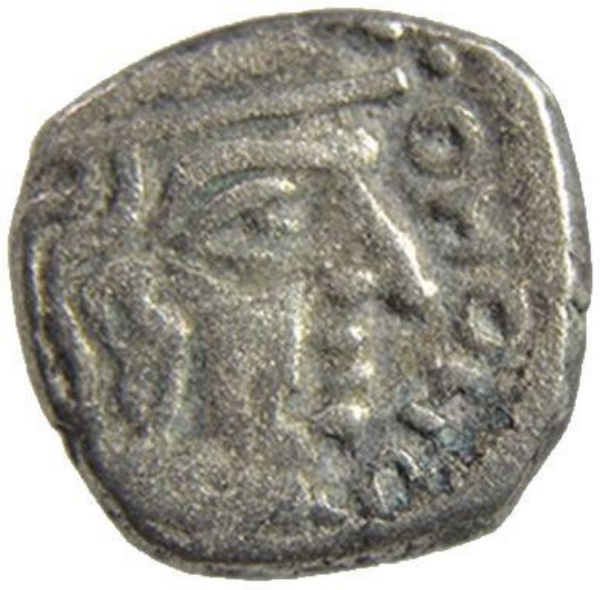
Picture Source of Kamaragupta I (c. 415 – c. 455 CE): Wikipedia
The King of Peace and Patron of Learning: A Deep Dive into Kumaragupta I
When we talk about the great Gupta Empire, names like Samudragupta or Chandragupta II usually hog the limelight. But if you were living in ancient India between 415 and 455 CE, you were living under the steady, capable hand of Kumaragupta I. Often called "Mahendraditya," he didn't just inherit an empire; he refined it into a cultural and academic powerhouse that changed the world forever.[1]
Key Takeaways
A Record-Breaking Reign: He ruled for roughly 40 years, making his the longest reign of any Gupta emperor.
The Founder of Nalanda: He is credited with establishing the foundations of Nalanda University, one of the greatest centers of learning in human history.[2]
The Golden Age Pivot: His era was characterized by internal peace and a massive output of diverse gold coinage, showing a very healthy economy.
The First Huna Storm: Toward the end of his life, he successfully (with the help of his son) defended the empire against the first waves of the Huna (Huns) invasions.[3]
Stepping Into Big Shoes
Kumaragupta I took the throne in 415 CE. Imagine the pressure—his father was Chandragupta II (the legendary Vikramaditya) and his grandfather was Samudragupta, the "Napoleon of India." Many expected a dip in quality, but Kumaragupta proved them wrong. He didn't focus on aggressive expansion because, frankly, his predecessors had already conquered almost everything worth having.[4] Instead, he focused on consolidation.
A Culture of Gold and Tolerance
One of the coolest ways we know about Kumaragupta is through his coins. He issued 15 different types of gold coins! Some show him as a horse rider, others as a lion-slayer, and some even depict him playing the lute or feeding a peacock.[5] This wasn't just vanity; it was propaganda showing a king who was as much a fan of the arts as he was a protector of the realm.
He was a devout follower of Lord Kartikeya (hence the name Kumar), but he was incredibly tolerant. He supported Buddhist monasteries and Hindu temples alike, proving that a diverse empire functions best when everyone has a seat at the table.
The Birth of Nalanda
If you enjoy the idea of Ivy League schools today, you have Kumaragupta to thank. He founded the first monastery at Nalanda in Bihar. It grew from a small religious center into an international university that hosted thousands of students from across Asia. It became the Harvard of the ancient world, teaching everything from astronomy to linguistics.[6]
The Sunset Years and the Huna Threat
Every long peace has its end. In the final years of his reign, the empire was shaken by the Pushyamitras and the Hunas (often identified as the White Huns).[7] While Kumaragupta was getting on in years, his son, Skandagupta, stepped up to lead the armies. They managed to push back the invaders, but the effort drained the royal treasury and signaled the beginning of the end for the Gupta's absolute dominance.
FAQs
1. Was Kumaragupta I as great a warrior as his father? While he didn't launch massive wars of conquest, he was no pushover. He performed the Ashvamedha (horse sacrifice), a ritual reserved only for powerful, independent monarchs who had successfully defended their borders and authority.[8]
2. What happened to his empire after he died? His son, Skandagupta, took over. While Skandagupta was a brilliant general, the empire began to struggle with the rising costs of war and internal revolts, leading to a slow decline over the next century.
3. Why is he associated with peacocks? Many of his silver and gold coins feature a peacock, which is the "vahana" (vehicle) of the deity Kartikeya. Since Kumaragupta was named after this deity, the peacock became a sort of royal symbol for his specific reign.[9]
References (Harvard Style)
Agrawal, A. (1989) Rise and Fall of the Imperial Guptas. Delhi: Motilal Banarsidass. Link
Altekar, A.S. (1954) The Gupta Gold Coins in the Bayana Hoard. Bombay: Numismatic Society of India.
Majumdar, R.C. (1977) Ancient India. Delhi: Motilal Banarsidass. Link
Mookerji, R.K. (1973) The Gupta Empire. Delhi: Motilal Banarsidass.
Sharma, T.R. (1989) A Political History of the Imperial Guptas. New Delhi: Concept Publishing Company.
Singh, U. (2008) A History of Ancient and Early Medieval India: From the Stone Age to the 12th Century. Delhi: Pearson Education. Link
Thapar, R. (2002) Early India: From the Origins to AD 1300. Berkeley: University of California Press. Link