.jpg)
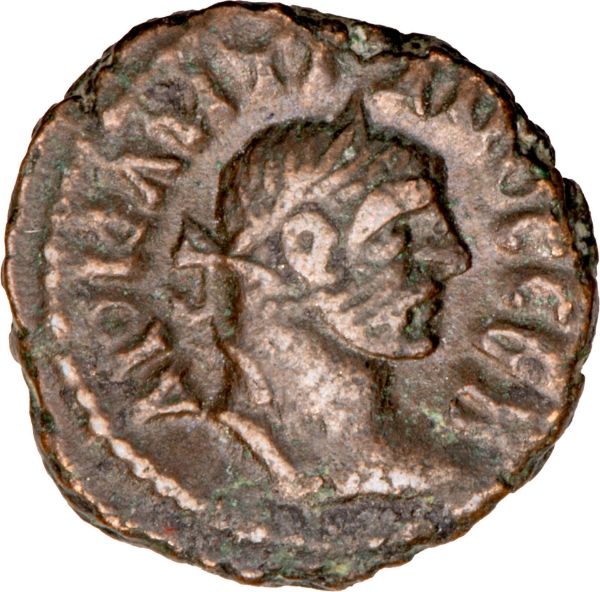
Picture Source of Marcus Aurelius Probus (c. 276 – 282): Wikipedia
Marcus Aurelius Probus: The Restoration of the Frontier (r. 276–282 AD)
Marcus Aurelius Probus was one of the "Illyrian Emperors," a series of soldier-emperors from the Danubian provinces who played a decisive role in ending the Crisis of the Third Century. His reign was characterized by relentless military campaigning, infrastructure development, and a focus on restoring the economic viability of the provinces.
1. Accession and Consolidation
Probus was born in Sirmium (modern-day Sremska Mitrovica, Serbia) around 232 AD. He rose through the ranks under Emperors Valerian and Aurelian, gaining a reputation as a highly capable tactician and disciplinarian.
Following the death of Emperor Tacitus in 276 AD, the Eastern legions proclaimed Probus emperor. This led to a brief conflict with Florianus, Tacitus's half-brother, who had the support of the Western legions. Probus avoided a direct pitched battle, instead utilizing the harsh climate of Cilicia to wear down Florianus's troops. When Florianus was assassinated by his own soldiers at Tarsus, Probus became the undisputed ruler of the Roman world (Aurelius Victor, De Caesaribus, 37).
2. Military Campaigns and Border Security
The primary objective of Probus’s reign was the security of the Rhine and Danube frontiers, which had been compromised by decades of civil war.
The Recovery of Gaul (277–278 AD): Probus led a massive campaign against Germanic tribes, specifically the Alamanni and the Longiones. Historical accounts (notably the Historia Augusta and Zosimus) claim he recovered sixty significant cities and pushed the invaders back across the Rhine (Zosimus, New History, 1.67–68).
The Limes Germanicus: Unlike many of his predecessors who simply drove invaders out, Probus focused on rebuilding the limes (fortified borders). He stationed new garrisons and implemented a policy of settling defeated barbarians (Vandals and Burgundians) on Roman soil, particularly in Britain and the Balkans, to serve as agricultural labor and future military recruits (Eutropius, Breviarium, 9.17).
The East and Egypt: Probus successfully suppressed a revolt in Egypt led by the Blemmyes and dealt with various internal usurpers, including Saturninus in the East and Proculus and Bonosus in Gaul (Historia Augusta, Vita Probi, 17–18).
3. Economic and Agricultural Reforms
Probus is perhaps most famous for his "vineyard policy." He recognized that the standing army was a significant financial drain and a potential source of political instability when idle.
Repeal of Domitian’s Edict: Probus rescinded the centuries-old edict of Domitian that had prohibited the planting of new vineyards in the provinces to protect Italian wine production. He actively encouraged the cultivation of grapes in Gaul (modern-day France), Pannonia, and Moesia (Aurelius Victor, De Caesaribus, 37.3).
Infrastructure Works: He utilized the legions for massive public works projects during peacetime. This included the drainage of marshes near his hometown of Sirmium to create fertile farmland and the construction of canals and bridges along the Rhine and Danube (Historia Augusta, Vita Probi, 21).
4. Assassination and Legacy
The very discipline and labor requirements that stabilized the empire eventually led to Probus's downfall. In 282 AD, while he was preparing for a campaign against the Sassanid Empire, he ordered his troops to drain a marsh in the heat of summer.
Resentful of being used as common laborers rather than soldiers, and hearing news that the Praetorian Prefect Carus had been proclaimed emperor in Raetia and Noricum, the troops mutinied. Probus sought refuge in a lookout tower, but the soldiers breached it and assassinated him (Zosimus, New History, 1.71).
Historical Significance:
The Restorer: Probus continued the work of Aurelian, further stabilizing the empire's borders.
Economic Impact: His viticulture reforms laid the foundation for the famous wine regions of the Moselle and Alsace.
Military Transition: His reign highlighted the tension between the traditional role of the soldier and the state's need for internal reconstruction, a challenge that would later be addressed by Diocletian’s Tetrarchy.
5. Bibliography of Primary and Secondary Sources
Primary Sources
Aurelius Victor, De Caesaribus: Provides a concise biographical account focusing on his administrative and viticulture achievements.
Eutropius, Breviarium Historiae Romanae: An essential late-antique summary of his military successes.
Historia Augusta (Vita Probi): While prone to exaggeration, it contains the most detailed—if sometimes fictionalized—narrative of his life.
Zosimus, Historia Nova: Offers an Eastern perspective on his rise and the subsequent mutiny.
Secondary Sources
Southern, P. (2015). The Roman Empire from Severus to Constantine. Routledge.
Watson, A. (1999). Aurelian and the Third Century. Psychology Press. (Contains significant context on Probus's role as a successor to Aurelian's policies).
Potter, D. S. (2004). The Roman Empire at Bay, AD 180–395. Routledge.