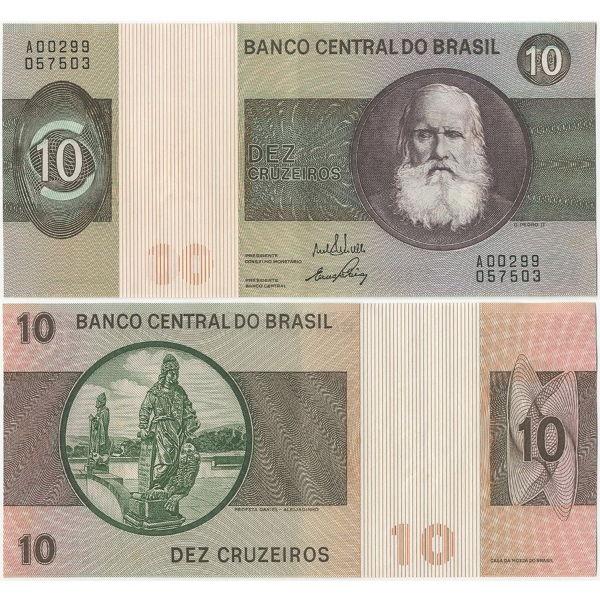
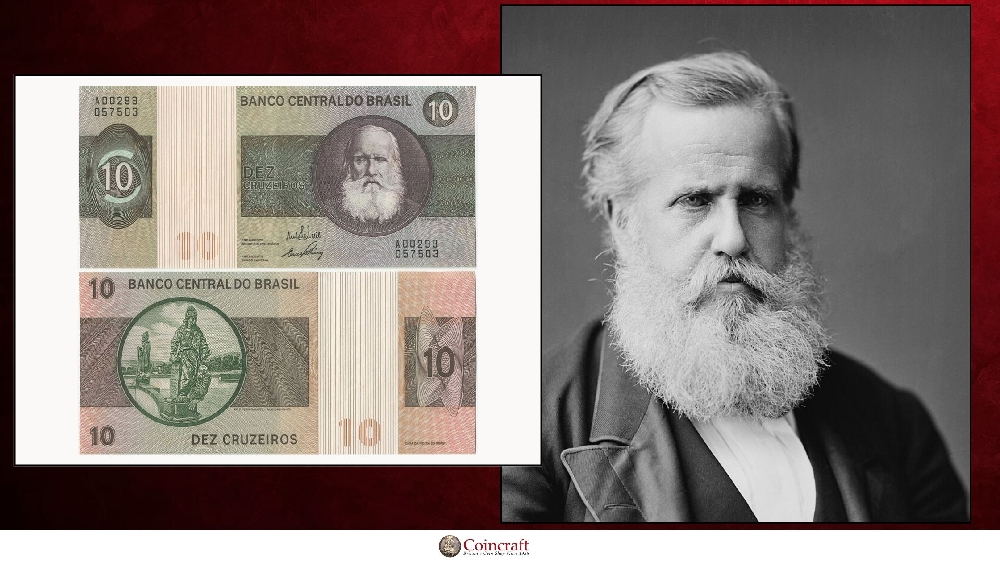
Picture Source of Pedro II of Brazil: Wikipedia
Dom Pedro II: The "Citizen Emperor" of Brazil
Dom Pedro II, born Pedro de Alcântara, was the second and last monarch of the Empire of Brazil. Ruling for over 58 years (1831–1889), his reign brought stability, cultural growth, and international respect to a nation previously fractured by political turmoil [1]. Often called "The Magnanimous," Pedro II is remembered as a highly intellectual ruler who prioritized education, science, and the modernization of Brazil. Despite his deep personal popularity, his commitment to peaceful evolution eventually paved the way for a bloodless military coup that ended the Brazilian monarchy, leaving behind a lasting legacy of progressive leadership and civic duty [2].
Key Takeaways
Decades of Stability: Pedro II ruled for 58 years, transforming Brazil from a chaotic, newly independent territory plagued by regional revolts into a stable, growing economic power in South America [1].
The "Citizen Emperor" Persona: He rejected the traditional pomp of European absolute monarchs, preferring the simple attire of a civil servant and dedicating his life to scientific progress, education, and the arts [3].
Abolition of Slavery: His reign oversaw the gradual dismantling of slavery, culminating in the Lei Áurea (Golden Law) in 1888. However, this reform alienated the powerful agrarian elite, directly precipitating the fall of the monarchy [4].
Tragic Fall and Exile: Deposed by a small military clique in 1889, Pedro II refused to allow any armed resistance to preserve his crown. He spent his final two years in exile in Europe, deeply homesick, but respected worldwide [2].
Key Facts
Fact Category | Details |
|---|---|
Full Name | Pedro de Alcântara João Carlos Leopoldo Salvador Bibiano Francisco Xavier de Paula Leocádio Miguel Gabriel Rafael Gonzaga [1] |
Born | December 2, 1825 (Rio de Janeiro, Brazil) |
Died | December 5, 1891 (Paris, France) |
Reign | April 7, 1831 – November 15, 1889 (58 years, 222 days) |
Coronation | July 18, 1841 |
Consort | Teresa Cristina of the Two Sicilies (married 1843) |
Heir | Princess Isabel, Imperial Princess of Brazil |
Key Achievements | Abolition of slavery, political stabilization, infrastructure modernization, promotion of education and science |
Early Life and the Turbulent Regency (1825–1840)
Pedro de Alcântara was born on December 2, 1825, in Rio de Janeiro [1]. He was the son of Emperor Dom Pedro I (who declared Brazil's independence from Portugal) and Empress Maria Leopoldina of Austria. His childhood was marked by abandonment and tragedy; his mother died when he was only one, and in 1831, his father was forced to abdicate the throne and return to Portugal to claim the Portuguese crown [3].
At just five years old, young Pedro was left behind as the designated Emperor of Brazil. A highly unstable regency took control of the country, during which regional rebellions, such as the Farroupilha Revolution and the Cabanagem, threatened to tear the young empire apart [1].
To restore national unity, politicians advanced Pedro’s legal majority. On July 23, 1840, at the age of fourteen, he was declared of age and formally assumed his constitutional powers as Dom Pedro II [2].
Stabilization, Parliamentary Monarchy, and Modernization
Upon taking the throne, Pedro II successfully consolidated power by playing the country’s two main political factions—the Liberals and the Conservatives—against one another. He established a unique parliamentary system, sometimes called parliamentarismo às avessas (parliamentarism inside out), wherein the Emperor held the ultimate "Moderating Power" (Poder Moderador), allowing him to dissolve parliament and call for new elections to maintain balance [2].
       [ Constitutional Emperor: Dom Pedro II ]
                        |
            ( Poder Moderador / Moderating Power )
            /           |            \
 [ Executive ]   [ Legislative ]   [ Judiciary ]
Under his stable governance, Brazil's economy flourished, largely driven by the coffee boom. Pedro II championed technological progress, introducing:
The first telegraph lines in South America.
Extensive railway networks connecting the interior plantations to ports.
The telephone (Pedro II was famously one of the first buyers of Alexander Graham Bell's invention at the 1876 Philadelphia Centennial Exposition) [3].
As a passionate patron of the arts and sciences, he funded the Imperial Colégio de Pedro II, supported the Brazilian Historic and Geographic Institute, and personally sponsored young Brazilian artists, musicians, and scientists to study in Europe [2].
Foreign Conflicts and Regional Leadership
While Pedro II preferred peace, his reign was punctuated by several major international conflicts in the River Plate basin:
The Platene War (1851–1852): Brazil allied with Argentine rebels to overthrow the dictator Juan Manuel de Rosas.
The Uruguayan War (1864–1865): A brief conflict that led to the stabilization of a friendly government in Uruguay.
The Paraguayan War (1864–1870): Also known as the War of the Triple Alliance, this was the bloodiest conflict in South American history. Brazil, Argentina, and Uruguay fought against Paraguayan dictator Francisco Solano López.
During the Paraguayan War, when military enlistment lagged, Pedro II offered to go to the front lines himself as the "first volunteer of the nation" [1]. The war ended in a Triple Alliance victory but left Brazil with significant foreign debt and a newly empowered, politically ambitious military class [4].
The Abolition of Slavery and the Fall of the Monarchy
Pedro II was privately a staunch abolitionist, freeing his own personal slaves early in his reign. However, he believed that a sudden, uncompensated end to slavery would ruin Brazil’s agricultural economy and trigger a civil war. He chose a path of gradual emancipation [4]:
1850 (Eusébio de Queirós Law): Banned the transatlantic slave trade.
1871 (Law of the Free Womb): Declared that children born to enslaved mothers were free.
1885 (Sexagenarian Law): Freed slaves over the age of 60.
May 13, 1888 (Golden Law / Lei Áurea): Signed by his daughter, Princess Isabel (acting as Regent while Pedro II was receiving medical treatment in Europe), this law unconditionally abolished slavery in Brazil [4].
While the Lei Áurea was celebrated by the populace, it proved to be the death knell of the Empire. Wealthy coffee oligarchs, furious at the loss of their unpaid labor without financial compensation, abandoned their support for the monarchy and allied with republican military officers [2].
On November 15, 1889, a small military faction led by Marshal Deodoro da Fonseca staged a coup d'état in Rio de Janeiro. Pedro II, unwilling to spill Brazilian blood in a civil war to keep his throne, accepted his deposition calmly. He and the imperial family were exiled to Europe under the cover of night [1].
Exile, Death, and Legacy
Pedro II spent his final years in France and Portugal, living modestly in hotels on a small pension. He remained deeply homesick, carrying a small package of Brazilian soil with him wherever he went [3]. On December 5, 1891, he died of pneumonia in Paris at the age of 66.
His death was met with global mourning. In Brazil, despite the republican government's efforts to suppress royalist sentiment, public grief was immense. In 1921, the republican government officially repealed his banishment, and the remains of Pedro II and Empress Teresa Cristina were returned to Brazil with great ceremony. They are buried today in the Imperial Cathedral of Petrópolis [2].
Frequently Asked Questions (FAQs)
Why did Dom Pedro II lose his throne if he was so popular?
While Pedro II was deeply loved by the public, he lacked organized political backing near the end of his life. His main support base had been the conservative agrarian elites, who abandoned him after his daughter signed the Golden Law abolishing slavery in 1888 [4]. Furthermore, the rising urban middle class and the military sought a republic, and the aging Emperor himself had grown tired of ruling, openly doubting the long-term viability of the monarchy [2].
Was Dom Pedro II related to European royalty?
Yes. Through his father, Pedro I, he was a member of the House of Braganza (Portugal). Through his mother, Maria Leopoldina, he was a member of the House of Habsburg-Lorraine (Austria), making him a first cousin to Emperor Franz Joseph I of Austria and Napoleon II of France.
How did Dom Pedro II view his role as Emperor?
Pedro II did not view himself as a traditional, divinely ordained ruler. He saw the monarchy as a duty and a burden rather than a privilege. He famously remarked that if Brazil ever chose to become a republic, he would gladly step down to become a schoolteacher, a profession he valued above all others [3].
Did Pedro II fight in the Paraguayan War?
Yes, but not as an active combatant. When Paraguay invaded Brazilian territory in 1865, Pedro II traveled to the southern siege of Uruguaiana to boost troop morale and oversee military operations directly, earning the respect of his soldiers and allies [1].
References
[1] Barman, Roderick J. Citizen Emperor: Pedro II and the Making of Brazil, 1825–1891. Stanford University Press, 1999.
[2] Carvalho, José Murilo de. D. Pedro II: ser ou não ser. Companhia das Letras, 2007.
[3] Schwarcz, Lilia Moritz. As barbas do Imperador: D. Pedro II, um monarca nos trópicos. Companhia das Letras, 1998.
[4] Skidmore, Thomas E. Brazil: Empire and Republic, 1822–1930. Cambridge University Press, 1989.