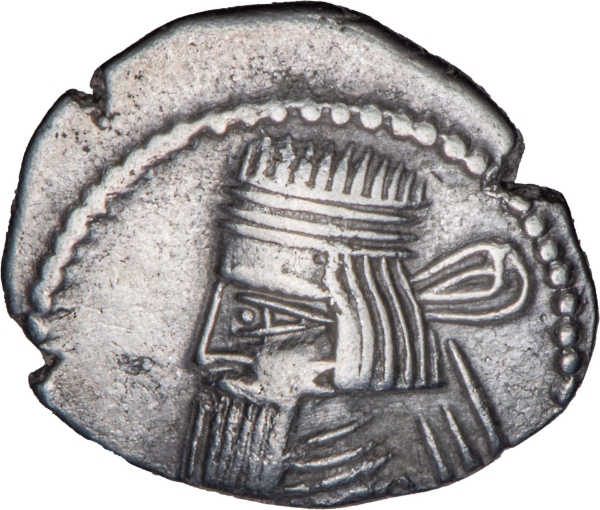
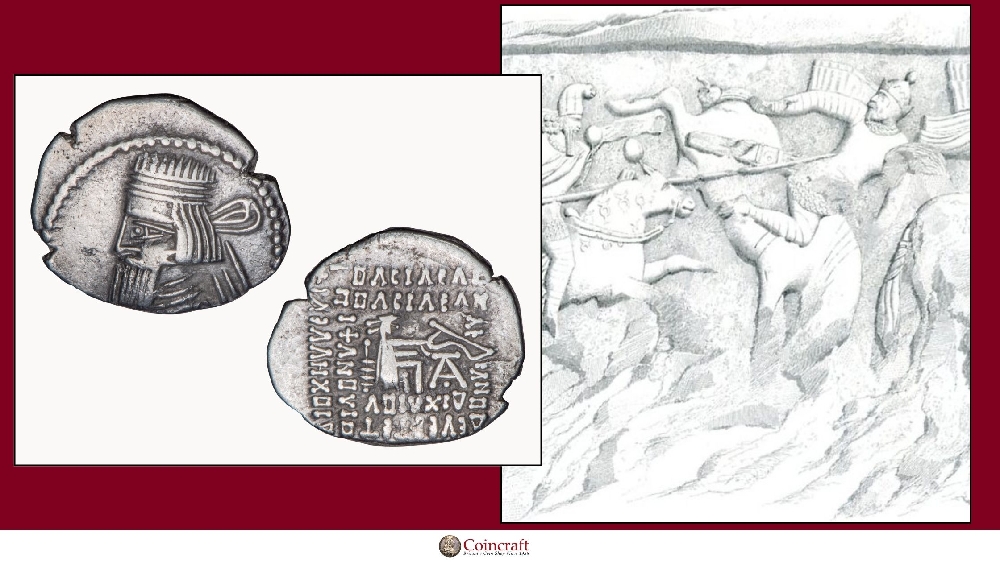
Picture Source of Artabanos IV: Wikipedia
The Last Great Arsacid: The Life and Fall of Artabanos IV
Artabanos IV, was the final significant ruler of the Parthian Empire. His reign was a whirlwind of sibling rivalry, Roman betrayal, and the sudden, violent birth of a new Persian era. While history often remembers the winners, the story of Artabanos is a gripping look at a man who fought tooth and nail to keep a 400-year-old dynasty alive against the turning tides of fate.
Key Takeaways
The Final Stand: Artabanos IV was the last effective ruler of the Arsacid (Parthian) dynasty before it was overthrown by the Sassanids¹.
Sibling Rivalry: Much of his early reign was spent in a grueling civil war against his brother, Vologases VI, which significantly weakened the empire².
Defeating Rome: He achieved one of Parthia’s greatest military victories against the Roman Emperor Macrinus at the Battle of Nisibis in 217 AD³.
The Rise of Ardashir: Despite his external successes, Artabanos was eventually defeated by his former vassal, Ardashir I, marking the end of the Parthian era⁴.
A House Divided: The Struggle for the Throne
The story of Artabanos IV doesn't begin with peace. Around 213 AD, he rose up against his brother, Vologases VI. It wasn't just a small family spat; it was a full-scale civil war that tore the Parthian heartland apart. While Vologases managed to keep control of the capital, Ctesiphon, and the surrounding areas of Babylonia, Artabanos successfully carved out a power base in Media and the northern territories⁵.
By 216 AD, Artabanos was effectively the man in charge of the empire's military might, even if his brother still held the traditional capital. This internal fracturing, however, was a "blood in the water" moment for the neighbors—specifically the Romans⁶.
The Roman Betrayal and the Battle of Nisibis
Enter the Roman Emperor Caracalla. In an attempt to conquer Parthia through guile rather than just grit, Caracalla proposed a marriage between himself and Artabanos’s daughter. Artabanos was rightfully suspicious, but eventually agreed, hoping for a lasting peace.
It was a trap. During the wedding celebrations in 216 AD, Caracalla’s troops turned on the unarmed Parthian guests, massacring them. Artabanos himself barely escaped with his life⁷.
But if the Romans thought Artabanos would crumble, they were dead wrong. After Caracalla was assassinated by his own men, the new Emperor Macrinus faced a furious Parthian army led by Artabanos. In 217 AD, at the Battle of Nisibis, the Parthians unleashed their heavy cataphracts and camel-borne archers in a brutal three-day engagement. The Romans were so badly beaten that Macrinus was forced to pay a staggering 200 million sesterces in reparations to secure peace⁸.
The Shadow from the South: Ardashir I
Just as Artabanos reached the height of his power by humbling Rome, a new threat emerged from within his own borders. Ardashir I, a local ruler in the Persis region (modern-day Fars, Iran), began systematically conquering neighboring territories⁹.
Artabanos initially dismissed Ardashir as a minor nuisance. He even reportedly sent a letter calling Ardashir a "miserable Kurd" who had overstepped his bounds. But Ardashir was no minor rebel; he was a visionary seeking to restore the glory of the old Achaemenid Empire. By the time Artabanos realized the scale of the threat, Ardashir had already secured most of southern Iran¹⁰.
The End of an Era: The Battle of Hormozdgan
The final showdown took place in 224 AD at the Battle of Hormozdgan. It was the definitive "end of an era" moment. The Parthian cavalry, once the terror of the ancient world, met its match in the disciplined forces of the rising Sassanid house.
Artabanos IV fought on the front lines but was ultimately killed in the heat of battle¹¹. With his death, the Arsacid dynasty, which had ruled for nearly five centuries, effectively collapsed. Ardashir I was crowned "King of Kings," and the Sassanid Empire was born on the ruins of Artabanos's kingdom¹².
FAQs about Artabanos IV
1. Was Artabanos IV actually the last Parthian King? Technically, his brother Vologases VI continued to mint coins in Ctesiphon for a few years after Artabanos's death, but Artabanos was the last ruler with real authority and military power. Most historians consider his death the functional end of the empire¹³.
2. Why did the Parthians lose to the Sassanids after beating the Romans? Years of civil war between Artabanos and his brother had exhausted the empire’s resources and nobility. While they could still pull together for a short campaign against Rome, they lacked the internal stability to suppress a deep-rooted, ideological revolution like the one led by Ardashir I¹⁴.
3. What happened to Artabanos's family? After his death, his sons continued a guerrilla-style resistance in the mountains for a short time, but they were eventually captured or forced into exile. The Sassanids were very thorough in ensuring no Arsacid rival remained to challenge their new throne¹⁵.
References
Daryaee, T. (2014). Sasanian Persia: The Rise and Fall of an Empire. London: I.B. Tauris. Link
Schippmann, K. (1986). Artabanus (Arsacid kings). Encyclopaedia Iranica. Link
Herodian. (1961). History of the Empire from the Death of Marcus, Book IV. Translated by Edward C. Echols. Berkeley: University of California Press.
Farrokh, K. (2007). Shadows in the Desert: Ancient Persia at War. Oxford: Osprey Publishing. Link
Chaumont, M. L. and Schippmann, K. (1988). Balāš VI. Encyclopaedia Iranica.
Cassius Dio. (1927). Roman History, Volume IX, Books 71-80. Translated by Earnest Cary. Loeb Classical Library.
Rawlinson, G. (1873). The Sixth Great Oriental Monarchy. London: Longmans, Green, and Co.
Frye, R. N. (1984). The History of Ancient Iran. Munich: C.H. Beck.
Wiesehöfer, J. (2001). Ancient Persia. London: I.B. Tauris.
Shahbazi, A. S. (2004). Hormozdgān. Encyclopaedia Iranica. Link
Rezakhani, K. (2017). ReOrienting the Sasanians: East Iran in Late Antiquity. Edinburgh: Edinburgh University Press.
Agathias. (1975). The Histories. Translated by Joseph D. Frendo. Berlin: Walter de Gruyter.
Curtis, V. S. and Stewart, S. (2007). The Age of the Parthians. London: I.B. Tauris.
Brosius, M. (2006). The Persians: An Introduction. London: Routledge.
Olmstead, A. T. (1948). History of the Persian Empire. Chicago: University of Chicago Press.