 - WBH0517.jpg)
Picture Source of Jigme Khesar Namgyel Wangchuck: Wikipedia
Jigme Khesar Namgyel Wangchuck: The People's King of Bhutan
In the heart of the Himalayas lies the Kingdom of Bhutan, a nation famous for measuring its success not by pure economic output, but by Gross National Happiness. At the helm of this unique modern state is Jigme Khesar Namgyel Wangchuck, the fifth Druk Gyalpo (Dragon King). Taking the throne in his twenties, he successfully guided his country through a historic transition from an absolute monarchy to a democratic, constitutional monarchy, earning him deep reverence both at home and abroad [2].
Affectionately known as the "People's King," his reign represents a delicate and successful balance between rapid 21st-century modernization and the fierce preservation of ancient Buddhist traditions [4].
Key Facts
Full Name: Jigme Khesar Namgyel Wangchuck
Title: 5th Druk Gyalpo (Dragon King) of Bhutan
Born: February 21, 1980
Ascension: Took the throne on December 9, 2006, and was officially crowned on November 6, 2008 [2].
Education: Educated at Cushing Academy and Wheaton College in the United States, before completing a degree in Foreign Service Programme and International Relations at Magdalen College, Oxford, UK [4].
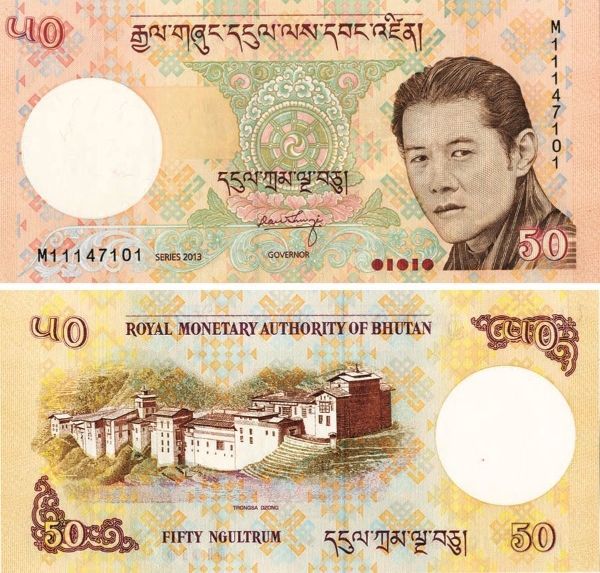
Numismatic Presence: His portrait is prominently featured on modern issues of the Bhutanese Ngultrum, including the 50, 100, and 1000 notes [1].
Key Takeaways
Champion of Democracy: Unlike many monarchs who resist yielding power, King Jigme Khesar actively oversaw and encouraged Bhutan's transition to a parliamentary democracy, a process initiated by his father [2].
Gross National Happiness (GNH): He is a steadfast global ambassador for GNH, a philosophy that prioritizes environmental conservation, cultural preservation, and the psychological well-being of citizens alongside economic development [3].
Accessible Leadership: He is renowned for his "Kidu" (welfare) initiatives, frequently traveling to remote villages to distribute land to landless farmers and grant immediate assistance to vulnerable citizens, cementing his status as a highly accessible leader [2][4].
Early Life and Education
Born in 1980 as the eldest son of the fourth King of Bhutan, Jigme Singye Wangchuck, Jigme Khesar was raised with a deep understanding of his future responsibilities. His education was a blend of traditional Bhutanese teachings and Western academia.
After completing his early schooling in Bhutan, he studied in the United States at Cushing Academy and Wheaton College in Massachusetts. He later attended the prestigious Magdalen College at the University of Oxford in the United Kingdom, where he completed the Foreign Service Programme and earned a degree in International Relations [4]. This global education allowed him to view Bhutan's unique isolated culture through an international lens, preparing him for the complexities of modern governance.
The Dawn of Democracy in the Himalayas
In December 2006, the fourth King shocked the world—and many of his own citizens—by abdicating the throne early to pave the way for democratic elections. Jigme Khesar Namgyel Wangchuck, then just 26 years old, stepped into the role of King [2].
Rather than holding onto absolute power, the young monarch spent his early reign traveling extensively throughout the mountainous country. He personally explained the new democratic constitution to his people, encouraging them to embrace the upcoming parliamentary elections of 2008. His guidance was crucial; many Bhutanese citizens were hesitant to abandon the absolute monarchy because they trusted the royal family implicitly. His reassurance helped successfully launch Bhutan's first democratic government [2].
Championing Gross National Happiness
King Jigme Khesar is a fervent protector of "Gross National Happiness" (GNH), a guiding philosophy first coined by his father in the 1970s. The King has modernized the concept, integrating it into the nation's constitution and policy-making framework.
Under his reign, GNH dictates that any new industry or development must not compromise the country's pristine environment or cultural heritage. For example, Bhutan remains the world's first and only officially carbon-negative country, absorbing more greenhouse gases than it emits, a direct result of the environmental pillars of GNH that the King fiercely protects [3].
Numismatic Significance: The King on the Ngultrum
For banknote collectors, King Jigme Khesar Namgyel Wangchuck is a familiar face. Following his coronation, the Royal Monetary Authority of Bhutan updated the national currency, the Ngultrum, to reflect the new era of the fifth Druk Gyalpo [1].
His portrait graces several modern banknotes, most notably the intricately designed 50 Ngultrum note, the vibrant 100 Ngultrum note, and the high-denomination 1000 Ngultrum note. These banknotes are highly sought after by collectors for their brilliant use of color, complex Buddhist geometric patterns, and the serene portrait of the young king dressed in the traditional "Gho" (the national dress of Bhutanese men) [1].
Frequently Asked Questions (FAQs)
Q: Who is the current King of Bhutan? A: The current King is Jigme Khesar Namgyel Wangchuck. He is the fifth King of the Wangchuck dynasty and ascended to the throne in 2006 [2].
Q: Why is he called the "Dragon King"? A: In the native Dzongkha language, Bhutan is known as Druk Yul, which translates to the "Land of the Thunder Dragon." Therefore, the ruling monarch holds the title of Druk Gyalpo, meaning "Dragon King" [4].
Q: What is Gross National Happiness (GNH)? A: GNH is an index used by the Bhutanese government to measure the collective happiness and well-being of its population. It focuses on four main pillars: sustainable development, environmental conservation, cultural preservation, and good governance, rather than just tracking GDP [3].
Q: Is King Jigme Khesar on Bhutanese money? A: Yes. His portrait is featured on several modern issues of the Bhutanese Ngultrum (BTN), including the 50, 100, and 1000 denomination banknotes, issued by the Royal Monetary Authority [1].
References
Royal Monetary Authority of Bhutan. (n.d.). Banknotes and Coins of Bhutan.
BBC News. (2011, October 13). Profile: Jigme Khesar Namgyel Wangchuck.
Centre for Bhutan Studies & GNH. (2016). A Compass Towards a Just and Harmonious Society: 2015 GNH Survey Report.
Oxford University Press / Magdalen College Alumni. (2008). The Coronation of H.M. King Jigme Khesar Namgyel Wangchuck.