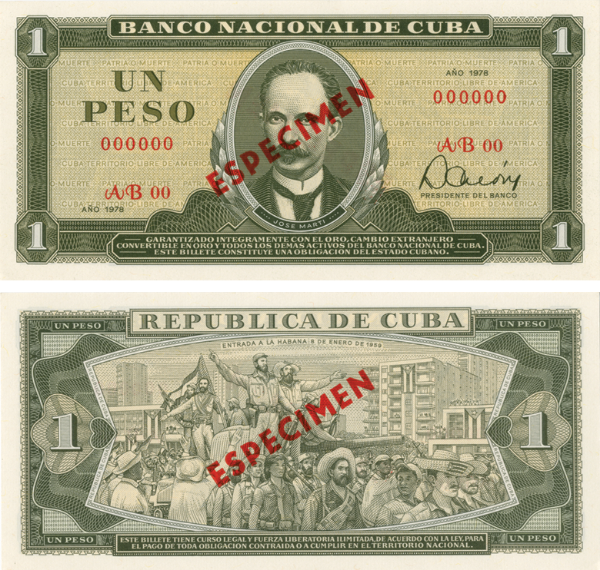
Picture Source of José Martí (1853 - 1895): Wikipedia
 - WCU0935 .jpg)
José Martí: The Apostle of Cuban Independence
José Martí (1853–1895) stands as one of the most significant figures in Latin American history. He was a polymath—a poet, essayist, journalist, philosopher, and revolutionary leader. Known as the "Apostle" of Cuban independence, Martí’s life was defined by a single, unwavering goal: the liberation of Cuba from Spanish colonial rule and the prevention of its absorption by the rising power of the United States. His legacy, however, extends far beyond Cuban borders; he is revered across Latin America as a visionary of continental unity.
Key Facts
Birth/Death: January 28, 1853 – May 19, 1895.
The "Apostle": He is referred to as the Apóstol (Apostle) of Cuban Independence because of his moral and intellectual leadership.
Nuestra América: His seminal 1891 essay warns of the "giant with seven-league boots," a metaphor for the expanding United States.
Founder of the PRC: He created the Cuban Revolutionary Party in 1892 to unite disparate pro-independence factions.
Literary Masterpieces: Key works include Ismaelillo (1882), Versos Sencillos (1891), and the novel Amistad Funesta (1885).
Diplomatic Exile: He lived in exile in Spain, Mexico, Guatemala, Venezuela, and the United States (mostly New York).
Key Takeaways
Unity is Strength: Martí’s greatest political achievement was the unification of the Cuban exile community. He proved that ideological consensus is required to challenge entrenched powers.
Intellectual Independence: He taught that intellectual decolonization is the first step toward political sovereignty. He advocated for a Latin American identity rooted in indigenous and mixed-race heritage.
The Ethics of Leadership: Martí prioritized self-sacrifice. He did not ask others to fight for a cause he would not die for, establishing an ethical standard for revolutionary leadership in the region.
Anti-Imperialist Foresight: He was one of the first intellectuals to articulate the danger of U.S. expansionism in the Caribbean, arguing that economic independence was just as vital as political independence.
The Formative Years
Born in Havana, Cuba, in 1853 to Spanish immigrant parents, Martí grew up witnessing the brutal realities of the colonial system. His political awakening occurred early, catalyzed by the onset of the Ten Years' War (1868–1878). At the age of 16, he was arrested for writing a letter criticizing a classmate who had joined the Spanish volunteer militia.
Sentenced to forced labor, the harsh conditions at the San Lázaro quarries severely damaged his health, leaving physical scars that would haunt him for the rest of his life [1]. This early trauma solidified his resolve. After being deported to Spain, he continued his education, earning degrees in law and philosophy. His time in Europe and later in Mexico, Guatemala, and Venezuela expanded his worldview, allowing him to analyze the systemic flaws of colonialism and the dangers of imperial expansion.
The Intellectual Revolutionary
Martí was a man of letters who believed that culture and politics were inseparable. His literary work was not mere escapism; it was a weapon of liberation. His collection Versos Sencillos (Simple Verses) demonstrated a profound connection to nature and humanity, while his essays provided a rigorous critique of contemporary power dynamics [2].
His most famous essay, "Nuestra América" (1891), remains a seminal text in post-colonial studies. In it, Martí articulated a vision of Latin America that was neither a copy of Europe nor a subservient neighbor to the United States. He urged Latin Americans to govern themselves based on their own realities, traditions, and local knowledge, rather than importing foreign administrative models that ignored the specific needs of their societies [3].
The Road to Independence
Martí recognized that the failure of the Ten Years' War was due to internal divisions among revolutionary leaders. To succeed, he believed the independence movement needed to be unified, disciplined, and organized. In 1892, he founded the Cuban Revolutionary Party (PRC) in New York City.
The PRC was a revolutionary masterpiece of organization. It brought together veterans of the 1868 war, younger radicals, and exile communities. Martí’s diplomatic skill was on full display as he navigated the egos of powerful generals and the suspicions of the U.S. government. He insisted that the new Cuba must be a republic "with all and for the good of all," emphasizing social equality and rejecting the racial hierarchies that had plagued colonial Cuba [4].
Death at Dos Ríos
Martí returned to Cuba in April 1895 to lead the uprising. He did not view himself primarily as a military man, but he believed he had a moral duty to be on the front lines. On May 19, 1895, at the Battle of Dos Ríos, Martí rode toward the Spanish lines and was killed in the initial skirmish. He was 42 years old.
His death was a devastating blow to the revolution, but it also served as a martyr’s call to arms. The conflict he helped ignite would eventually lead to the Spanish-American War in 1898 and the end of Spanish rule in Cuba, though the outcome was not the independent republic he had envisioned, but rather a new era of heavy U.S. influence [5].
Frequently Asked Questions (FAQs)
Q: Why is José Martí still so relevant today? A: Martí’s writings on Latin American identity, anti-imperialism, and social justice continue to influence political thought across the Americas. His philosophy of unity remains a touchstone for pan-Latin American movements.
Q: Was Martí a poet or a politician? A: He was both. Martí believed that language could shape reality. He utilized his poetic voice to inspire national sentiment and his political pragmatism to organize the revolution.
Q: What was Martí’s relationship with the United States? A: Complex. He admired the U.S. for its democratic institutions and industrious nature, but he feared its expansionist foreign policy. He famously wrote, "I have lived in the monster, and I know its vitals," warning against the economic and political dominance of the U.S. over Latin America.
Q: Did Martí ever win a battle? A: Martí was an intellectual and a visionary leader rather than a professional military strategist. His contribution to the war was moral, organizational, and diplomatic. His death occurred in his first major engagement on Cuban soil.
Bibliography
Kirk, J. M. (1983). José Martí: Mentor of the Cuban Nation. University Press of Florida.
Foner, P. S. (1978). Martí on the U.S.A.. Monthly Review Press.
Martí, J. (1891). Nuestra América. (Original essay published in La Revista Ilustrada de Nueva York).
Turton, P. (1986). José Martí: Architect of Freedom. Afroworld.