Picture Source of Francisco del Rosario Sánchez (1817 – 1861): Wikipedia
 - WDM1985 .jpg)
Francisco del Rosario Sánchez (1817–1861): Founding Father, Martyr, and Architect of Dominican Freedom
Introduction
Francisco del Rosario Sánchez stands as one of the paramount figures in Caribbean political history, revered alongside Juan Pablo Duarte and Matías Ramón Mella as one of the three Founding Fathers (Padres de la Patria) of the Dominican Republic 1. Born in Santo Domingo during a turbulent epoch characterised by shifting imperial dominance and foreign administration, Sánchez emerged not merely as an ardent activist, but as the pragmatic engine of the Dominican independence movement. When exile severed Duarte from the immediate struggle in 1843, it was Sánchez who assumed leadership of the clandestine revolutionary society La Trinitaria, orchestrating the coalition-building and strategic preparations that culminated in the historic proclamation of sovereignty at the Puerta del Conde on 27 February 1844 2.
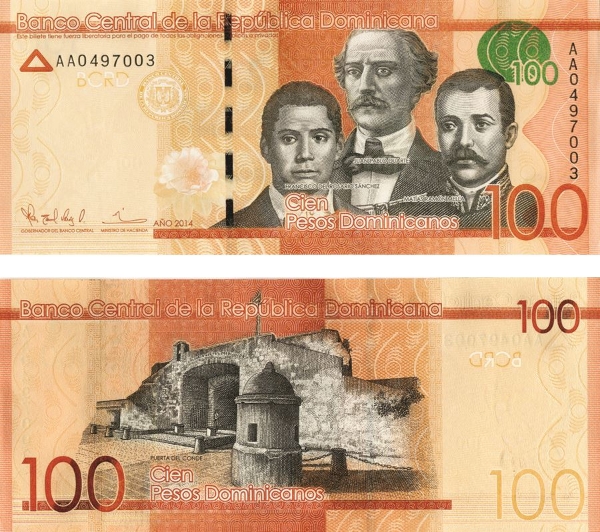
Sánchez’s legacy, however, extends far beyond the initial victory of 1844; it is irrevocably defined by his unyielding defence of national self-determination against domestic authoritarianism and foreign subjugation 3. When General Pedro Santana executed the contentious re-annexation of the young republic to the Spanish Crown in 1861, Sánchez refused to acquiesce to the erosion of Dominican liberty. Spearheading an armed expedition from exile in Haiti to restore constitutional independence, he was betrayed, wounded, and captured. His subsequent execution by firing squad at the age of forty-four transformed him from a political architect into the supreme martyr of Dominican nationhood—a legacy enshrined today in national monuments and on the obverse of the 100 Pesos Dominicanos banknote 4.
Key Takeaways
Architect of Independence: Alongside Juan Pablo Duarte and Matías Ramón Mella, Francisco del Rosario Sánchez is celebrated as one of the three Founding Fathers (Padres de la Patria) of the Dominican Republic 1.
Leader at the Critical Hour: When Juan Pablo Duarte was forced into exile in 1843, Sánchez stepped forward to lead the underground movement La Trinitaria, directing the strategic preparations for liberation 2.
Historical Proclamation: On 27 February 1844, Sánchez famously raised the newly designed Dominican flag at the Puerta del Conde (Count’s Gate) in Santo Domingo, formally declaring independence from Haitian rule 3.
Unwavering Patriotism: Throughout his life, Sánchez resisted political despotism and foreign subjugation, enduring multiple exiles for his democratic principles 4.
Martyrdom: In 1861, Sánchez led an armed expedition against General Pedro Santana’s annexation of the republic back to Spain. Ambushed and captured, he was executed by firing squad, cementing his enduring legacy as a national martyr 5.
Cultural & Numismatic Icon: His portrait appears alongside Duarte and Mella on the obverse of the 100 Pesos Dominicanos currency note, fronting the historic Puerta del Conde 16.
Key Facts
Feature | Details |
|---|---|
Full Name | Francisco del Rosario Sánchez 1 |
Date of Birth | 9 March 1817 6 |
Place of Birth | Santo Domingo, Captaincy General of Santo Domingo (now Dominican Republic) 6 |
Date of Death | 4 July 1861 (aged 44) 5 |
Place of Death | El Cercado, San Juan, Dominican Republic 5 |
Cause of Death | Execution by firing squad 27 |
Primary Roles | Revolutionary leader, politician, lawyer, military commander 9 |
Key Organisations | |
Resting Place | Altar de la Patria (Mausoleum), Santo Domingo 29 |
Numismatic Feature | 100 Pesos Dominicanos Banknote (Obverse) 16 |
Early Life and Intellectual Formation
Francisco del Rosario Sánchez was born in Santo Domingo on 9 March 1817, during a period marked by profound geopolitical instability in Hispaniola 6. His father, Olaya Sánchez, was a tailor, and his mother, Francisca del Rosario, was a woman of firm principle who deeply influenced her son's moral development.
Sánchez grew up during the period of Haitian rule over the entire island, which began in 1822 under President Jean-Pierre Boyer 7. Despite the socio-economic restrictions of the era, Sánchez received an excellent education. He studied law under the guidance of Father Gaspar Hernández, a prominent clergyman whose philosophical circles served as an intellectual catalyst for young, educated Dominicans dissatisfied with foreign administration 8.
Sánchez displayed exceptional intellectual aptitude, developing a strong command of legal practice, political theory, and rhetoric. His background as a legal practitioner provided him with a structured understanding of constitutional governance, civil rights, and statecraft—tools that would prove vital in constructing the foundation of an independent nation 9.
La Trinitaria and the Leadership Shift
In July 1838, the visionary activist Juan Pablo Duarte established La Trinitaria, a secret revolutionary society dedicated to securing complete sovereignty for the Spanish-speaking eastern portion of Hispaniola 10. Sánchez joined the movement shortly after its inception, quickly rising through its ranks due to his organizational talent, charisma, and pragmatic leadership style.
Unlike Duarte, who functioned primarily as the ideological architect of the independence movement, Sánchez possessed a formidable capacity for tactical execution and direct political mobilization 11. In 1843, Haitian authorities discovered the covert network of La Trinitaria, launching a campaign of repression that forced Duarte to flee into exile to Curaçao 12.
With Duarte absent, the survival of the independence cause fell squarely upon Sánchez’s shoulders, supported closely by Matías Ramón Mella. Operating under aliases and in constant danger of arrest or execution, Sánchez reorganized the underground cells, forged crucial alliances with conservative factions who also opposed Haitian rule, and drafted the fundamental blueprint for a sovereign Dominican state 13.
┌──────────────────────────────────────────────────────────┐
│                   LA TRINITARIA (1838)                    │
│            Ideological Foundation for Freedom             │
└────────────────────────────┬─────────────────────────────┘
                             │
            ┌────────────────┴────────────────┐
            ▼                                 ▼
   Juan Pablo Duarte                Francisco del Rosario Sánchez
 (Ideological Visionary)               (Tactical Execution & Law)
   Exiled in 1843                     Assumed Operational Command
            │                                 │
            └────────────────┬────────────────┘
                             │
                             ▼
              PROCLAMATION OF INDEPENDENCE
             27 February 1844 (Puerta del Conde)
The Proclamation of Independence (1844)
The culmination of years of clandestine preparation occurred on the night of 27 February 1844. Assembled at the historic Puerta del Conde city gate in Santo Domingo, a group of patriots led by Sánchez and Mella initiated the revolt 14. After Mella fired his famous blunderbuss shot (trabucazo), signaling the onset of the uprising, Sánchez unfurled the newly designed Dominican tricolour flag and proclaimed the birth of the Dominican Republic 15.
Following the successful takeover of the capital, a provisional governing body known as the Junta Central Gubernamental (Central Government Junta) was established. Sánchez was named its first president, temporarily assuming executive power over the newborn nation at the age of twenty-six 16. He oversaw early administrative measures and organized defense forces to repel impending military counter-offensives from Haiti.
Upon Duarte’s return from exile in March 1844, Sánchez willingly yielded leadership of the government, demonstrating his commitment to civic duty over personal ambition 17.
Post-Independence Conflicts and Repeated Exile
The initial euphoria of independence was rapidly eclipsed by internal factionalism. A deep rift opened between the liberal nationalists (led by Duarte, Sánchez, and Mella) and conservative military caudillos, most notably General Pedro Santana and Buenaventura Báez 18. Santana believed the young republic could not survive without foreign protection and sought a protectorate agreement with France or Spain.
Sánchez vehemently opposed any compromise of national sovereignty. In July 1844, Santana staged a military coup, seized control of the government, and declared Duarte, Sánchez, and their allies "traitors to the fatherland" 19. Sánchez was arrested and sent into his first period of exile in August 1844.
Over the subsequent decade, Sánchez experienced a turbulent cycle of exile, pardon, political service, and renewed banishment:
First Return (1848): Following an amnesty granted by President Manuel Jimenes, Sánchez returned to Santo Domingo, serving in prominent judicial and administrative roles, including Public Prosecutor and Minister of Justice 20.
Second Exile (1859): After publicly opposing the corrupt administration of President Buenaventura Báez, Sánchez was banished once again, settling in the Danish island of Saint Thomas 21.
Opposition to Spanish Annexation and the Final Campaign
In 1861, General Pedro Santana committed what many Dominicans regarded as the ultimate betrayal: he formally dissolved the republic and annexed the country back to the Spanish Empire, making the Dominican Republic a Spanish colony once again (La Anexión) 22.
From his exile in Saint Thomas, Sánchez was overcome with outrage. Recognizing that diplomatic protests were futile, he began organizing an armed invasion force to overthrow Spanish rule and restore national independence. In an open letter to the Dominican people, Sánchez famously declared:
"I am the Dominican flag... To step on me, you will have to tear me to pieces." 23
This iconic declaration encapsulated his total personal identification with the nation's independence, transforming his campaign into a moral imperative for the Dominican people.
Despite lacking adequate financial support and armaments, Sánchez sought assistance from Haitian President Fabre Geffrard, who provided discreet logistical support, fearing that a Spanish military presence next door posed a direct threat to Haiti 24.
In June 1861, Sánchez led an armed expedition across the border into western Dominican territory. However, Santana's forces had been alerted to the invasion plans.
Ambush, Trial, and Execution
On 20 June 1861, while advancing through the rugged terrain of El Cercado in the southern highlands, Sánchez’s column was betrayed by a local guide and ambushed by forces loyal to Santana 25. Severely wounded in the leg during the battle, Sánchez was captured alongside over twenty of his officers and men.
Santana ordered a swift military tribunal in San Juan de la Maguana. Despite suffering from severe injuries and intense pain, Sánchez delivered a spirited defense of his actions, asserting that he was defending the constitutional integrity of a sovereign nation against an illegal occupation 26.
Unsurprisingly, the tribunal declared Sánchez and his comrades guilty of treason against the Spanish Crown. On 4 July 1861, at the age of forty-four, Francisco del Rosario Sánchez was executed by firing squad in the cemetery of El Cercado 27. Prior to his execution, he requested that a Dominican flag be wrapped around his body.
Legacy and Assessment
The execution of Sánchez backfired dramatically on Santana and the Spanish administration. Rather than quelling dissent, Sánchez’s martyrdom served as a rallying cry that galvanized widespread popular outrage, directly inspiring the Dominican Restoration War (1863–1865) 28. Within four years of his death, Dominican forces successfully expelled the Spanish army and re-established the sovereign republic.
Today, Francisco del Rosario Sánchez is revered as a national hero. His remains rest alongside those of Juan Pablo Duarte and Matías Ramón Mella inside the Altar de la Patria, an imposing white marble mausoleum located at the Puerta del Conde in Santo Domingo—the very spot where he raised the nation's flag in 1844 29.
His portrait regularly graces national coinage, monuments, and banknotes, such as the 100 Pesos Dominicanos bill, preserving his legacy as an unyielding guardian of freedom 16.
Frequently Asked Questions (FAQs)
Why is Francisco del Rosario Sánchez considered a Founding Father?
Sánchez played a critical operational role in organizing the 1844 revolution. When Juan Pablo Duarte was exiled in 1843, Sánchez took command of La Trinitaria, coordinated the military action, raised the first Dominican flag at the Puerta del Conde, and served as the first head of the provisional government 2, 16.
How did Sánchez differ from Juan Pablo Duarte?
While Juan Pablo Duarte was the intellectual, philosophical mind behind Dominican nationalism, Sánchez was a pragmatic lawyer and tactical strategist. Sánchez excelled in crisis management, public political maneuvering, and military leadership on the ground 11.
Why was Sánchez executed in 1861?
He was executed because he led an armed uprising against General Pedro Santana's annexation of the Dominican Republic to Spain. Santana’s military tribunal found him guilty of treason against the Spanish Crown 22, 27.
What is the significance of the Puerta del Conde?
The Puerta del Conde (Count's Gate) is the historic city gate where Sánchez proclaimed Dominican independence on 27 February 1844. Today, it houses the Altar de la Patria, where Sánchez, Duarte, and Mella are entombed 15, 29.
How is Francisco del Rosario Sánchez depicted on Dominican currency?
Sánchez is prominently featured on the obverse of the 100 Pesos Dominicanos banknote alongside fellow Founding Fathers Juan Pablo Duarte and Matías Ramón Mella, with the historic Puerta del Conde depicted on the reverse 16.
Bibliography & References
1. Moya Pons, F. (2010) The Dominican Republic: A National History. Princeton: Markus Wiener Publishers, pp. 152–156.
2. Franco, F. J. (2002) Historia del Pueblo Dominicano. Santo Domingo: Editora Taller, pp. 210–215.
3. Clausner, M. D. (1973) Rural Santo Domingo: Settler and Frontier Life in the Dominican Republic. Philadelphia: Temple University Press, pp. 88–92.
4. Bethell, L. (ed.) (1993) The Cambridge History of Latin America: Volume 3. Cambridge: Cambridge University Press, pp. 241–245.
5. Welles, S. (1928) Naboth's Vineyard: The Dominican Republic, 1844–1924. New York: Payson & Clarke Ltd., pp. 195–201.
6. Cassá, R. (2008) Los Padres de la Patria. Santo Domingo: Comisión Permanente de Efemérides Patrias, pp. 77–84.
7. Turits, R. L. (2003) Foundations of Despotism: Peasants, the Cattle Economy, and State-Making in the Dominican Republic. Stanford: Stanford University Press, pp. 45–48.
8. Balcácer, J. D. (2001) Pensamiento y Acción de Francisco del Rosario Sánchez. Santo Domingo: Editora Corripio, pp. 33–40.
9. Bosch, J. (1984) De Cristóbal Colón a Fidel Castro: El Caribe, frontera imperial. Santo Domingo: Editorial Alfa y Omega, pp. 312–318.
10. Rodríguez Demorizi, E. (1957) Sánchez: En el Centenario de su Muerte. Santo Domingo: Academia Dominicana de la Historia, pp. 12–25.
11. Cassá, R. (2014) Personajes Dominicanos: Tomo I. Santo Domingo: Instituto Panamericano de Geografía e Historia, pp. 185–192.
12. Moya Pons, F. (1998) Manual de Historia Dominicana. 11th edn. Santiago: Universidad Católica Madre y Maestra, pp. 270–275.
13. Balcácer, J. D. (2007) Juan Pablo Duarte: El Padre de la Patria. Santo Domingo: Editora Corripio, pp. 110–118.
14. Franco, F. J. (1992) Los Trinitarios y la Sombra de Santana. Santo Domingo: Editora Nacional, pp. 64–72.
15. Rodríguez Demorizi, E. (1980) La Independencia Dominicana y sus Héroes. Santo Domingo: Sociedad Dominicana de Bibliófilos, pp. 140–148.
16. Welles, S. (1928) Naboth's Vineyard: The Dominican Republic, 1844–1924. New York: Payson & Clarke Ltd., pp. 78–82.
17. Cassá, R. (2008) Los Padres de la Patria. Santo Domingo: Comisión Permanente de Efemérides Patrias, pp. 95–101.
18. Moya Pons, F. (2010) The Dominican Republic: A National History. Princeton: Markus Wiener Publishers, pp. 165–170.
19. Bethell, L. (ed.) (1993) The Cambridge History of Latin America: Volume 3. Cambridge: Cambridge University Press, pp. 248–250.
20. Balcácer, J. D. (2001) Pensamiento y Acción de Francisco del Rosario Sánchez. Santo Domingo: Editora Corripio, pp. 102–109.
21. Rodríguez Demorizi, E. (1957) Sánchez: En el Centenario de su Muerte. Santo Domingo: Academia Dominicana de la Historia, pp. 88–95.
22. Turits, R. L. (2003) Foundations of Despotism. Stanford: Stanford University Press, pp. 60–64.
23. Balcácer, J. D. (2001) Pensamiento y Acción de Francisco del Rosario Sánchez. Santo Domingo: Editora Corripio, p. 145.
24. Moya Pons, F. (1998) Manual de Historia Dominicana. Santiago: UCMM, pp. 330–335.
25. Cassá, R. (2014) Personajes Dominicanos: Tomo I. Santo Domingo: IPGH, pp. 201–207.
26. Franco, F. J. (2002) Historia del Pueblo Dominicano. Santo Domingo: Editora Taller, pp. 280–285.
27. Rodríguez Demorizi, E. (1957) Sánchez: En el Centenario de su Muerte. Santo Domingo: Academia Dominicana de la Historia, pp. 150–162.
28. Moya Pons, F. (2010) The Dominican Republic: A National History. Princeton: Markus Wiener Publishers, pp. 180–186.
29. Cassá, R. (2008) Los Padres de la Patria. Santo Domingo: Comisión Permanente de Efemérides Patrias, pp. 115–120.