 - WCO0660.jpg)
Picture Source of Débora Arango Pérez (1907 – 2005): The Art Story
Débora Arango Pérez: The Rebel Expressionist of Colombian Art
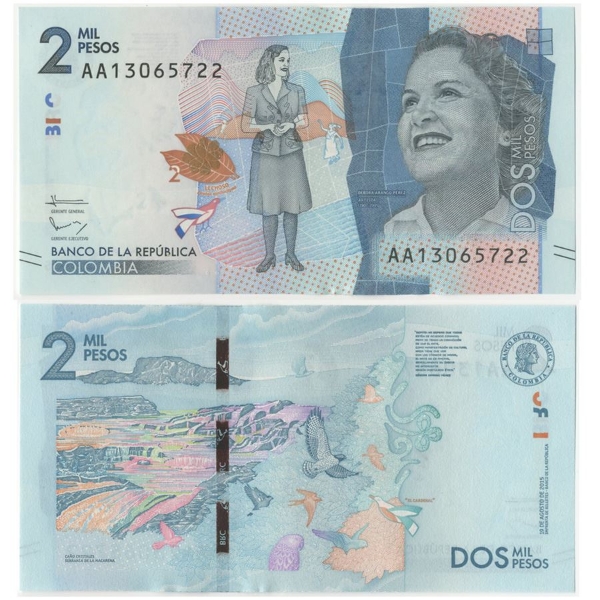
To hold a blue Colombian 2,000-peso banknote is to hold a tribute to one of the most revolutionary, rebellious, and fiercely independent voices in Latin American art. Gracing the obverse of this modern currency is the dignified, elderly face of Débora Arango Pérez. Her sharp, clear gaze is paired with a cardinal bird—a nod to her highly controversial painting Las monjas y el cardenal ("The Nuns and the Cardinal")—and a famous quote asserting that art has its own orbit, separate from restrictive moral codes.
Yet, long before she became a celebrated national icon and the face of Colombian paper currency, Débora Arango was considered a social pariah, a threat to public decency, and an existential danger to the conservative status quo. Painting during a highly religious, patriarchal, and politically explosive era in twentieth-century Colombia, Arango broke every social taboo imaginable. She was the first Colombian woman to paint and exhibit large-scale female nudes, and she used her brush to launch savage, expressionistic critiques of the political "oligarchy," the hypocrisies of the Catholic Church, and the horrific state-sponsored bloodshed of La Violencia. This article traces the path of Débora Arango from a censored, ostracised rebel to her crowning glory as a permanent symbol of Colombia’s cultural soul.
Key Facts
Feature / Metric | Details and Historical Specifications |
|---|---|
Full Name | Débora Arango Pérez |
Lifespan | 11 November 1907 – 4 December 2005 (Aged 98 years) |
Place of Birth | Medellín, Antioquia, Colombia |
Primary Artistic Medium | Watercolours, oils, ceramics, and graphic art |
Key Artistic Movements | Figurative Expressionism, Neo-Figuration, Social Realism |
Most Famous Paintings | Cantarilla (1940), Las monjas y el cardenal (1940s), La justicia (1950), La junta militar (1957) |
Major Accolades | Order of Boyacá (1993); National Prize of Arts and Sciences of Colombia |
Banknote Representation | Featured on the blue 2,000 Colombian Peso banknote (introduced $2016$) |
Banknote Dimensions | 128 \times 66 \text{ mm} (Paper composition) |
Key Takeaways
The Taboo-Breaker: Arango was a trailblazing feminist pioneer who shattered patriarchal constraints by refusing to paint "appropriate" domestic subjects, opting instead to paint raw, anatomical female nudes and marginalized street figures.
Target of the Church: Her defiant representations of political corruption and clerical hypocrisy led the Roman Catholic Church, under the direction of Archbishop Joaquín García Benítez, to repeatedly threaten her with formal excommunication.
Chronicler of Cruelty: During the bloody partisan era of La Violencia and subsequent military dictatorships, she boldly painted political leaders as ravenous beasts, including toads, vultures, and pigs, to expose state brutality.
A National Resurrection: After spending nearly three decades in voluntary, quiet isolation at her home in Envigado, her work was triumphantly rediscovered in the mid-1980s, cementing her legacy as one of the most important Latin American artists of the century.
Early Life and the Seeds of Rebellion
Débora Arango Pérez was born on 11 November $1907$ in Medellín, the seventh of eleven children born to a wealthy, traditional upper-class family (Londoño Vélez, 1997). Growing up in a conservative, deeply religious region of Antioquia, she was expected to follow the highly structured curriculum assigned to young women of her social standing: dressmaking, domestic arts, culinary preparation, and decorative painting.
However, Arango showed an early, fierce resistance to these gender limitations. In an act of childhood rebellion, she conspired with some of her more open-minded relatives to dress in men's clothing so she could ride horses astride—a practice strictly forbidden for "proper" young women of the era (Londoño Vélez, 1997).
Arango's artistic talent was first recognized at her secondary school, the María Auxiliadora, where an Italian nun named Maria Rabaccia encouraged her to pursue painting. Accessing her medical student brothers' anatomy textbooks, Arango began to study the structures of the human body in detail (Wikipedia, 2026).
By the late 1920s, she secured her entry into the Institute of Fine Arts of Medellín. There, she studied under the acclaimed master painter Pedro Nel Gómez. Gómez, a pioneer of Colombian muralism, taught Arango to look beyond the idealised, academic styles imported from Europe and to focus instead on the raw, muscular energy of expressionism and social reality (ArtNexus, 2026). Under Nel Gómez's tutelage, Arango mastered the difficult medium of large-scale watercolour, using bold, thick lines and vibrant, clashing colours to bring her subjects to life.
The Exhibition Scandal: The Battle of the Nude
In $1939$, Arango took part in a prestigious exhibition organised by the Club Unión in Medellín. Her entries—featuring raw, unvarnished depictions of the female body—instantly sparked a national controversy. While male artists had long painted classical, mythological nudes, Arango’s nudes were different: they were real, contemporary women, devoid of idealised, mythological allegories.
One of her paintings, Cantarilla (1940), depicted a prostitute leaning against a wall, while other works showed women in postures that challenged traditional notions of modesty and domestic submission.
                    THE EXPULSION OF ARANGO'S ART
┌────────────────────────────────────────────────────────────────────────┐
│  1. 1939 EXHIBITION (Medellín):                                        │
│     - Displays raw, un-idealised female nudes and street prostitutes.  │
│     - Shocks elite high-society; branded as "immoral" and "obscene".   │
├────────────────────────────────────────────────────────────────────────┤
│  2. 1940 NATIONAL SALON (Bogotá):                                      │
│     - Invited by Jorge Eliécer Gaitán to exhibit her controversial art.│
│     - Archbishop of Bogotá threatens her with excommunication.         │
└────────────────────────────────────────────────────────────────────────┘
The reaction from Medellín's elite and the Catholic Church was swift, aggressive, and highly punitive. Her works were branded as "immoral," "obscene," and "scandals against public decency."
The controversy escalated further in 1940 when Colombia’s progressive Minister of Education, Jorge Eliécer Gaitán, invited Arango to present a solo exhibition at the National Salon of Artists in Bogotá (Sharpless, 1978). The exhibition became a lightning rod. Conservative politicians demanded that the show be closed down immediately, while the Roman Catholic Archbishop of Bogotá, Joaquín García Benítez, publicly threatened Arango with formal excommunication if she did not withdraw her works (Wikipedia, 2026).
Arango refused to back down, famously declaring that art had nothing to do with artificial moral codes, but was instead an honest, cultural manifestation of human truth.
Painting the Terrors of La Violencia
As Colombia descended into the dark, bloody decade of partisan civil war known as La Violencia (1948–1958) following the assassination of Gaitán, Arango’s artistic brush became even more politically charged and aggressive. She moved away from the nude to focus on political satire, documenting the horrors of military repression, police brutality, and dictatorship (Rubiano, 1984).
Rather than painting realistic portraits of political leaders, Arango drew inspiration from Mexican muralists like José Clemente Orozco to portray Colombia's ruling class as monstrous, non-human beasts:
La justicia (Justice, 1950): Painted in response to the political violence sweeping the countryside. It depicted corruption and lawlessness as a rotting, decaying corpse surrounded by vultures and hyenas in suits.
La junta militar (The Military Junta, 1957): Painted to critique the military regime of General Gustavo Rojas Pinilla. In this piece, the five high-ranking members of the ruling military junta are depicted as five bloated, heavily decorated pigs sitting around a table, greedily dividing the spoils of the nation (ArtNexus, 2026).
Las monjas y el cardenal (The Nuns and the Cardinal): A sharp, expressionistic critique of the clergy’s close collusion with conservative political leaders, showing nuns with terrified faces under the heavy, shadow-like figure of a red-robed cardinal, who is depicted as a giant predatory bird.
Because her political paintings were incredibly dangerous to display publicly during this era of intense censorship, many of her works were seized, hidden away in private collections, or kept locked inside her home to protect them from destruction by the state police.
The Quiet Hermitage and Late Rediscovery
Ostracised by the artistic establishment, censored by the government, and tired of constant public attacks, Arango retreated from the public sphere in the mid-1960s. She settled permanently in "Casablanca," her beautiful, quiet family home and studio in Envigado, just south of Medellín. For nearly three decades, she lived as a hermit, continuing to paint, work with clay, and design ceramics in absolute privacy (AWARE, 2026).
For many years, Arango’s name was quietly erased from the history books of Colombian art. However, by the mid-1980s, a new generation of feminist scholars, democratic politicians, and modern art curators began to look back at the history of Colombia's expressionist movement.
                         THE PATH OF REDISCOVERY
┌────────────────────────────────────────────────────────────────────────┐
│  Ostracised Hermit (1960s-1970s)                                       │
│  - Lives in seclusion at her "Casablanca" home in Envigado.            │
│  - Continues to paint in absolute private.                             │
│                                │                                       │
│                                ▼                                       │
│  The 1984 Retrospective Exhibition                                     │
│  - Museo de Arte Moderno (Medellín) hosts her first major display.    │
│  - Triumphantly re-evaluated as a heroic pioneer of Colombian art.     │
└────────────────────────────────────────────────────────────────────────┘
In 1984, the Museum of Modern Art in Medellín (MAMM) hosted a massive, highly successful retrospective exhibition containing over 250 of Arango’s long-hidden paintings (Wikipedia, 2026). The exhibition shocked the public, who were amazed by the raw power, social relevance, and political courage of her works.
The woman who had once been threatened with excommunication was suddenly hailed as a heroic pioneer of Colombian modernism. In 1993, the Colombian government officially apologised for her decades of marginalisation, awarding her the Order of Boyacá, the nation’s highest civilian honour, to recognise her contributions to the republic.
Legacy on the 2,000-Peso Banknote
Débora Arango Pérez died peacefully at her beloved Casablanca home on 4 December 2005 at the age of 98 (Wikipedia, 2026). Eleven years later, in November 2016, the Banco de la República immortalised her on the new $2,000$-peso banknote, a polymer-based issue in its modern "New Family" series (Banco de la República, 2016).
                      THE 2,000-PESO DESIGN SPECIFICATIONS
┌────────────────────────────────────────────────────────────────────────┐
│ OBVERSE (Heads):                                                       │
│  - Detailed portrait of a wise, older Débora Arango Pérez.             │
│  - Features a cardinal bird registration device (from her art).       │
│  - Micro-text details of her name and birth/death years ($1907$-$2005$).│
│                                                                        │
│ REVERSE (Tails):                                                       │
│  - Showcases Caño Cristales (the magnificent "River of Five Colours"). │
│  - Features several species of native birds in flight over the jungle.  │
│  - Includes Arango's famous quote on the separation of art and morality.│
└────────────────────────────────────────────────────────────────────────┘
The banknote's design beautifully honors her artistic philosophy. On the reverse side, printed alongside the stunning natural wonders of Caño Cristales (the River of Five Colours in the Sierra de la Macarena), is a quote from Arango's famous interview in the book Débora en plural:
"Pepito: I do not expect everyone to agree with me; but I have the conviction that art, as a manifestation of culture, has nothing to do with moral codes. Art is not amoral; simply, its orbit does not intercept any ethical postulate." (Banco de la República, 2016).
Through this currency representation, Arango’s lifelong struggle to liberate art from political and clerical control is permanently preserved in the daily life and transactions of the Colombian people.
Frequently Asked Questions (FAQs)
Why was Débora Arango's art so offensive to Colombian society?
Arango’s art was highly offensive to the conservative elite because she boldly painted raw, anatomical female nudes at a time when women were expected to remain silent, modest, and confined to domestic tasks. Furthermore, she did not paint classical, idealised figures; she painted realistic prostitutes, prisoners, and beggars, forcing high-society to look directly at the poverty, inequality, and systemic corruption they preferred to ignore.
Did she ever marry or have children?
No, Arango never married or had children. She dedicated her entire life to her art, believing that the traditional expectations of motherhood and domestic life in twentieth-century Colombia would have severely compromised her creative freedom and independence as a working artist.
What is the significance of the bird on her 2,000-peso banknote?
The cardinal bird depicted on both sides of the banknote is a direct reference to her famous painting Las monjas y el cardenal ("The Nuns and the Cardinal"), in which the cardinal is represented as a large, predatory bird, symbolising her sharp critique of the Catholic Church's political domination.
Where can I view her paintings today?
The largest public collection of Arango's paintings is housed in the Museum of Modern Art in Medellín (MAMM), which received a donation of over $230$ of her paintings from her personal collection in $1987$. Her historic house, "Casablanca," in Envigado, is also a preserved cultural museum open to visitors.
Bibliography
Banco de la República. (2016). The 2,000-Peso Banknote: Identification and Security Features. Central Bank of Colombia Public Archive. Bogotá. Available at: Banco de la República Portal
Coincraft. (2026). Colombia $2,000 Pesos 2015 P458 Uncirculated Banknote. Coincraft World Currency Catalogue. Available at: Coincraft Colombia Entry
Londoño Vélez, B. (1997). Débora Arango: Vida de Pintora. Bogotá: Ministerio de Cultura de Colombia.
Rubiano, G. (1984). El expresionismo social de Débora Arango. Medellín: Museo de Arte Moderno.
Sharpless, R. E. (1978). Gaitán of Colombia: A Political Biography. Pittsburgh: University of Pittsburgh Press.
Wikipedia Contributors. (2026). Débora Arango: Life, Works, and Legacy. In Wikipedia, The Free Encyclopedia. Available at: Wikipedia Entry