 - WDJ0530 .jpg)
Ali Ahmed Oudoum: The Voice of Liberation and Cultural Pride in Djibouti
The history of decolonization in the Horn of Africa is punctuated by the sacrifices and enduring visions of remarkable individuals who fought against overwhelming odds. Among these towering figures is Ali Ahmed Oudoum (1913–1988), a Djiboutian pro-independence activist, political pioneer, and cultural icon. Though his name might not echo as loudly in Western historical texts as some of his contemporaries, his legacy is indelibly woven into the fabric of the Republic of Djibouti. Today, his face graces the national currency, serving as a daily reminder to the Djiboutian people of the struggle for their national sovereignty.
This article explores the life, political evolution, exile, and cultural contributions of Ali Ahmed Oudoum, contextualizing his story within the broader fight for the emancipation of the French Coast of Somalis (which later became the French Territory of the Afars and the Issas, and ultimately, Djibouti).
Key Facts
Full Name: Ali Ahmed Oudoum
Lifespan: 1913 – 1988 (75 years)
Birthplace: Obock, French Coast of Somalis (Modern-day Djibouti)
Ethnicity/Linguistic Group: Afar
Key Roles: Pro-independence militant, politician, radio broadcaster, poet, and songwriter.
Political Affiliation: Territorial Assembly (1958–1963); Front for the Liberation of the Somali Coast (FLCS) in exile.
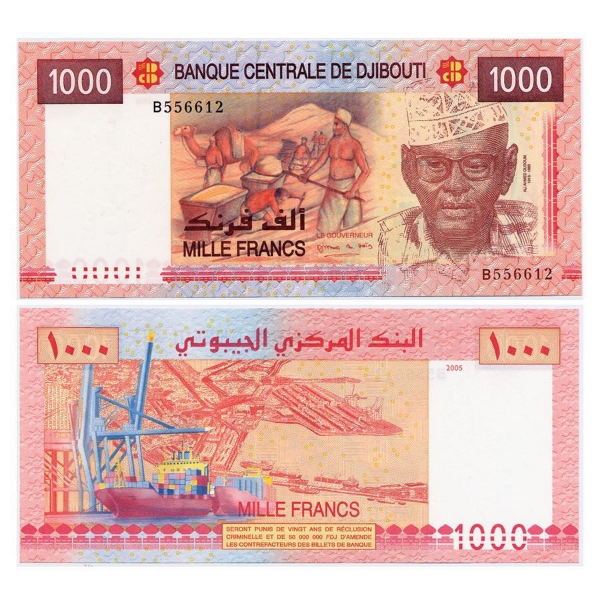
Numismatic Recognition: Featured on the obverse of the 1,000 Djiboutian Franc (FDJ) banknote introduced in 2005.
Key Takeaways
Pioneer of Emancipation: Ali Ahmed Oudoum was an early, uncompromising voice for the total independence of Djibouti, refusing to accept the limited autonomy offered by the French colonial administration in the 1950s and 60s.
Media as Resistance: His use of Radio-Mogadishu to broadcast anti-colonial messages in the Afar language demonstrated a brilliant understanding of media, enabling him to mobilize the rural and urban populations from exile.
Cultural Preservation: By composing music and poetry in the Afar language, Oudoum used art as a powerful tool to preserve indigenous identity against the threat of colonial cultural erasure.
Enduring Legacy: His transition from a marginalized political exile to a national hero featured on the 1,000 FDJ banknote highlights his foundational role in the creation of the modern Republic of Djibouti.
Early Life in the Shadow of Colonialism
Ali Ahmed Oudoum was born in 1913 in the coastal town of Obock. At the time of his birth, the region was firmly under French colonial rule, known as the French Coast of Somalis (Côte française des Somalis). Obock holds a specific historical significance; it was the site of the very first French establishment in the Horn of Africa following a treaty signed in 1862 between the French and the local Afar sultans.
Growing up in this colonial epicenter, Oudoum experienced the dualities of life in the Horn of Africa. He began his education in a traditional Quranic school, where he received a foundational Islamic education rooted in the cultural traditions of his people. Subsequently, he transitioned to the colonial educational system, where he learned French—often referred to historically as "the language of Molière." This dual education was pivotal. It allowed him to remain deeply connected to his Afar roots and Islamic faith, while also granting him the linguistic and intellectual tools necessary to understand, and eventually challenge, the French colonial administration on its own terms.
Described by contemporaries as an inherently sociable and deeply principled young man, Oudoum’s exposure to the systemic inequalities of the colonial system sparked an early interest in militant activism. He recognized early on that the native populations were being marginalized in the economic and political development of their own land.
Political Awakening: The Territorial Assembly
Following the end of the Second World War, the winds of decolonization began sweeping across the African continent. In the French Coast of Somalis, this translated into an emerging political consciousness among the indigenous Afar and Somali populations. Oudoum threw himself into the political arena during this volatile period.
His first major foray into electoral politics occurred in 1957. Although he was defeated in these initial elections, the experience cemented his reputation as a grassroots organizer. A year later, in the pivotal elections of 1958, Oudoum successfully secured a seat in the Territorial Assembly (Assemblée Territoriale). He was elected on a joint list alongside notable political figures Ibrahim Mohamed Sultan and Ali Aref Bourhan.
The 1958 elections took place against the backdrop of a controversial constitutional referendum orchestrated by French President Charles de Gaulle, which asked French African colonies to vote on whether to join the new French Community or seek immediate independence. While the territory voted to remain associated with France, the seeds of dissent were firmly planted.
Within the Territorial Assembly, Oudoum found himself at a crossroads. While some politicians favored gradual autonomy and continued cooperation with Paris, Oudoum was an "indépendantiste dans l'âme" (pro-independence to his core). He grew increasingly disillusioned with the internal political movements that were willing to compromise with the colonial authorities. His unwavering demand for full emancipation put him at sharp odds with the French administration and more moderate local politicians.
Exile and the FLCS Resistance
By early 1963, the ideological rift between Oudoum and the colonial establishment became untenable. Facing immense political pressure and systemic marginalization, he was officially declared as having "resigned" from the Territorial Assembly in January 1963—a move that effectively pushed him out of internal politics and into exile.
Unable to safely or effectively pursue his independence agenda within Djibouti, Oudoum relocated to the neighboring Republic of Somalia, settling in Mogadishu. Somalia, having gained its independence in 1960, had become a safe haven and a staging ground for anti-colonial militants from the French territory.
In Mogadishu, Oudoum became an active and vital member of the Front for the Liberation of the Somali Coast (FLCS). The FLCS was a nationalist organization—recognized and funded by the Organisation of African Unity (OAU)—that utilized both political lobbying and guerrilla tactics to fight for the independence of Djibouti from France.
Oudoum's most significant contribution during his exile was not on the battlefield, but over the airwaves. Understanding the power of mass communication in a region with a strong oral tradition, he took charge of organizing radio broadcasts. Broadcasting from Radio-Mogadishu, Oudoum produced pro-independence propaganda programs specifically in the Afar language.
These broadcasts were revolutionary. By speaking directly to the Afar population in their native tongue, Oudoum bypassed French censorship. He detailed the injustices of the colonial regime, unified the populace, and kept the dream of a free Djibouti alive for those still living under French rule. He effectively bridged the gap between the exiled political leadership and the everyday citizens in the territory.
A Cultural Icon: Afar Poetry and Music
Ali Ahmed Oudoum was not merely a political firebrand; he was fundamentally a man of culture. In the Horn of Africa, poetry and song have long been utilized as vehicles for historical record-keeping, social commentary, and political resistance.
Understanding this, Oudoum weaponized culture against colonialism. He authored numerous songs and poems in the Afar language. While specific recordings of his work from the 1960s are rare today, historical accounts confirm that his music served as a clandestine method of spreading nationalist sentiment. His songs celebrated the nomadic heritage of the Afar people, mourned the loss of native sovereignty, and called for unity against the colonizers.
By elevating the Afar language through art, Oudoum was actively resisting the cultural assimilation pushed by the French educational and political systems. His artistic contributions ensured that the struggle for independence was fought not just for political control, but for the soul and identity of the nation.
Return, Final Years, and Numismatic Legacy
After decades of political tension, violent clashes, and mounting international pressure, the French Territory of the Afars and the Issas finally voted for independence. On June 27, 1977, the Republic of Djibouti was born.
With the primary goal of his life's work achieved, Ali Ahmed Oudoum eventually returned to his newly freed homeland. He lived out his final years in the independent nation he had sacrificed so much to build, eventually passing away in Djibouti City in 1988 at the age of 75.
Oudoum’s contributions to the nation were immortalized in 2005 when the Central Bank of Djibouti (Banque Centrale de Djibouti) issued a new series of banknotes. Ali Ahmed Oudoum was selected to be the face of the 1,000 Djiboutian Franc note.
The banknote is a masterpiece of symbolic design. The obverse (front) features a distinguished portrait of Oudoum on the right. In the center, a camel is depicted alongside local workers engaged in sand mining with shovels. The reverse side illustrates container ships and gantry cranes at the Port of Djibouti.
This imagery beautifully encapsulates Oudoum's life and vision. The camel represents the deeply rooted nomadic traditions and the Afar culture he so fiercely protected through his poetry and music. The workers represent the everyday Djiboutian citizens he fought to emancipate. Finally, the bustling modern port on the back symbolizes the independent, economically viable, and forward-looking nation that his early activism helped bring into reality.
Frequently Asked Questions (FAQs)
Q: Who was Ali Ahmed Oudoum? A: Ali Ahmed Oudoum was a prominent Djiboutian pro-independence activist, politician, broadcaster, and poet who played a critical role in the fight against French colonial rule in the mid-20th century.
Q: Why was Ali Ahmed Oudoum exiled from Djibouti? A: Oudoum’s unwavering demand for total independence from France put him at odds with both the colonial administration and more moderate local politicians. Facing immense political pressure, he was forced out of the Territorial Assembly in 1963 and relocated to Somalia to continue his activism safely.
Q: What did he do during his time in exile? A: While exiled in Mogadishu, Somalia, he joined the Front for the Liberation of the Somali Coast (FLCS). His most notable contribution was producing and broadcasting pro-independence radio programs in the Afar language via Radio-Mogadishu to bypass French censorship and unify the people back home.
Q: How is Ali Ahmed Oudoum remembered today? A: He is celebrated as a national hero in Djibouti. His legacy is permanently honored on the 1,000 Djiboutian Franc banknote, which features his portrait alongside symbols of the nation's culture, workforce, and economic independence.
Bibliography
Héros de Djibouti: Ali Ahmed Oudoum - Biographie. (Historical archive detailing his birth in Obock, political career, exile, work with Radio-Mogadishu, and cultural contributions).
Wikipedia (English): Front for the Liberation of the Somali Coast (FLCS). (Context regarding the militant and political organization Oudoum supported during his exile in Somalia).
Wikipedia (English): History of Djibouti. (Historical context regarding the colonization of Obock and the 1977 independence referendum).
Wikipedia (French): Ibrahim Mohamed Sultan. (Records of the 1958 Territorial Assembly elections where Oudoum, Sultan, and Ali Aref shared a political ticket).
Journal Officiel de Djibouti: Arrêté n° 139 (1963). (Official decree noting the forced resignation and replacement of Ali Ahmed Oudoum in the Territorial Assembly, precipitating his exile).
Numista: 1000 Francs - Djibouti (2005). (Numismatic database detailing the design, dimensions, and release of the Ali Ahmed Oudoum banknote).
Leftover Currency: 1000 Djiboutian Franc banknote (Ali Ahmed Oudoum). (Details regarding the continued circulation and central bank issuance of the 2005 series).