 - WCU1042 (1).jpg)
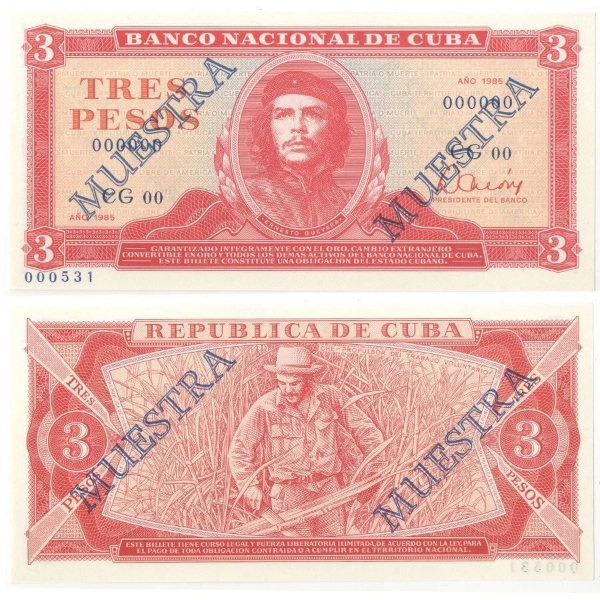
Picture Source of Ernesto "Che" Guevara (1928 – 1967): Wikipedia
Ernesto "Che" Guevara: The Man, The Myth, and The Revolution
Ernesto "Che" Guevara (June 14, 1928 – October 9, 1967) remains one of the most polarizing, recognizable, and deeply scrutinized figures of the 20th century. An Argentine Marxist revolutionary, physician, author, guerrilla leader, and diplomat, Guevara played a crucial role in the success of the Cuban Revolution. Following the overthrow of the Batista regime, Guevara attempted to export his revolutionary ideology and guerrilla tactics to the developing world, fighting in the Congo and ultimately meeting his demise in Bolivia (Anderson, 1997).
Decades after his execution, his image—most notably captured in Alberto Korda’s iconic 1960 photograph Guerrillero Heroico—continues to serve as a ubiquitous, global symbol of rebellion, anti-imperialism, and radical left-wing politics. Conversely, his critics and victims condemn him as an architect of authoritarianism, economic ruin, and political repression (Castañeda, 1998).
Key Facts
Birth Name: Ernesto Guevara de la Serna
Born: June 14, 1928, in Rosario, Argentina
Died: October 9, 1967 (aged 39) in La Higuera, Bolivia
Education: M.D., University of Buenos Aires (1953)
Key Roles: Commander of the Cuban Revolution, Minister of Industries (Cuba), President of the National Bank of Cuba
Major Writings: The Motorcycle Diaries, Guerrilla Warfare, Episodes of the Cuban Revolutionary War
Key Takeaways
Ideological Transformation: Guevara’s early travels across Latin America exposed him to extreme poverty, shifting his life trajectory from medicine to Marxist revolution.
Military Architect: His strict discipline and tactical expertise in guerrilla warfare were instrumental in the success of the Cuban Revolution.
Global Ambitions: Unlike other Cuban leaders who focused inward, Guevara sought a worldwide communist revolution, leading him to launch ill-fated campaigns in Africa and South America.
A Polarizing Icon: He is simultaneously celebrated globally as a romantic symbol of anti-imperialist rebellion and vehemently condemned as a ruthless architect of political repression and economic mismanagement.
Early Life and Political Awakening
Ernesto Guevara was born into a middle-class, left-leaning family of Spanish-Irish descent in Rosario, Argentina. Despite suffering from severe, lifelong asthma, he was an enthusiastic athlete and an avid reader. His family's extensive library exposed him to a wide range of thinkers, from poets like Pablo Neruda to the political theories of Karl Marx, Friedrich Engels, and Vladimir Lenin (Kellner, 1989).
In 1948, Guevara enrolled at the University of Buenos Aires to study medicine. However, his worldview was irrevocably altered by two major journeys across Latin America. The most transformative of these occurred in 1951–1952, when he and his friend Alberto Granado traveled across the continent on a Norton 500cc motorcycle named La Poderosa. During this expedition, Guevara witnessed extreme poverty, systemic exploitation of indigenous workers, leprosy colonies, and a severe lack of healthcare—experiences he chronicled in his journals, which were posthumously published as The Motorcycle Diaries (Guevara, 2003).
These visceral encounters led Guevara to conclude that Latin America's socioeconomic inequities were not isolated incidents, but the direct result of capitalist exploitation and Western imperialism, specifically by the United States. Convinced that peaceful reform was an impossibility, he decided that armed revolution was the only viable path to liberation. He briefly returned to Argentina to complete his medical degree in 1953 before leaving his homeland permanently (Anderson, 1997).
Radicalization in Guatemala and Mexico
Guevara's journey took him to Guatemala, which was undergoing a progressive social revolution under the democratically elected president Jacobo Árbenz. Árbenz was implementing land reforms that threatened the interests of the US-based United Fruit Company. In 1954, the CIA orchestrated a coup d'état that overthrew Árbenz, an event that cemented Guevara’s intense hatred of US imperialism and catalyzed his absolute commitment to Marxist ideology (Castañeda, 1998).
Following the coup, Guevara fled to Mexico City. It was there that he was introduced to Fidel Castro and his brother Raúl in 1955. The Castros were organizing a guerrilla expedition to overthrow the US-backed Cuban dictator Fulgencio Batista. Guevara enthusiastically joined their "26th of July Movement," initially enlisting as the group’s combat medic. It was also in Mexico that his Cuban comrades gave him the nickname "Che"—an Argentine verbal tic he frequently used, meaning "hey," "mate," or "friend" (Kellner, 1989).
The Cuban Revolution
In December 1956, Guevara, the Castro brothers, and 79 other revolutionaries boarded an overcrowded, leaky yacht named the Granma and landed in Cuba's Oriente province. They were immediately ambushed by Batista’s military forces. Only a small fraction of the rebels survived the initial assault, fleeing deep into the rugged Sierra Maestra mountains (Anderson, 1997).
Over the next two years, Guevara evolved from a camp doctor into a ruthless and highly effective guerrilla commander (Comandante). He was known for his extreme bravery in combat but also for his strict discipline. He demanded absolute loyalty and did not hesitate to order the executions of suspected spies, informants, and deserters, viewing uncompromising harshness as a necessity of revolutionary war (Castañeda, 1998).
Guevara's tactical brilliance reached its zenith during the Battle of Santa Clara in late December 1958. His guerrilla column successfully derailed a heavily armed military train carrying reinforcements and supplies for Batista's army. This victory dealt the fatal blow to the regime. On January 1, 1959, Batista fled Cuba, and Castro's revolutionary forces seized control of the country.
Post-Revolutionary Power and the "New Man"
Following the revolution’s victory, Guevara was appointed commander of the La Cabaña fortress in Havana. For several months in 1959, he oversaw revolutionary tribunals and the executions of hundreds of Batista loyalists, police officers, and accused war criminals. This period remains one of the darkest and most intensely debated chapters of his life. Supporters frame it as necessary revolutionary justice, while human rights advocates and critics condemn it as a brutal, extrajudicial purge (Anderson, 1997).
Guevara subsequently became a central figure in the new Cuban government, serving as President of the National Bank and later as Minister of Industries. He sought to rapidly centralize and industrialize Cuba's agrarian, sugar-dependent economy. He was instrumental in forging strong diplomatic, military, and trade ties with the Soviet Union while deliberately alienating the United States, hastening the onset of the US embargo against Cuba (Kellner, 1989).
A core pillar of his philosophy was the concept of the "New Man" (Hombre Nuevo). Guevara theorized that for communism to succeed, society had to be driven by moral imperatives and solidarity rather than personal, material incentives. He attempted to model this ideal personally by maintaining a grueling work schedule, frequently spending his weekends performing voluntary manual labor in sugarcane fields or on construction sites. In 1964, he represented Cuba at the United Nations in New York, delivering a fiery speech condemning US interventionism, imperialism, and institutional racism (Guevara, 1964).
The Congo, Bolivia, and Death
Despite his immense power in Cuba, Guevara grew restless. He became increasingly disillusioned with government bureaucracy and critical of the Soviet Union's diplomatic pragmatism during the Cold War. In 1965, he resigned from his government posts, renounced his Cuban citizenship, and vanished from public life (Castañeda, 1998).
Driven by an ideology he outlined in his writings as foco theory—the idea that a small, dedicated vanguard could ignite a broader peasant revolution—he traveled to the Congo (now the Democratic Republic of the Congo). His mission was to train Marxist rebels in guerrilla warfare. The campaign was a disastrous failure, hampered by severe linguistic barriers, disorganization among local rebel factions, and heavy opposition from CIA-backed mercenaries (Anderson, 1997).
After briefly returning in secret to Cuba, Guevara prepared for a new campaign in Bolivia, aiming to ignite a continental revolution across South America. Arriving incognito in late 1966, he established a small guerrilla band in the Ñancahuazú region. However, the Bolivian campaign was fraught with miscalculations. Guevara received no support from the local Bolivian communist party, failed to recruit the local peasantry, and faced a Bolivian military heavily trained and supplied by US Army Special Forces and the CIA (Kellner, 1989).
On October 8, 1967, Guevara's guerrilla unit was encircled by Bolivian Rangers. Wounded in the leg and with his rifle rendered inoperable, Guevara was captured. The following day, on the orders of the Bolivian government and in consultation with the CIA, he was executed by a firing squad in a dilapidated schoolhouse in the village of La Higuera. He was 39 years old (Anderson, 1997).
Legacy
Che Guevara’s death instantly amplified his status from a guerrilla commander to a global martyr. His remains were hidden in an unmarked mass grave for decades until 1997, when they were discovered, repatriated to Cuba, and buried in a massive mausoleum in Santa Clara with full military honors (Castañeda, 1998).
His legacy remains bifurcated:
To his admirers: He is the ultimate symbol of uncompromising idealism, self-sacrifice, and resistance against capitalist exploitation. His image decorates protests worldwide, representing a romanticized, enduring fight for social justice.
To his critics: He was a violent, authoritarian extremist. Many Cuban exiles and historians emphasize his role in establishing a repressive regime, his execution of political opponents without fair trials, and the devastating economic failures of his policies in Cuba.
Regardless of the perspective, Ernesto "Che" Guevara's impact on the geopolitical landscape of the 20th century is undeniable, leaving behind a complex legacy that continues to be fiercely debated.
Frequently Asked Questions (FAQs)
Why is Ernesto Guevara called "Che"? "Che" is an Argentine interjection roughly translating to "hey," "mate," or "pal." Guevara used it so frequently when speaking to his Cuban comrades in Mexico that they began calling him "Che," a nickname he fully embraced for the rest of his life.
What was Che Guevara's role in the Cuban government? Immediately after the revolution, Guevara commanded the La Cabaña fortress, overseeing revolutionary tribunals and executions. He later served as the President of the National Bank of Cuba and the Minister of Industries, where he attempted to rapidly centralize the economy and shift Cuba away from its reliance on US sugar markets.
Did Che Guevara actually have medical training? Yes. Guevara earned his medical degree from the University of Buenos Aires in 1953, specializing in allergology. He initially joined Fidel Castro’s revolutionary expedition as the group's combat medic before emerging as a primary military commander.
How did Che Guevara die? Guevara was captured by the Bolivian army (which was assisted by US Special Forces and the CIA) on October 8, 1967, following a firefight in which he was wounded. He was executed the following day by a Bolivian soldier in the village of La Higuera.
What are The Motorcycle Diaries? It is a posthumously published memoir based on the detailed travel diaries Guevara kept during his 1951–1952 motorcycle journey across South America with his friend Alberto Granado. The book details his awakening to the continent's profound poverty and inequality.
Bibliography
Anderson, J. L. (1997). Che Guevara: A Revolutionary Life. Grove Press.
Castañeda, J. G. (1998). Compañero: The Life and Death of Che Guevara. Vintage Books.
Guevara, E. C. (2003). The Motorcycle Diaries: Notes on a Latin American Journey. Ocean Press.
Kellner, D. (1989). Ernesto "Che" Guevara. Chelsea House Publishers.