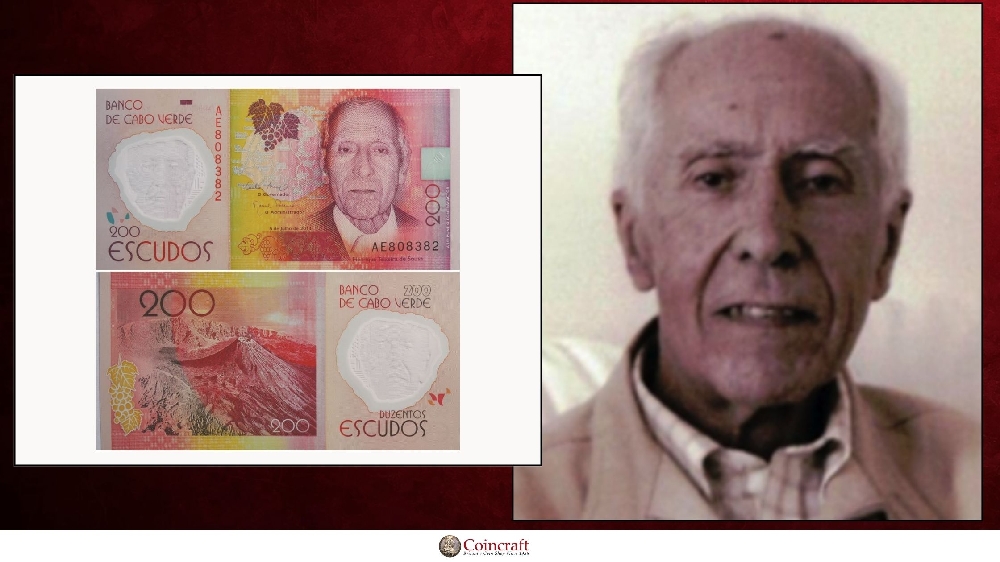
Picture Source of Henrique Teixeira de Sousa: Caboverde-Info
Henrique Teixeira de Sousa: The Physician-Novelist of Cape Verdean Identity
Henrique Teixeira de Sousa remains one of the most prolific and influential intellectuals in Cape Verdean history. Operating as both a pioneering medical doctor and a towering literary figure, his life’s work captured the sociological evolution, struggles, and identity of the Cape Verdean people during a century of profound transition. Along with the writers of the Claridade movement, Teixeira de Sousa helped steer Cape Verdean literature away from metropolitan Portuguese romanticism, anchoring it instead in the harsh, vibrant realities of the archipelago’s volcanic landscapes, social hierarchies, and ancestral heritage.
Key Facts
Feature | Details |
|---|---|
Full Name | Henrique Teixeira de Sousa |
Born | September 6, 1919 (São Lourenço, São Filipe, Fogo Island, Cape Verde) |
Died | March 3, 2006 (Oeiras, Portugal) |
Occupations | Physician, Public Health Pioneer, Novelist, Essayist, Poet |
Key Literary Movements | Claridade (Claridosos), Certeza (Neo-realism) |
Magnum Opus | Ilhéu de Contenda (1978) |
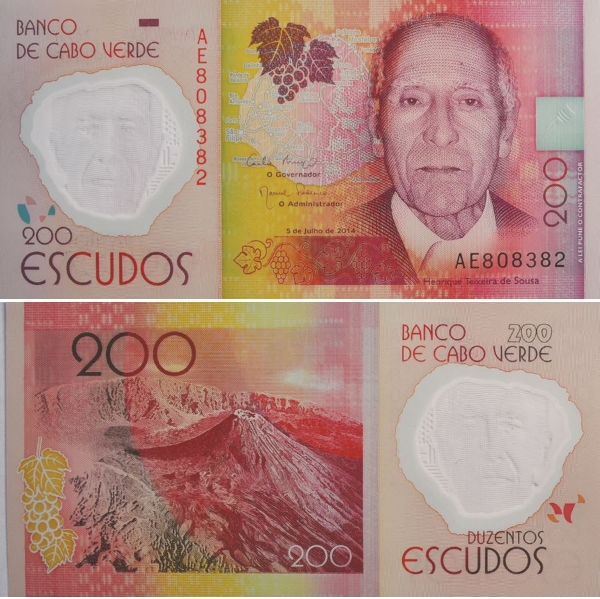
Major Honors | Depicted on the 200 Cape Verdean Escudo banknote (polymer series, 2014); Liceu Teixeira de Sousa (São Filipe) named in his honor |
Key Takeaways
Dual Legacy: Sousa was a rare Renaissance man who simultaneously modernized public health, clinical nutrition, and literary prose in 20th-century Cape Verde.
Sociological Mapmaker: His essays and novels provided a highly precise sociological blueprint of the transition of Fogo Island from a rigid, race-based feudal hierarchy to a more egalitarian, mixed-race society.
Literary Modernizer: Alongside his mentors in the Claridade movement, he helped define the unique aesthetic of Cape Verdean literature, moving it away from colonial imitation and toward regional authenticity.
National Symbol: Recognized as a national icon, his visage remains preserved in the daily life of Cape Verdeans on the official polymer $200 escudo banknote.
Early Life and Academic Foundations
Henrique Teixeira de Sousa was born into a relatively prominent white family on the volcanic island of Fogo on September 6, 1919. Growing up in an environment where social standing was intimately tied to skin color, land ownership, and ancestral heritage, the young Sousa observed firsthand the complex racial and class dynamics that would later dominate his fictional universe.
At the age of 17, while attending secondary school in Mindelo on the windward island of São Vicente, he published his first fictional work in Portuguese, titled "Chuba qu'énós governador" ("The Rain is Our Governor"). This early creole-titled piece was a veiled critique of the Portuguese colonial administration, highlighting the extreme dependence of the archipelago on natural rainfall, rather than colonial aid, for survival.
In search of higher education, Sousa sailed to Portugal, entering the University of Lisbon's Faculty of Medicine. He graduated as a medical doctor in 1945. Recognizing the unique challenges of public health in the colonies, he pursued post-graduate training at the Institute of Tropical Medicine in Porto the following year, establishing a solid foundation in sanitary science and infectious disease control.
A Dual Path: Public Health and Nutrition
Before cementing his legacy as a writer, Teixeira de Sousa was a deeply dedicated medical practitioner. His early career took him to East Timor (then under Portuguese rule) to complete an internship at the general hospital in Dili.
In 1948, he returned to his home island of Fogo, where the public health situation was dire. Fogo lacked basic sanitary infrastructure, leaving its populations vulnerable to famine, malaria, and infectious endemics. As a health delegate, Sousa undertook the monumental task of constructing Fogo's first hospital and maternity clinic, single-handedly modernizing the island's health services.
[University of Lisbon (1945)] ──> [Porto Tropical Medicine (1946)] ──> [Timor Internship] ──> [Fogo Health Delegate (1948)]
During this period, Sousa collaborated closely with the renowned Portuguese geographer Orlando Ribeiro. Sousa provided Ribeiro with unpublished, meticulously compiled medical reports detailing the state of nutrition and public health on Fogo. These observations became vital reference points for Ribeiro’s seminal geographical text, A Ilha do Fogo e as suas Erupções ("The Island of Fogo and its Eruptions").
Between 1955 and 1956, Sousa traveled to France to specialize in nutrition. Upon returning, he was appointed to the permanent mission for combating endemics in Cape Verde and served as the President of the Cape Verde Nutrition Commission. Throughout his lifetime, he published two highly regarded scientific texts analyzing regional diets: O problema alimentar em Cabo Verde (1954) and Alimentação e saúde nas ilhas de Cabo Verde (1957).
The Literary Architect: Claridade and Certeza
While fighting disease and hunger by day, Teixeira de Sousa mapped the Cape Verdean soul by night. He was an active contributor to the Claridade (Clarity) movement, a landmark cultural current founded in 1936 by literary giants like Baltasar Lopes da Silva and Manuel Lopes. The Claridosos sought to awaken Cape Verdean self-consciousness by writing about indigenous struggles: the devastating droughts, the isolation of the islands, and the painful necessity of emigration.
Sousa also engaged with the younger, politically charged Certeza (Certainty) movement in 1944. This group embraced Portuguese neo-realism, placing a heavier emphasis on class struggle and calling for social reforms within the colonial system. His landmark essays, "A estrutura social da Ilha do Fogo em 1940" (1947) and "Sobrados, lojas e funcos" (1958), provided the sociological framework that would later form the backbone of his novels.
The Masterpiece of Transition: The "Sobrados" Trilogy
Teixeira de Sousa's most celebrated literary achievement is his novelistic trilogy tracing the decline of the Fogo landholding aristocracy and the rise of a modern Cape Verdean middle class.
1. Ilhéu de Contenda (The Island of Contention, 1978)
This novel explores the mid-20th-century decline of the traditional white landowners (associated with the sobrados, or two-story colonial estates) and the rise of the mixed-race (mestiço) class, who operated the lojas (shops) and represented economic dynamism. The story exposes the anxieties of the old white elite as the marginalized black peasantry—relegated to thatched stone huts called funcos—began moving up the social ladder. It was adapted into an award-winning feature film in 1996.
2. Xaguate (The Xaguate Hotel, 1987)
In this second volume, Sousa shifts the focus to the theme of return rather than departure. Centered on a Cape Verdean emigrant returning home post-independence, the novel examines the transformation of the islands, nostalgia, and the complex adaptation of old identities to the new, sovereign state.
3. Na Ribeira de Deus (In the Stream of God, 1992)
The final book in the trilogy focuses on the psychological, spiritual, and religious transitions of the islanders. Sousa looks at how traditional folk beliefs, catholicism, and changing social structures interact within the remote valleys of Fogo.
           SOCIAL HIERARCHY IN FOGO (As analyzed by Sousa)
┌─────────────────────────────────────────────────────────────────────┐
│ 1. SOBRADOS (Mansions)   ─> The declining, white agrarian elite     │
├─────────────────────────────────────────────────────────────────────┤
│ 2. LOJAS (Shops)         ─> The rising, mixed-race (mestiço) class  │
├─────────────────────────────────────────────────────────────────────┤
│ 3. FUNCOS (Shanties)     ─> The marginalized, black peasantry       │
└─────────────────────────────────────────────────────────────────────┘
Later Life and Death
Shortly before Cape Verde achieved independence from Portugal in 1975, Teixeira de Sousa retired from his public medical roles and emigrated to Portugal, settling in the municipality of Oeiras near Lisbon. He continued to practice medicine and write extensively in Europe. He died in Oeiras on March 3, 2006, at the age of 86, following a tragic pedestrian road accident.
Frequently Asked Questions (FAQs)
What is the significance of the title Ilhéu de Contenda?
Ilhéu de Contenda (literally, "Isle of Contention" or "Islet of Conflict") is a metaphor for the island of Fogo itself. It represents the clashing interests of the social classes—the old colonial elite (sobrados), the rising merchants (lojas), and the impoverished agrarian workers (funcos).
Why is Henrique Teixeira de Sousa on the Cape Verdean $200 banknote?
In 2014, the Banco de Cabo Verde issued a new polymer banknote series celebrating national cultural figures. Teixeira de Sousa was chosen for the 200 Escudo note to honor his immense dual contributions to the nation’s literature and public health system.
Was Teixeira de Sousa's work translated into English?
Only a small portion of his short stories, such as "Na corte de El-Rei D. Pedro", have been translated into English. Most of his major novels, including the "Sobrados" trilogy, remain in Portuguese, though French translations exist for some works.
Bibliography
Primary Works (Fiction)
Teixeira de Sousa, H. (1972). Contra Mar e Vento. Lisbon: Prelo.
Teixeira de Sousa, H. (1978). Ilhéu de Contenda. Lisbon: O Século.
Teixeira de Sousa, H. (1984). Capitão de Mar e Terra. Lisbon: Publicações Europa-América.
Teixeira de Sousa, H. (1987). Xaguate. Lisbon: Publicações Europa-América.
Teixeira de Sousa, H. (1990). Djunga. Lisbon: Publicações Europa-América.
Teixeira de Sousa, H. (1992). Na Ribeira de Deus. Lisbon: Publicações Europa-América.
Teixeira de Sousa, H. (1994). Entre Duas Bandeiras. Lisbon: Publicações Europa-América.
Teixeira de Sousa, H. (2005). Oh Mar das Túrbidas Vagas. Lisbon: Publicações Europa-América.
Primary Works (Scientific & Essays)
Teixeira de Sousa, H. (1954). O problema alimentar em Cabo Verde. Lisbon: Ministério do Ultramar.
Teixeira de Sousa, H. (1957). "A estrutura social da Ilha do Fogo." Claridade, no. 5.
Teixeira de Sousa, H. (1957). Alimentação e saúde nas ilhas de Cabo Verde. Lisbon: Ministério do Ultramar.
Teixeira de Sousa, H. (1958). "Sobrados, lojas e funcos." Claridade, no. 8.
Secondary Literature & References
Encyclopedia.com. (n.d.). Henrique Teixeira de Sousa. Retrieved June 2026, from https://www.encyclopedia.com/history/encyclopedias-almanacs-transcripts-and-maps/henrique-teixeira-de-sousa
Wikipedia Contributors. (2026). Henrique Teixeira de Sousa. In Wikipedia, The Free Encyclopedia. https://en.wikipedia.org/wiki/Henrique_Teixeira_de_Sousa
Cabo Verde Info. (n.d.). Personalities: Henrique Teixeira de Sousa. Retrieved June 2026, from https://www.caboverde-info.com/eng/Identity/Personalities/Henrique-Teixeira-de-Sousa
Universidade de Lisboa. (2022). Henrique Teixeira de Sousa – Enciclopédia Digital de Estudos Insulares. Faculdade de Letras. https://insularidades.letras.ulisboa.pt/?p=1829
The Modern Novel. (n.d.). Henrique Teixeira de Sousa Profile and Bibliography. Retrieved June 2026, from https://www.themodernnovel.org/africa/other-africa/cape-verde/teixeira/
Chabal, P. (1996). The Postcolonial Literature of Lusophone Africa. London: Hurst & Company.