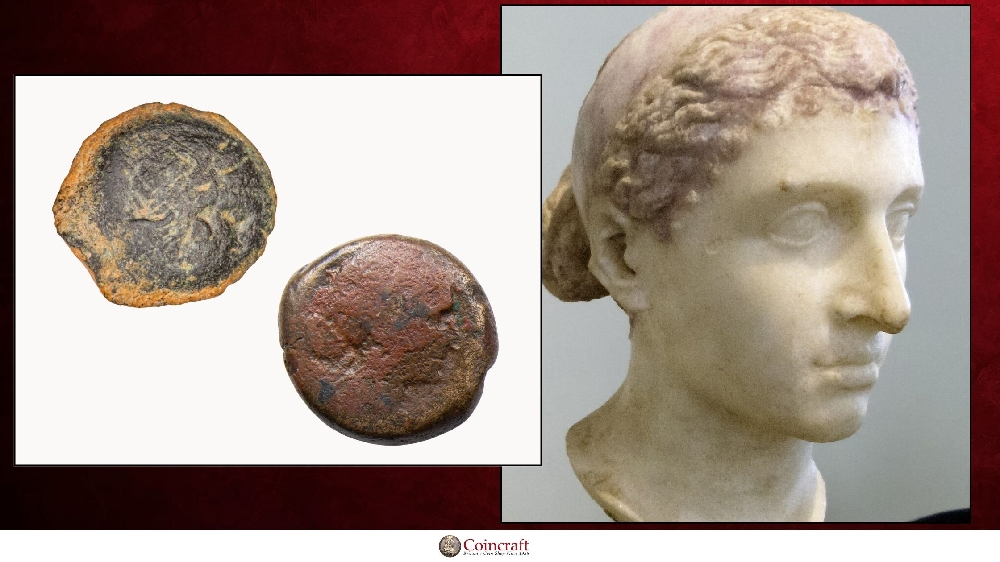
Picture Source of Cleopatra: Wikipedia
Hollywood vs. History: What Cleopatra Really Looked Like on Ancient Coins
For centuries, Cleopatra VII Philopator has lived in the global imagination as an exotic, drop-dead gorgeous temptress who brought the Roman Republic to its knees using nothing but her legendary physical beauty. Modern pop culture has reinforced this narrative through glamorous screen adaptations, casting Hollywood icons like Vivien Leigh (1945), Elizabeth Taylor (1963), and Gal Gadot to portray the Ptolemaic queen.
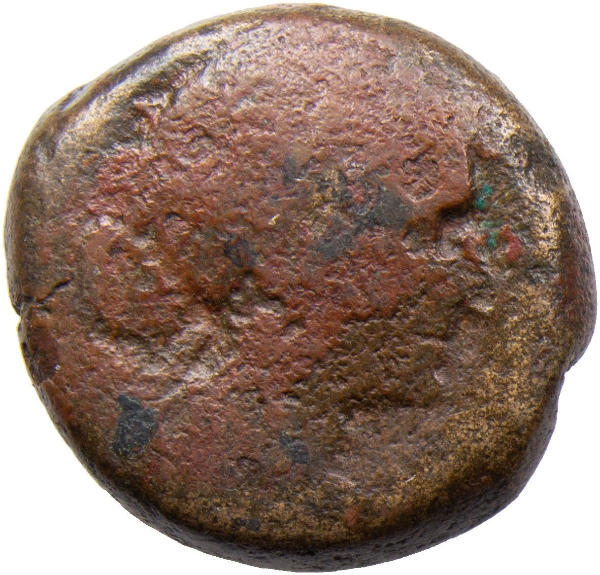
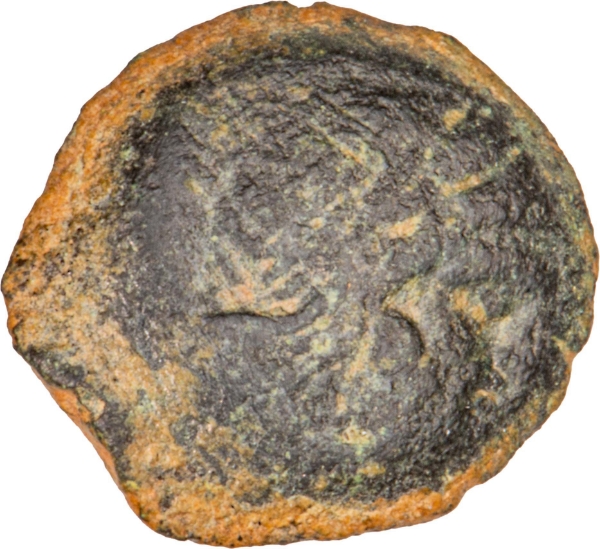
However, the primary contemporary, first-person visual evidence of Cleopatra's appearance paints a drastically different picture. The bronze and silver coins struck by her own royal mints during her reign (51-30 BCE) depict a ruler with highly distinct, powerful, and arguably masculine features: a sharp, hooked nose, a prominent chin, deep-set eyes, and a sloping forehead.
To understand the real Cleopatra, we must look past modern cinematic biases and decode the ancient visual vocabulary of her coinage. These coins were not realistic "selfies," but sophisticated tools of political propaganda designed to project power, legitimacy, and dynastic survival in a volatile Greco-Roman world.
Key Facts
Fact Category | Historical & Numismatic Details |
|---|---|
Historical Subject | Cleopatra VII Philopator (Last active ruler of the Ptolemaic Kingdom of Egypt) |
Reign | 51-30 BCE |
Ethnic Background | Macedonian Greek (Ptolemaic Dynasty founded by Ptolemy I Soter in 305 BCE) |
Key Coin Issues | Alexandrian Bronze 80-drachmai (Obol) & 40-drachmai; Syrian/Antioch Silver Tetradrachms |
Key Coin Weight & Size | Tetradrachms: approx. 14.5-15.3 g in weight, 25-27 mm in diameter |
Distinguishing Features on Coins | Aquiline (hooked) nose, prominent chin, deep-set eyes, melonenfrisur (melon-style hair) |
Primary Written Sources | Plutarch (Life of Antony), Cassius Dio (Roman History) |
Key Archaeological Parallels | The Berlin Cleopatra (marble bust), British Museum Limestone Portrait Head |
Key Takeaways
The Hollywood Disconnect: Cinematic portrayals prioritize idealized, hyper-feminine, modern standards of beauty, while contemporary coin portraits prioritize political messaging and Hellenistic ideals of authority.
Dynastic Legitimacy: Cleopatra's distinctive coin profile—characterized by a prominent, hooked nose and strong chin—deliberately resembled Ptolemy I Soter, the masculine founder of her dynasty, to validate her hereditary right to rule.
Visual Assimilation: On joint coin issues with Mark Antony, Cleopatra's features were heavily adapted to mirror Antony’s. This was a standard Hellenistic technique representing political harmony and shared power, rather than their literal physical likeness.
Intellect Over Aesthetics: Contemporary literary accounts, particularly by the biographer Plutarch, confirm that Cleopatra’s ultimate weapon was not incomparable physical beauty, but her profound intellect, multi-lingual capability, and irresistible personal charm.
                                 __...--''''--...__
                             _.-'                  '-._
                          .-'                          '-.
                        .'       .-----------------.      '.
                       /        /                   \       \
                      /        /    _..---.._        \       \
                     |        |   .'   _   _ '.       |       |
                     |        |  /    (o) (o)  \      |       |
                     |        |  |      .-.    |      |       |
                     |        |  |     (   )   |      |       |
                     |        |   \     '-'   /       |       |
                      \        \   '._______.'       /       /
                       \        \                   /       /
                        '.       '-----------------'      .'
                          '-.                          .-'
                             '-._                  _.-'
                                 '--...______...--'
The Seductress Myth vs. The Literary Record
The historical caricature of Cleopatra as a manipulative, hyper-sexualized seductress was originally forged by Roman state-sponsored propaganda. Following the assassination of Julius Caesar, Cleopatra allied herself with Mark Antony. To mobilize the Roman public against Antony, his rival Octavian (later the Emperor Augustus) launched a devastating smear campaign.
Instead of framing the conflict as a civil war between two Roman warlords, Octavian framed it as a holy crusade against a foreign, eastern queen who had bewitched Antony with her exotic sexuality and oriental luxury (Pomeroy, 1984). Later Roman historians, such as Cassius Dio writing in the 3rd century CE, echoed this Roman narrative, describing her as "a woman of surpassing beauty" who used her looks to manipulate the greatest men of Rome (Britannica, 2024).
However, the Greek historian Plutarch, writing about a century after Cleopatra's death, offers a far more nuanced and objective assessment. In his Life of Antony (27.2), Plutarch famously writes:
"For her beauty, as we are told, was in itself not altogether incomparable, nor such as to strike those who saw her; but converse with her had an irresistible charm, and her presence, combined with the persuasiveness of her discourse and the character which was somehow diffused about her behaviour towards others, had something stimulating about it." (Plutarch, trans. Perrin, 1920)
Plutarch’s testimony perfectly aligns with the physical evidence: Cleopatra was not a flawless Hollywood model, but a highly educated, multi-lingual, and deeply charismatic diplomat who used her intellect and strategic wit to navigate the cutthroat geopolitics of the Mediterranean.
Reading Cleopatra’s Face on Ancient Coins
Archaeologists and numismatists rely on coins as the most reliable indicators of Cleopatra’s physical appearance because they were struck during her lifetime and directly approved by her administration. Two main categories of coinage dominate the study of her portraiture:
1. The Alexandrian Bronze Coinage
Struck early in her reign (shortly after 51 BCE), the bronze 80-drachmai and 40-drachmai coins minted in Alexandria, Egypt, depict a young Cleopatra in her early twenties (Macquarie University, 2021). On these issues, she is depicted in profile:
The Hair: Styled in the traditional Greek melon coiffure (melonenfrisur), in which the hair is parted into vertical segments resembling the ribs of a melon, pulled tightly to the back, and gathered into a low bun at the nape of the neck.
The Diadem: A thick fabric headband, the universal symbol of Hellenistic royalty since Alexander the Great, is worn high on her head.
Facial Structure: She exhibits a strong, straight nose, a prominent, slightly pointed chin, and a rounded cheek. This portraiture is remarkably consistent with marble busts, such as the Berlin Cleopatra (Britannica, 2024).
2. The Silver Tetradrachms (Struck with Mark Antony)
Struck between 37-33 BCE at various mints in the Eastern Mediterranean (such as Antioch or Patrae), these high-value silver coins celebrate her political and romantic alliance with Mark Antony (Art Institute of Chicago / ResearchGate, 2017). Cleopatra is displayed on the obverse (front) of the coin, while Antony appears on the reverse (back).
On these joint issues, Cleopatra's features are highly exaggerated:
The Nose: Her nose is depicted as heavily hooked, or aquiline, curving dramatically downward toward her lip.
The Jaw: Her jaw is sharp, and her chin protrudes aggressively, matching the thick-necked, hyper-masculine profile of Antony on the other side.
The Eyes and Forehead: Her eyes are deep-set under a heavy, sloped brow.
The Art of Power: Why Did Cleopatra Look "Masculine" on Coins?
Modern viewers often look at these coins and assume that ancient mints lacked the artistic skill to produce a flattering portrait, or that Cleopatra was physically unattractive. Both assumptions are historically incorrect. The Alexandria mint was a world-class center of art, capable of exquisite realism. The harsh, powerful rendering of Cleopatra's face was a deliberate, calculated political choice.
1. Resemblance to the Dynastic Founder
As a woman ruling a Hellenistic kingdom, Cleopatra faced constant threats to her legitimacy. Her dynasty, the Ptolemies, was of Macedonian Greek origin. To prove she was the rightful heir to the throne, her portraits deliberately mimicked the facial structure of Ptolemy I Soter, the formidable general of Alexander the Great who founded the dynasty (Trusted Ancient Coins, 2023). Ptolemy I was famous for his massive, hooked nose, deep-set eyes, and aggressive chin. By adopting these features, Cleopatra visually signaled: "I am a true Ptolemy, possessed of the same grit and royal blood as the founder of our empire."
2. Visual Assimilation with Mark Antony
In the ancient world, marital, familial, and political alliances were communicated to the illiterate masses through visual assimilation—the practice of rendering two allied figures with nearly identical physical traits to convey harmony and shared power (Chicago Coin of Antony and Cleopatra, 2019).
On the silver tetradrachms, the die-engravers deliberately blended Cleopatra's features with Mark Antony's. By giving Cleopatra Antony's thick neck, aquiline nose, and strong jaw, the coins communicated to the eastern provinces that the Roman general and the Egyptian queen ruled as co-equals. This defied Roman traditions of male dominance and served as a bold assertion of Cleopatra's sovereign power over the East.
Reconciling Coins with Marble Sculptures
To get a complete picture of Cleopatra's real face, historians compare the coin portraits with surviving 1st-century BCE marble sculptures.
The two most secure marble portraits are the Berlin Cleopatra (housed in the Altes Museum, Germany) and the Vatican Cleopatra (housed in the Vatican Museums). Both sculptures feature the exact same melonenfrisur hairstyle and royal diadem seen on her coins. However, the marble sculptures—carved for display in elite, private Roman villas—render her features with a softer, classicizing Hellenistic elegance. Her nose is slightly less hooked, her lips are full, and her chin is delicate, proving that Cleopatra’s image was highly adaptable, shifting seamlessly between rugged political authority and refined Greek sophistication depending on the medium and the audience (British Museum, 1879).
Frequently Asked Questions (FAQs)
Was Cleopatra actually ugly?
No, she was not "ugly" by ancient or modern standards, but her appeal was not based on the delicate, passive beauty portrayed by Hollywood. She possessed a strong, distinctive Mediterranean profile. Ancient writers emphasized that her true beauty lay in her voice, her charm, her quick wit, and her formidable intellect.
Why does she have a hooked nose on some coins but a straight nose on others?
The shape of her nose varied based on where the coins were minted and the political message intended. Coins minted in Alexandria early in her reign show a straighter, softer nose. Coins minted in Syria and Antioch during her partnership with Mark Antony exhibit a heavily hooked nose to visually align her face with Antony's masculine, Roman profile.
Did Cleopatra speak Egyptian?
Yes. Cleopatra was the first and only ruler of the 300-year-old Ptolemaic dynasty to learn the native Egyptian language. In addition to Greek and Egyptian, she was reportedly fluent in Hebrew, Arabic, Aramaic, Syriac, Median, Parthian, and Ethiopian.
How did the Romans react to her coin portraits?
The Romans were deeply scandalized by Cleopatra's coin portraits, especially those where she was featured on the obverse (front) of the coin with a Roman general on the reverse. In Roman culture, women were forbidden from appearing on currency, and seeing a foreign queen occupying the primary face of a coin struck using Roman resources was viewed as a supreme insult to Rome's dignity.
Is the Berlin bust a more accurate representation than the coins?
The Berlin bust and her coins represent two sides of the same coin—pun intended. The coins represent her public, political propaganda aimed at soldiers, merchants, and the general public to project strength and dynastic legitimacy. The Berlin bust represents a highly refined, artistic tribute designed for an educated, elite class who appreciated classical Hellenistic sculpture. Both are accurate representations of how she wanted to be perceived.
Bibliography & References
Art Institute of Chicago & ResearchGate (2017). Cat. 22 Tetradrachm Portraying Queen Cleopatra VII, 37-33 B.C.. ResearchGate Reference
Britannica, The Editors of Encyclopaedia (2024). What Did Cleopatra Look Like?. Britannica Article
British Museum (1879). Limestone portrait head of a woman resembling Cleopatra VII. Museum Number 1879,0712.15. British Museum Collection Profile
Macquarie University (2021). Cleopatra and Egypt: The Coinage of Julius Caesar and the Civil Wars. Australian Centre for Ancient Numismatic Studies Exhibition
Pomeroy, Sarah B. (1984). Women in Hellenistic Egypt: From Alexander to Cleopatra. Schocken Books. Cited in Encyclopaedia Romana on Cleopatra’s Beauty
Plutarch (120 CE). The Life of Antony. Translated by Bernadotte Perrin (1920), Loeb Classical Library. York University Online Archive
University of Maryland, Department of Art History (2019). Chicago Coin of Antony and Cleopatra. Digital Mediterranean Portraiture Project
Trusted Ancient Coins (2023). Cleopatra VII – Queen of Egypt: Ancient Coin Guide. Trusted Ancient Coins Reference Portal