Market & Economic Realities
Why do some 2,000-year-old coins cost less than a cup of coffee, while others fetch millions at auction? Market & Economic Realities explores the fascinating economic history and modern market dynamics that dictate coin values. Dive into the historical realities of currency debasement, hoarding, and minting scales to understand the 'why' behind the price tag.
Sort by

The "Key Date" Phenomenon -Monday, 06 July 2026
To the uninitiated, the value of an antique coin is intrinsically tied to its age. It is a common misconception that a coin minted in the 18th century must naturally be worth more than one struck in the 20th century. However, numismatists—those who study and collect coins—know that age is merely a secondary factor. The true arbiter of a coin's worth is scarcity, and nothing exemplifies this more perfectly than the 'key date' phenomenon. next...

The Shipwreck Effect: How Sunken Treasure Impacts Numismatic Value -Wednesday, 01 July 2026
For centuries, the ocean floor has served as the world's most secure, yet destructive, monetary vault. Thousands of merchant vessels, Spanish galleons, and steamships laden with gold and silver have met their ends in violent storms, naval battles, and accidental collisions. When marine archaeologists and salvage teams retrieve these lost cargoes, they do not just find historical artifacts; they recover thousands of coins that eventually enter the commercial numismatic market. next...

Decoding the Kew Gardens 50p: Why is it the UK's Most Hunted Coin? -Friday, 26 June 2026
For more than a decade, one tiny piece of cupronickel has held an iron grip on the imagination of the British public. To the untrained eye, it is just a fifty-pence piece. But to collectors, numismatists, and everyday individuals sorting through their pocket change, the 2009 Kew Gardens 50p is nothing short of the "holy grail" of modern British coinage. next...
What to Do if You Inherit a Coin Collection: A Beginner's Guide -Thursday, 25 June 2026
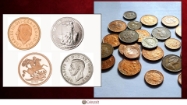
Inheriting a coin collection can be both deeply emotional and incredibly overwhelming. For many, a collection represents a loved one's lifetime of passion, meticulous gathering, and financial investment. Yet, when those heavy boxes, dusty albums, or locked safes are handed down, heirs are often left with a wave of questions: What is all of this? Is it actually valuable? How should I handle it? And most importantly, how do I avoid making a costly mistake before I even understand what I have? next...

Why Are Ancient Roman Coins So Cheap? The Reality of Hoards and History -Friday, 19 June 2026
It is a common assumption that anything older than a few centuries must be incredibly rare and, consequently, exorbitantly expensive. When beginners to historical collecting discover that they can purchase an authentic, 1,600-year-old Roman coin for the price of a cup of coffee, they are often met with disbelief. How can a tangible piece of the mighty Roman Empire—held by citizens, soldiers, and merchants millennia ago—cost around or less than £10? next...
Get in touch icon icon

- icon
45 Great Russell St, London WC1B 3JL
- icon
