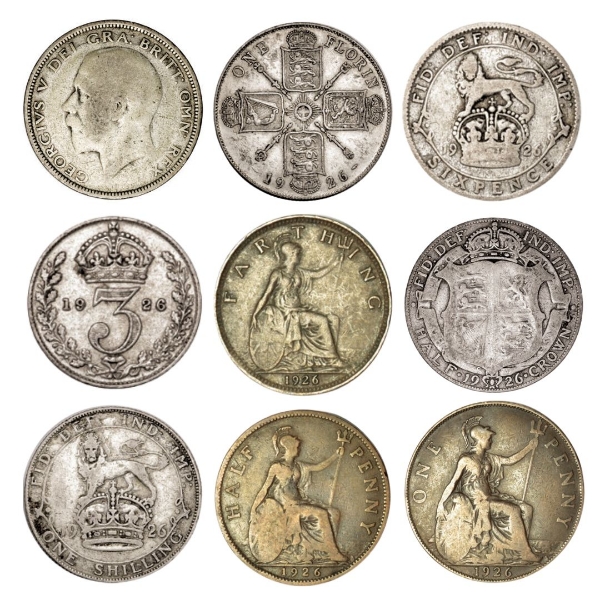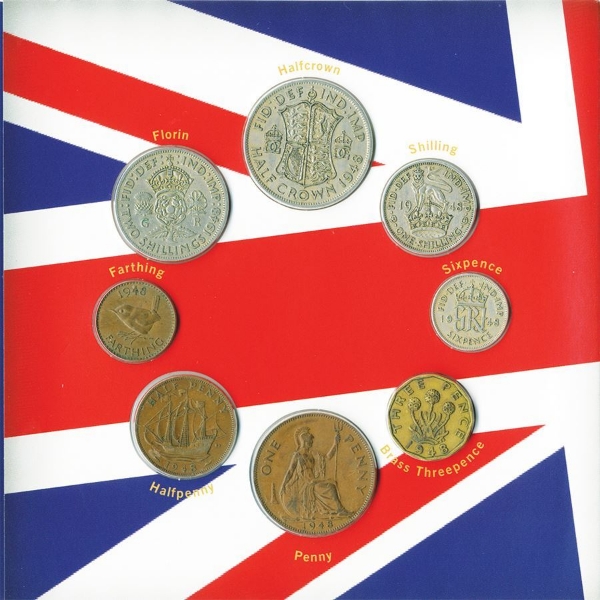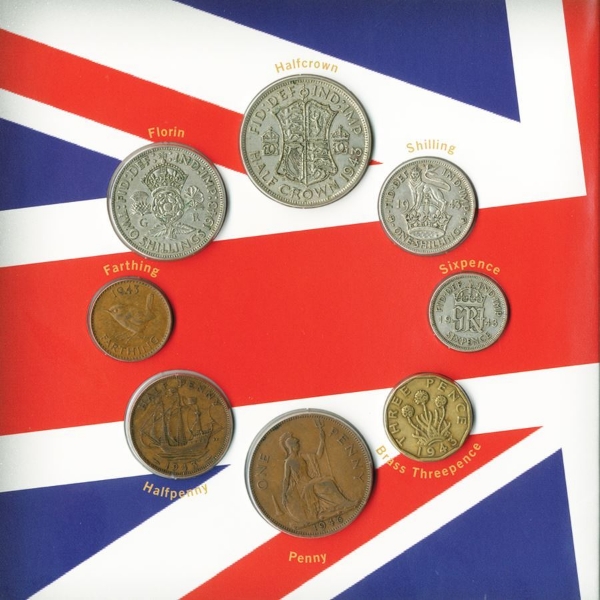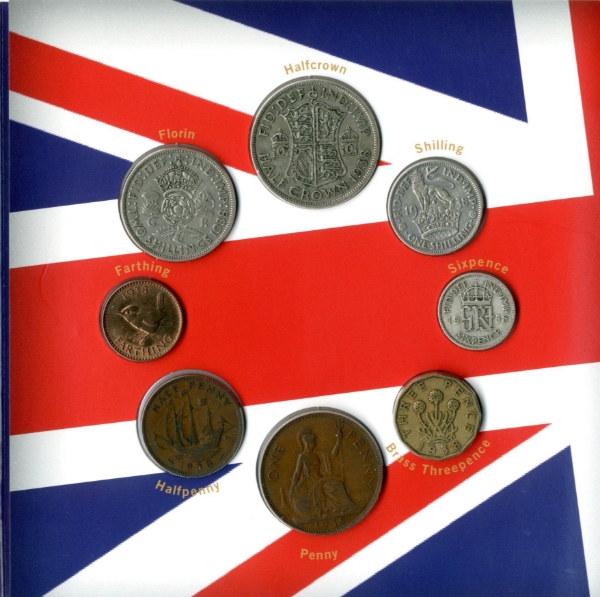
Picture Source: Canva
The "Key Date" Phenomenon: Why a Single Year Can Multiply a Coin’s Value Fiftyfold
To the uninitiated, the value of an antique coin is intrinsically tied to its age. It is a common misconception that a coin minted in the 18th century must naturally be worth more than one struck in the 20th century. However, numismatists—those who study and collect coins—know that age is merely a secondary factor. The true arbiter of a coin's worth is scarcity, and nothing exemplifies this more perfectly than the 'key date' phenomenon.
A 'key date' refers to the scarcest, most difficult-to-acquire year (and often mint mark) within a specific series of coins. Because many coin collectors strive to build comprehensive 'date sets'—acquiring one of every year a specific design was minted—the demand for these elusive issues creates an intense bottleneck. It is this exact phenomenon that can cause a key date coin to command a price fifty times higher—or more—than a virtually identical coin minted just one year prior.
Key Facts
Definition of a Key Date: The lowest mintage or lowest surviving year within a specific coin series, making it the most difficult piece required to complete a collection (Smith, 2021).
The Role of Mint Marks: Key dates are often defined not just by the year, but by the specific mint facility that struck them, denoted by a small letter on the coin (e.g., a London vs. a Melbourne strike).
Mintage vs. Survival: A coin's original production number (mintage) does not always equal its survival rate. Mass meltings, poor quality strikes, or heavy circulation can create 'conditional' key dates (Jones & Davies, 2019).
The Multiplier Effect: Because demand remains constant among set-builders, the constrained supply of a key date regularly inflates its value to 50x–100x that of a common date within the very same series (Numismatic Guaranty Company, 2023).
Key Takeaways
Age Does Not Equal Value: A 2,000-year-old Roman bronze coin can often be purchased for £20, whilst a rare British 50p piece from 2009 can easily fetch £200. Value is dictated by the intersection of supply and collector demand.
Type Sets vs. Date Sets: The key date phenomenon almost exclusively affects 'date set' collectors. Those building 'type sets' can simply bypass expensive years.
Always Check the Reverse and Obverse: The difference between a coin worth its face value and one worth a small fortune often comes down to a microscopic mint mark or a slight variation in the date's typography.
Condition Compounds the Premium: If a key date is already worth 50 times its common counterpart in worn condition, finding a key date in uncirculated, pristine condition can trigger an exponential increase in value.
Demystifying the Key Date
To understand the key date phenomenon, one must first understand how coins are produced and collected. Mints around the world do not produce the exact same number of coins every year. Production numbers are dictated by the demands of the broader economy. If the central bank has a surplus of pennies in its vaults, it will order the national mint to strike fewer pennies the following year.
In the world of numismatics, you will frequently see collections divided into categories such as Type Sets and Date Sets.
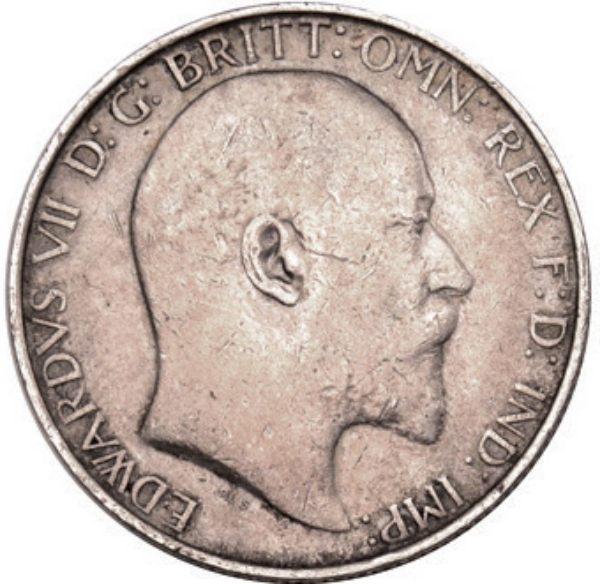
If a collector is building a Type Set—seeking just one example of each major design—they have the luxury of choice. They can simply browse and purchase a 'common date', avoiding the exorbitant costs of rare years. However, a collector attempting to assemble a complete Date Set—for example, every single year of the British Edward VII Halfcrowns (minted from 1902 to 1910)—inevitably runs into a wall.
Millions of halfcrowns were struck in 1906, 1907, and 1908. These are common dates. However, because of a sharp drop in demand for new silver coinage in 1905, the Royal Mint produced a drastically reduced number of halfcrowns that year. Thus, 1905 becomes the key date (Spink, 2023). When thousands of collectors are all trying to complete their Edward VII Date Sets, they all inevitably hit the same 1905 roadblock. The demand is uniform, but the supply is virtually non-existent.
The Mechanics of Scarcity: Mintage vs. Survival Rate
The most obvious cause of a key date is a low initial mintage. However, the numismatic market is heavily influenced by the survival rate. A coin might have a relatively high mintage figure in the official government ledgers, but historical events may have drastically reduced the number of surviving specimens.
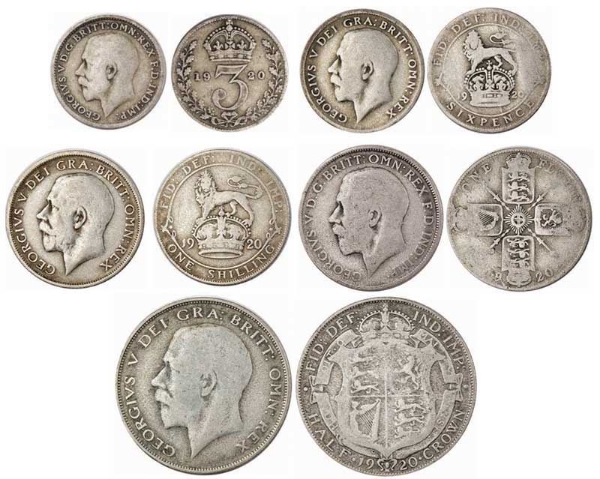
During the First and Second World Wars, for instance, public appeals for metal resulted in millions of older copper, bronze, and silver coins being melted down for the war effort (Harrison, 2018). Similarly, when a nation changes its monetary standard—such as Britain debasing its silver coinage from .925 sterling to .500 silver in 1920, and eventually to cupro-nickel in 1947—the older, more valuable coins are aggressively withdrawn by the government and melted down.
If a specific year happened to be circulating heavily just as a massive recall or melting programme began, its survival rate plummets. Collectors call these 'condition rarities'. A coin might be common in heavily worn, circulated grades, but essentially non-existent in pristine, uncirculated condition because they were all pressed into heavy everyday use.
The 50x Multiplier: The Psychology of Date Sets
The staggering price discrepancy between a common date and a key date is largely driven by collector psychology. Numismatists building date sets are, by nature, completionists. An album missing a single coin is often viewed as fundamentally incomplete.
Consider the mathematics of this demand. If there are 10,000 collectors currently building a date set of a specific coin series, and a common date has a surviving population of 2 million, every collector can easily acquire one for a minimal premium above its metal value. However, if the key date for that series has a surviving population of only 5,000 coins, it is mathematically impossible for every collector to finish their set.
This scarcity initiates fierce competition. Let us look at a stark example from American numismatics, which frequently crosses over into British collecting circles due to its clear illustration of this economic principle: the 1916-D Mercury Dime (a ten-cent piece minted in Denver). A common Mercury Dime from the 1920s might cost a collector roughly £4 in heavily worn condition. However, the 1916-D had a remarkably low mintage. In that exact same heavily worn condition, a 1916-D will routinely sell for £800 to £1,000 (Professional Coin Grading Service, 2024).
The coin contains the exact same amount of silver, features the exact same design, and has endured the exact same amount of historical wear. Yet, simply because it bears the date '1916' and a microscopic 'D' (for the Denver Mint), the price is multiplied by well over 200 times. A 50x multiplier is entirely commonplace in series with established key dates.
Classic Case Studies in Numismatics
To fully grasp the key date phenomenon, one can look at several famous examples within British and global coinage that highlight how sudden economic shifts create these high-value anomalies.
The 1905 Edward VII Halfcrown
As previously mentioned, the 1905 halfcrown is one of the most famous key dates in British silver coinage. Following the end of the Boer War and a period of economic sluggishness, the demand for large silver coins plummeted. While over 1.5 million halfcrowns were minted in 1906, a mere 166,008 were struck in 1905. Today, a common 1906 halfcrown in 'Fine' condition might retail for £25 to £30. A 1905 halfcrown in that exact same 'Fine' grade commands upwards of £1,500. This is exactly a fiftyfold increase based entirely on the date (Spink, 2023).
The 2009 Kew Gardens 50p
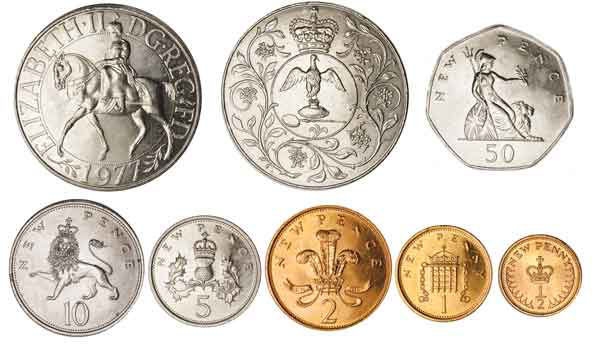
The phenomenon is not limited to antique silver and gold. Modern circulating decimal coinage is highly susceptible to the key date multiplier. In 2009, the Royal Mint released a 50p coin celebrating the 250th anniversary of the Royal Botanic Gardens at Kew. Due to a lack of demand from banks that year, only 210,000 pieces were released into circulation (The Royal Mint, 2022). Compare this to a standard 2008 shield 50p, which had a mintage of over 22 million. Today, a standard 2008 50p is worth exactly 50 pence. A circulated 2009 Kew Gardens 50p routinely sells on the secondary market for £150 to £200—a multiplier of 300x to 400x its face value, driven entirely by collectors trying to complete their modern 50p date sets.
The 1932 Pretoria Sovereign
Gold Sovereigns are globally collected, but they were minted in various branches of the Royal Mint across the British Empire. In 1932, the Pretoria Mint in South Africa struck Sovereigns, but due to shifting gold standards and economic policies during the Great Depression, very few were actually released to the public, and most were subsequently melted. While a standard 1925 London Sovereign might trade for its intrinsic gold weight plus a small premium (around £350–£400 today), the 1932 Pretoria (SA) Sovereign is a legendary key date that routinely fetches tens of thousands of pounds at auction (Marsh, 2017).
Conclusion
The "key date" phenomenon is a perfect distillation of supply and demand economics, packaged within historical artefacts. It reminds collectors and historians alike that the value of an object is rarely defined by its age or its material composition alone, but by the story of its creation and its subsequent survival. Whether it is a deliberate reduction in mintage due to a recession, an accidental oversight at a branch mint, or the ravages of wartime metal drives, these historical quirks transform ordinary pocket change into highly coveted treasures. For those browsing Date Sets or carefully assembling their collections, knowing which date to look for can indeed make a small disc of metal fifty times more valuable than the one sitting right next to it.
Bibliography
Harrison, D. (2018). The Economics of Coinage: Supply, Demand, and the Numismatic Market. British Numismatic Society. Retrieved from British Numismatic Society Publications
Jones, A., & Davies, M. (2019). Scarcity and Survival: A Guide to British Coin Mintage. London: NumisPress.
Marsh, M. A. (2017). The Gold Sovereign (Revised ed.). Token Publishing. Retrieved from Token Publishing
Numismatic Guaranty Company (NGC). (2023). Understanding Coin Values and Key Dates. Retrieved from NGC Coin Explorer
Professional Coin Grading Service (PCGS). (2024). PCGS Price Guide: Mercury Dimes. Retrieved from PCGS Coin Facts
Spink. (2023). Coins of England & The United Kingdom (58th ed.). London: Spink & Son Ltd. Retrieved from Spink Books
The Royal Mint. (2022). Mintage Figures: The Kew Gardens 50p. Retrieved from The Royal Mint Official Website