Historical Lore & Context
Uncovering the incredible stories, political propaganda, and historical legends stamped into global currency throughout the ages! From the scandalous portraits of ancient emperors to the hidden artistic symbols of modern revolutions, each article explores the fascinating "why" behind the designs that shaped world history.
Sort by
The "Mad" Coinage of Caligula -Friday, 03 July 2026
Few figures in ancient history capture the popular imagination quite like Rome’s third emperor, Gaius Julius Caesar Augustus Germanicus, universally known by his childhood nickname, Caligula ("Little Boots"). Ruling from AD 37 to 41, his brief tenure is traditionally painted as a masterclass in tyranny, excess, and mental instability. Yet, for numismatists and historical investors, the coins struck during his four-year reign tell a far more calculated, brilliant, and arguably stable story than the sensationalist texts of Suetonius or Cassius Dio suggest. next...
The Propaganda of Britannia: How a Roman Goddess Became the Symbol of Britain -Thursday, 02 July 2026
To the modern citizen, the figure of Britannia is the ultimate emblem of national pride, military resolve, and maritime strength. Dressed in classical robes, wearing a Corinthian helmet, and armed with a trident and shield, she stands as the undisputed personification of the United Kingdom. Her image is instantly recognisable, gracing everything from the reverse of the circulating fifty-pence piece to the highly coveted gold and silver bullion coins issued annually by the Royal Mint. next...
The Widow's Mite: The Real Story Behind the World’s Most Famous Biblical Coin -Tuesday, 30 June 2026
Few ancient coins carry the emotional weight, narrative power, and cultural resonance of the "Widow’s Mite." Mentioned in the Gospels of Mark and Luke, this humble bronze coin has transcended its physical status as minor provincial currency to become a universal symbol of selfless giving, faith, and the true measure of generosity. next...
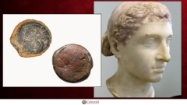
Hollywood vs. History: What Cleopatra Really Looked Like on Ancient Coins -Wednesday, 24 June 2026
For centuries, Cleopatra VII Philopator has lived in the global imagination as an exotic, drop-dead gorgeous temptress who brought the Roman Republic to its knees using nothing but her legendary physical beauty. Modern pop culture has reinforced this narrative through glamorous screen adaptations, casting Hollywood icons like Vivien Leigh (1945), Elizabeth Taylor (1963), and Gal Gadot to portray the Ptolemaic queen. next...
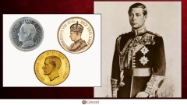
The King Who Never Was: The Mystery of Edward VIII’s 1936 Coinage -Monday, 22 June 2026
The abdication of King Edward VIII on December 11, 1936, remains one of the most disruptive constitutional crises in the modern history of the British monarchy [1]. Forced to choose between the crown and his love for the twice-divorced American socialite Wallis Simpson, the charismatic young king walked away from his birthright after a reign of just 326 days [2]. next...
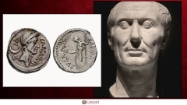
Why Was Julius Caesar's Face Depicted on Roman Coins? The Ultimate Act of Ancient Propaganda -Thursday, 18 June 2026
For nearly five centuries, the Roman Republic operated under a strict, unbending, and unwritten rule: no living man, no matter how powerful, wealthy, or victorious, was permitted to place his own face on a Roman coin. Coinage was a sacred medium of the state, strictly reserved for the gods, mythological personifications of Roman virtues, and long-dead, legendary ancestors. To mint a coin featuring your own living portrait was to declare yourself a king—and in Rome, kings were violently despised. next...
Get in touch icon icon

- icon
45 Great Russell St, London WC1B 3JL
- icon
