Picture Source: Canva
The Propaganda of Britannia: How a Roman Goddess Became the Symbol of Britain
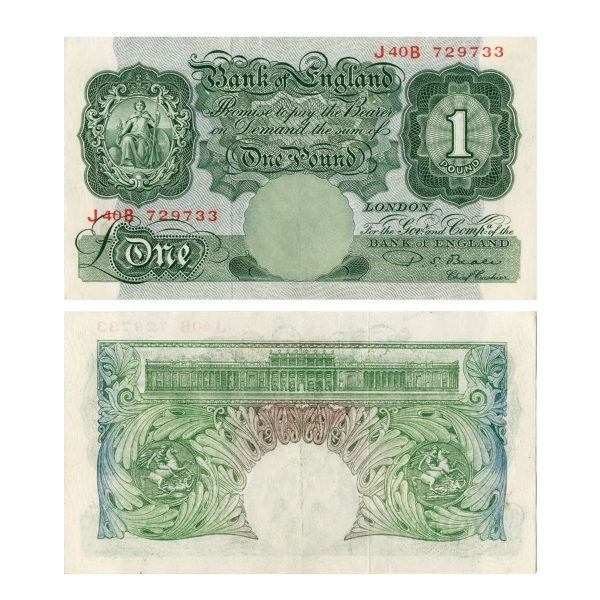
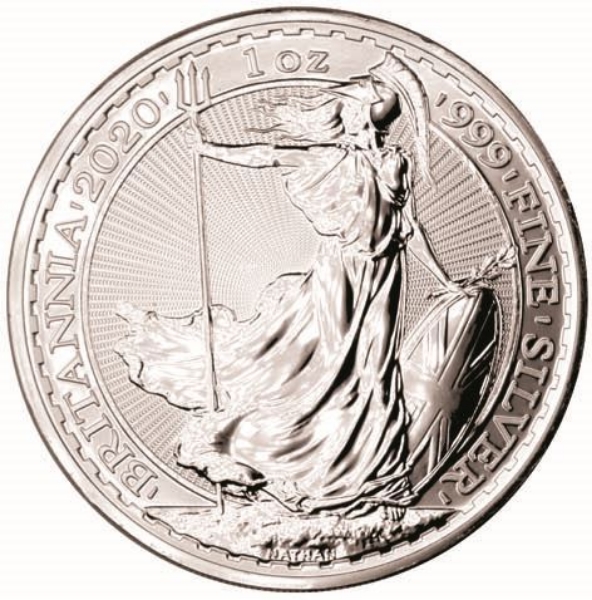
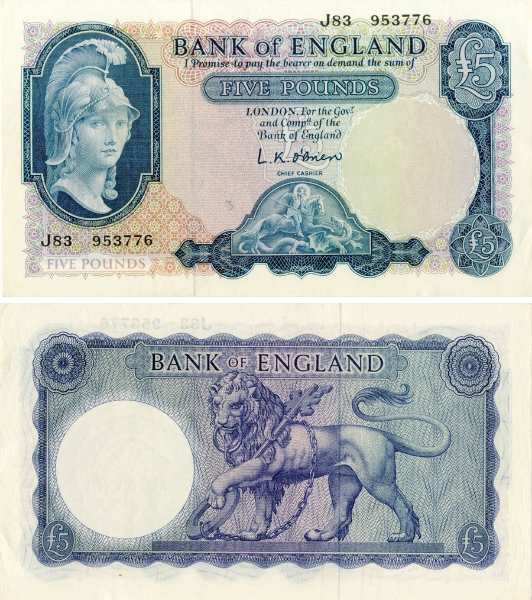
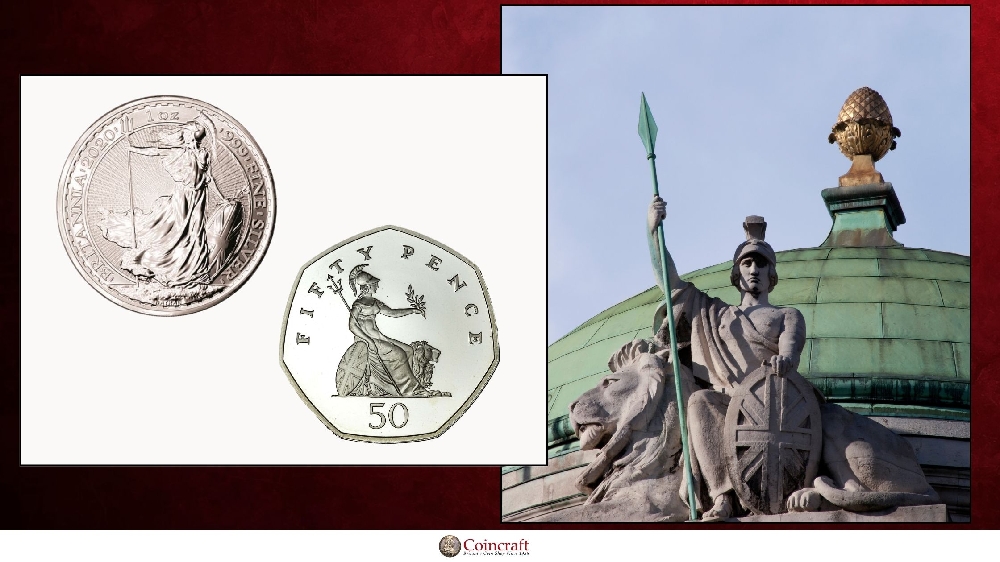
To the modern citizen, the figure of Britannia is the ultimate emblem of national pride, military resolve, and maritime strength. Dressed in classical robes, wearing a Corinthian helmet, and armed with a trident and shield, she stands as the undisputed personification of the United Kingdom. Her image is instantly recognisable, gracing everything from the reverse of the circulating fifty-pence piece to the highly coveted gold and silver bullion coins issued annually by the Royal Mint.
Yet, the history of Britannia is marked by a profound historical paradox. Before she became a symbol of British liberty and imperial dominance, Britannia was created by an invading force as a tool of psychological warfare and political propaganda. Originally designed by the Romans to represent a defeated, humiliated, and captive province, her journey from a writhing hostage under the heel of an emperor to the triumphant "Queen of the Waves" is a fascinating study in political iconography, materials science, and cultural appropriation. This article traces the evolution of Britannia across two millennia of British and Roman history.
Key Facts
Feature / Metric | Historical Standard & Numismatic Details |
|---|---|
Original Origin | Roman Imperial personification of conquered territories (2nd Century AD) |
Earliest Coin Representation | Sestertius of Emperor Hadrian (c. AD 119–122) |
Reintroduction on British Coins | Copper Farthings and Halfpennies of King Charles II (1672) |
Historical Muse (1672) | Frances Stuart, the Duchess of Richmond (allegedly) |
Transition from Spear to Trident | Struck under King George III (1797) to symbolise naval supremacy |
Addition of Corinthian Helmet | Struck under King George IV (1825) to emphasise military strength |
Modern Bullion Coin Series | Gold Britannia (1987–present); Silver Britannia (1997–present) |
Purity Standard (Post-2013) | Gold: 0.9999 fine (24 carats); Silver: 0.999 fine (99.9% pure) |
Key Takeaways
The Captive Origin: Britannia was not designed by the Britons. She was created by the Romans to symbolise the subjugation of the British Isles, often depicted in early Roman art as a bound captive weeping beside her weapons.
The Restoration Resurrection: After disappearing for over a millennium following the collapse of Roman rule, Britannia was revived on regal copper coins in 1672 by Charles II, who used her classical imagery to legitimise England’s growing naval rivalry with the Dutch.
From Shielding to Ruling: Her symbolic toolkit evolved alongside Britain’s imperial fortunes. Her defensive Roman spear was intentionally replaced by Neptune's trident in 1797 to visually proclaim the Royal Navy's global mastery of the seas.
A Modern Security Icon: On modern bullion coins, Britannia is not just an artistic symbol; her design incorporates state-of-the-art security features, including laser-etched latent images and surface animation, making her the most secure bullion coin in the world.
The Roman Origin: Symbol of a Conquered Land
The concept of personifying geographic territories as female figures was a standard convention of Roman political propaganda (Royal Mint Museum, 2024). When the Roman Empire expanded its borders, the state mints in Rome would strike coins depicting the newly conquered lands as women—such as Gallia (France), Dacia (Romania), and Judaea—typically in postures of defeat, despair, or submission.
Following the Roman invasion of Britain under Emperor Claudius in AD 43, the Roman state began incorporating the newly acquired territory of Britannia into its visual culture. The earliest representations were brutal and uncompromising. A marble frieze discovered in the Sebasteion at Aphrodisias (in modern-day Turkey) depicts a bare-breasted, helmeted female warrior explicitly labelled BRITANNIA, writhing in agony on the ground as Emperor Claudius prepares to deliver a death blow (UK Parliament, 2020). Here, Britannia was not a goddess to be revered, but a barbarian captive to be crushed.
                    THE ROMAN PROPAGANDA DEVOLUTION
┌────────────────────────────────────────────────────────────────────────┐
│  1. CLAUDIAN ERA (c. AD 43-50):                                        │
│     - Depicted as a half-naked, defeated barbarian warrior.            │
│     - Stripped of dignity; writhing under the heel of the Emperor.     │
├────────────────────────────────────────────────────────────────────────┤
│  2. HADRIANIC ERA (c. AD 119-122):                                     │
│     - Depicted as a dignified, seated guardian on a rocky cliff.       │
│     - Symbolised the secure, fortified northern frontier of the Empire.│
└────────────────────────────────────────────────────────────────────────┘
The iconography shifted under Emperor Hadrian (AD 117–138). Hadrian, who visited Britain in AD 122 and initiated the construction of his famous stone frontier wall, sought to consolidate and defend the borders rather than expand them further. To commemorate his travels, the mint in Rome struck a series of bronze sestertii featuring a reconstituted Britannia (BullionByPost, 2024).
On Hadrian's coins, Britannia was elevated to a semi-divine guardian. She was depicted seated upon a pile of rocks (often interpreted as the rugged cliffs of the British coast), holding a spear, and resting her arm on a spiked shield. This seated pose served to reframe Britain as a stable, pacified, and heavily fortified northern outpost of the civilized Roman world. Under Hadrian's successor, Antoninus Pius, similar coins were struck, sometimes showing Britannia seated atop a globe above waves—a visual nod to Britain’s position at the very edge of the known universe (UK Parliament, 2020).
The Lost Millennium and the Elizabethan Awakening
When the Roman legions withdrew from Britain around AD 410, the figure of Britannia vanished from coins and public monuments for more than a thousand years. During the Anglo-Saxon, Viking, and medieval periods, the identity of the island was fractured into warring kingdoms, and regional rulers preferred Christian symbols, heraldic beasts, or royal portraits on their silver pennies.
The intellectual revival of Britannia began during the Renaissance, specifically during the reign of Queen Elizabeth I (1558–1603). As England began to assert its naval power and look toward overseas exploration, scholars and astrologers looked back to classical Roman texts to construct a unified national identity.
In 1577, the royal astrologer and mathematician John Dee published his landmark treatise, General and Rare Memorials Pertayning to the Perfect Arte of Navigation (Royal Mint Museum, 2024). The frontispiece of the book featured an illustration of a kneeling, weeping Britannia on a rocky shore, pleading with Queen Elizabeth I to protect her shores by building a powerful navy.
This was a critical turning point: for the first time in history, Britannia was explicitly linked to the sea and maritime defence, setting the stage for her future role as a maritime deity.
The Restoration of 1672: The Duchess and the Dutch
While Elizabeth I laid the intellectual groundwork, it was King Charles II (1660–1685) who officially restored Britannia to British coinage. In the late 1660s and early 1670s, England was locked in a series of destructive maritime conflicts with the Dutch Republic (the Anglo-Dutch Wars) for control of global trade routes. Charles II desperately needed a symbol to rally the nation behind the Royal Navy and legitimise his military campaigns.
In 1672, the Royal Mint issued Britain's first official, regal copper halfpennies and farthings (Chards, 2022). Designed by the engraver John Roettier, the reverse of these coins featured a striking image of Britannia that was directly modelled on the ancient Roman coins of Hadrian. She was depicted:
Seated on a rocky shore, facing left.
Holding a defensive olive branch in her right hand and a spear in her left.
Leaning on a round shield which, for the very first time, was emblazoned with the Union Flag (Chards, 2022).
                      THE 1672 RESTORATION COINAGE
┌────────────────────────────────────────────────────────────────────────┐
│                             Charles II                                 │
│                 [First Regal Copper Issue, 1672]                       │
│                                │                                       │
│                                ▼                                       │
│                    Seated Britannia Reverse                            │
│           ┌────────────────────┴────────────────────┐                  │
│           ▼                                         ▼                  │
│    Roman Influence:                        Nationalist Addition:       │
│    Seated on rocks holding                 Emblazoned with the new     │
│    spear and olive branch.                 Union Jack on her shield.   │
└────────────────────────────────────────────────────────────────────────┘
According to the famous diaries of Samuel Pepys and John Evelyn, the model for this new Britannia was Frances Stuart, the Duchess of Richmond (Royal Mint Museum, 2024). Known as "La Belle Stuart," she was one of the most celebrated beauties of the Restoration court and a woman whom Charles II had unsuccessfully tried to make his mistress. By casting a famous living beauty as the face of the nation, Charles II successfully modernised the symbol, turning an ancient Roman captive into a glamorous, contemporary icon of English patriotism and naval ambition.
Because these copper coins were struck in massive quantities for everyday transaction, Britannia entered the pockets—and the collective consciousness—of the British working classes.
From Spear to Trident: The Victorian Imperial Titan
As the British Empire expanded during the eighteenth and nineteenth centuries, Britannia's defensive, protective character underwent a dramatic, aggressive transformation. As Britain's industrial and naval supremacy grew, she was no longer depicted as a guardian waiting on the shore to repel invaders; she was re-engineered to represent global hegemony.
This ideological shift was physically reflected in her attributes on the coinage:
1. The Trident ($1797$)
Under King George III, the Royal Mint commissioned the Soho Mint in Birmingham to strike the revolutionary "Cartwheel" copper pennies and twopences using steam-powered presses. On these coins, designed by Conrad Heinrich Küchler, Britannia’s traditional Roman spear was permanently replaced with Neptune’s three-pronged trident (Wikipedia, 2026). This was a direct, unapologetic proclamation of naval dominion, echoing the popular patriotic anthem "Rule, Britannia! Britannia rule the waves," composed in 1740.
2. The Corinthian Helmet ($1825$)
During the reign of George IV, a classical Corinthian helmet was added to her head (Wikipedia, 2026). This replaced her softer, flowing hair with a martial, warrior-like headpiece reminiscent of the Greek goddess Athena or the Roman goddess Minerva, asserting Britain's willingness to use military force to protect its global trade networks.
3. The British Lion
By the time Queen Victoria ascended the throne in 1837, Britannia was frequently depicted sitting alongside a roaring British Lion, the national animal of England. Victorian painters and cartoonists often conflated the features of Queen Victoria with Britannia, reinforcing the image of a maternal yet fiercely protective ruler of a global empire that covered a quarter of the world's landmass (Victorian Web, 2022).
Modern Numismatics: The Britannia Bullion Series
Today, Britannia remains one of the most famous and highly respected icons in the global precious metals market.
In 1987, the Chancellor of the Exchequer, Nigel Lawson, authorised the Royal Mint to issue a high-purity gold coin to compete with the dominance of the South African Krugerrand and the Canadian Maple Leaf (Royal Mint Museum, 2024). The series was named the Britannia, and the Royal Mint selected a majestic, forward-facing depiction of the goddess designed by sculptor Philip Nathan.
                      METALLURGICAL PURITY STANDARDS
┌────────────────────────────────────────────────────────────────────────┐
│  GOLD BRITANNIA (1987-2012):                                           │
│  - Minted in 22-carat gold (Crown Gold standard).                      │
│  - Purity: $\frac{22}{24}$ gold alloyed with copper/silver ($91.67\%$).│
├────────────────────────────────────────────────────────────────────────┤
│  GOLD BRITANNIA (2013-Present):                                        │
│  - Minted in 24-carat gold (Pure Investment Gold).                     │
│  - Purity: $.9999$ fine gold ($99.99\%$ pure).                         │
└────────────────────────────────────────────────────────────────────────┘
The metallurgical specifications of the Britannia series highlight the Royal Mint's commitment to coin engineering:
The Gold Standard: From 1987 to 2012, Gold Britannias were struck in 22-carat gold ($\frac{22}{24}$ purity, or $91.67\%$), alloyed with copper and silver to increase durability. In 2013, the Royal Mint upgraded the standard to 24-carat gold, achieving a state-of-the-art purity of $.9999$ fine gold ($99.99\%$ pure).
The Silver Standard: Introduced in 1997, Silver Britannias were originally minted in "Britannia Silver," which features a high purity of $.958$ fine silver ($95.8\%$ pure). In 2013, this was upgraded to investment-grade $.999$ fine silver ($99.9\%$ pure).
Advanced Anti-Counterfeiting Security
In 2021, the Royal Mint introduced four ground-breaking security features to the Britannia coin, making it the most secure bullion coin in the world (Royal Mint, 2024). These features include:
A Latent Image: A small circular feature at the base of the design that shifts from a padlock to a trident as the coin is rotated.
Surface Animation: Micro-etched background waves that appear to flow and ripple when light hits the surface of the coin.
Micro-Text: The latin phrase DECUS ET TUTAMEN ("An Ornament and a Safeguard") laser-etched along the inner rim of the coin.
Tincture Lines: Precision-struck lines on Britannia’s shield that denote the traditional heraldic colours of the Union Flag.
These technical achievements ensure that the Roman goddess remains at the cutting edge of global monetary security, successfully defending wealth just as she once defended the coastlines.
Frequently Asked Questions (FAQs)
Was Britannia originally a British symbol?
No. Britannia was created by the Roman Empire during the first century AD to personify the newly conquered British Isles. In early Roman art, she was used as imperial propaganda to symbolise submission, often depicted as a weeping, bound captive writhing under the heel of the Roman Emperor.
Who was the real woman depicted as Britannia on the 1672 coins?
According to contemporary diarists of the Restoration period, the face of Britannia on King Charles II's 1672 copper coinage was modelled on Frances Stuart, the Duchess of Richmond. She was a prominent member of the royal court and a celebrated beauty whom the King admired.
When and why did her spear change into a trident?
Her spear was officially changed to Neptune's trident on the "Cartwheel" copper coins of 1797 under King George III. This change was made to celebrate the historic naval victories of the Royal Navy and to visually represent Britain's global maritime dominance.
Why did the purity of Britannia bullion coins change in 2013?
Prior to 2013, Gold Britannias were struck in 22-carat gold ($91.67\%$ pure), which was the historical standard for British circulating coinage (Crown Gold). In 2013, the Royal Mint transitioned to 24-carat gold ($99.99\%$ pure) and fine silver ($99.9\%$ pure) to meet international investment standards and tax-exempt regulations for pure bullion in global markets.
Bibliography
BullionByPost. (2024). Who Is Britannia? Britannia On Coins. BullionByPost Numismatic Education Library. Available at: BullionByPost Guide
Chards. (2022). Britannia Re-emerges for Charles II in 1672. Chards Coin and Bullion Dealers Hub. Available at: Chards Historical Guide
Royal Mint Museum. (2024). The History of Britannia on Coins. Royal Mint Museum Podcasts and Articles. Llantrisant. Available at: Royal Mint Museum Portal
The Royal Mint. (2024). The Britannia Coin Series. Royal Mint Precious Metals Registry. Available at: Royal Mint Britannia Hub
UK Parliament. (2020). Britannia: Symbol of the UK. Parliamentary Research Briefings. London. Available at: UK Parliament Research Portal
Victorian Web. (2022). Britannia as the Embodiment of Great Britain. Victorian History and Iconography Database. Available at: Victorian Web Archive