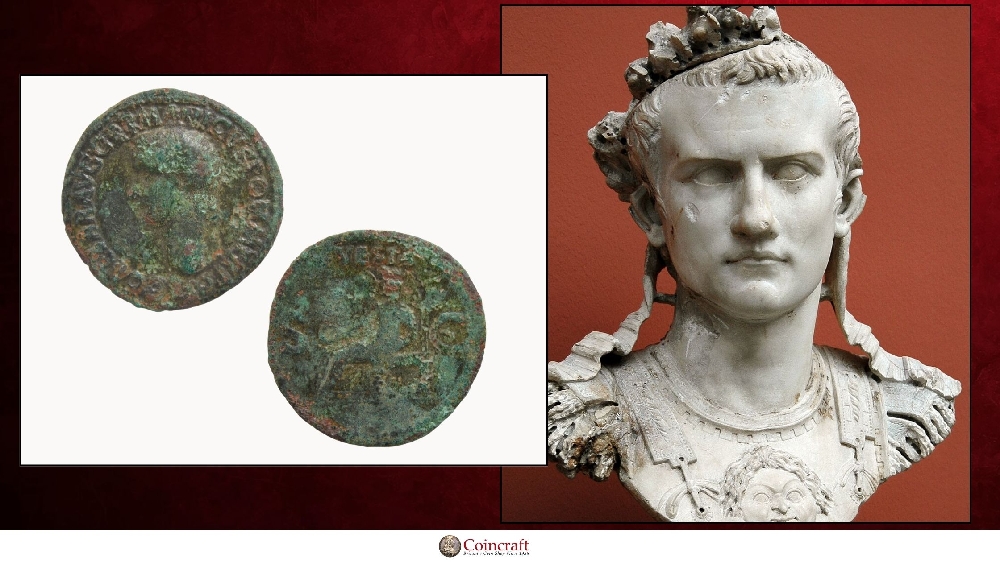
Picture Source of Caligula: Wikipedia
The "Mad" Coinage of Caligula: Propaganda, Pride, and Imperial Legacy in the Ancient Market
Few figures in ancient history capture the popular imagination quite like Rome’s third emperor, Gaius Julius Caesar Augustus Germanicus, universally known by his childhood nickname, Caligula ("Little Boots"). Ruling from AD 37 to 41, his brief tenure is traditionally painted as a masterclass in tyranny, excess, and mental instability. Yet, for numismatists and historical investors, the coins struck during his four-year reign tell a far more calculated, brilliant, and arguably stable story than the sensationalist texts of Suetonius or Cassius Dio suggest.
Far from the random output of a "mad" emperor, Caligula’s coinage represents a highly sophisticated, calculated exercise in political legitimacy, familial branding, and imperial consolidation. For premium e-commerce platforms and collectors alike, understanding this specific numismatic era is vital to appreciating how economic currency operated as the premier mass-media tool of the ancient world.
Key Facts for Numismatic Portfolios
| Fact Metric | Historical and Technical Detail |
| Reign Dates | AD 37 – 41 (4 Years) |
| Primary Mints | Rome and Lugdunum (modern Lyon, France) |
| Key Denominations | Aureus (Gold), Denarius (Silver), Sestertius (Orichalcum/Bronze), As (Copper), Quadrans (Copper) |
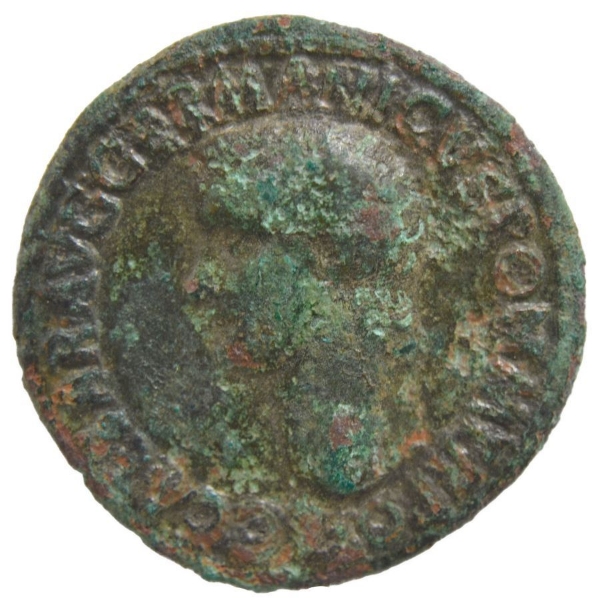
| Common Obverse Legends | C CAESAR AVG GERMANICVS PON M TR POT |
| Rarity Factors | High rarity due to post-assassination destruction (Damnatio Memoriae) |
| Metal Quality | Consistently high purity; no signs of economic debasement despite fiscal extravagance |
Key Takeaways for High-Value Collections
Rarity Driven by Destruction: Following Caligula's brutal assassination in AD 41, the Senate ordered many of his statues dismantled and his bronze coins melted down or defaced. This post-mortem backlash makes well-preserved specimens exceptionally scarce on the modern market.
A Masterclass in Marketing: Caligula did not use coins to post abstract allegories. He used them as direct corporate branding tools for the Julio-Claudian dynasty, ensuring his face and pedigree were viewed daily by millions of citizens.
High Artistic Execution: The die-cutters of the Caligulan era achieved an extraordinary level of lifelike realism. Portraits display distinctive physical traits—such as his high forehead, hollow temples, and stern expressions—with exceptional clarity.
Investment Resiliency: Due to the cross-market appeal of Caligula’s infamous historical profile, his coinage routinely commands massive premiums at international auctions compared to more long-lived, stable emperors.
The Myth of Madness vs. Numismatic Reality
The popular historical narrative asserts that after a severe illness in late AD 37, Caligula descended into absolute madness. While his political actions certainly alienated the Roman Senate and eventually led to his assassination by the Praetorian Guard, his imperial mints operated with flawless efficiency and remarkable artistic cohesion.
When Caligula assumed power, he faced an acute crisis of legitimacy. Unlike his predecessor Tiberius, he had no formal administrative track record. He was young, unproven, and entirely reliant on the lingering military popularity of his late father, the beloved general Germanicus. Consequently, his coinage was designed to execute a critical strategy: dynastic validation.
Every gold aureus, silver denarius, and base-metal sestertius issued under his authority served as an unyielding visual reminder of his impeccable Julio-Claudian bloodline.
Iconic Issues of Caligula’s Reign
Caligula’s currency is highly sought after precisely because it broke away from the traditional, insular design choices of Augustus and Tiberius. He turned his money into a family portrait album.
1. The Three Sisters Sestertius
Perhaps the most famous bronze coin in Roman history, this magnificent sestertius features the laureate portrait of Caligula on the obverse. The reverse features a revolutionary design: a full-length depiction of his three sisters—Agrippina the Younger, Drusilla, and Julia Livilla.
Rather than simple portraits, the sisters are masterfully personified as Roman deities:
Agrippina is depicted as Securitas (Security), leaning on a column.
Drusilla stands as Concordia (Harmony), holding a sacrificial bowl (patera).
Julia Livilla is shown as Fortuna (Fortune), holding a cornucopia.
This was not a manifestation of incestuous madness, but a calculated political statement. By elevating his sisters to divine status, Caligula was signaling the absolute stability, fertility, and divine favor of the ruling family to every merchant, soldier, and citizen across the Mediterranean basin.
2. Honouring the Dead: Germanicus and Agrippina the Elder
Caligula used the mints to systematically honor his deceased family members who had been persecuted under Tiberius.
The Agrippina Sestertius: Struck to honour his mother, Agrippina the Elder, the reverse features an elegant carpentum (a ceremonial two-wheeled mule cart) moving left, a vehicle reserved exclusively for high-ranking matrons during sacred processions.
The Germanicus Dupondius: Celebrating his legendary father, these issues depict Germanicus in a triumphal chariot on the obverse, celebrating his historic military achievements and the recovery of lost Roman standards.
By broadcasting his parents' virtues, Caligula framed his own regime as a restoration of Rome's golden age.
3. The Adlocutio Cohortium Sestertius
Another monumental design, this coin completely dispenses with the traditional Senatus Consultum (S-C) mark on the reverse, suggesting it was financed directly from the Emperor's private treasury. The reverse depicts Caligula standing confidently on a raised platform (suggestum), his toga draped formally, extending his hand to address five helmeted Praetorian guardsmen holding shields and standards.
The inscription reads ADLOCUT COH ("Address to the Cohorts"). This issue was plain political survival; it visually immortalized the mutual dependence and loyalty between the Emperor and the military force that kept him alive.
Frequently Asked Questions
Did Caligula really make his horse a senator on his coins?
No. While historical gossip from ancient writers claims Caligula threatened to make his favorite racehorse, Incitatus, a consul, this narrative never translated to the state currency. His coinage remained entirely focused on his imperial family, military ties, and religious duties.
Why do many of Caligula’s coins feature other people's faces?
Because his primary political challenge was a lack of personal prestige. By striking coins featuring the radiate head of the deified Augustus, or the portraits of his parents Germanicus and Agrippina the Elder, Caligula was visually asserting his hereditary right to absolute power.
What does "S C" mean on the back of his bronze coins?
"S C" stands for Senatus Consultum, translating to "by decree of the Senate". Under the early Roman Empire, the Senate technically controlled the issuance of base-metal copper and bronze coinage, while the Emperor controlled precious metals (gold and silver). Notably, some of Caligula's unique pieces purposefully omit this mark, demonstrating his willingness to override senatorial oversight.
How can I spot a counterfeit Caligula coin?
Given their immense value, Caligula coins are prime targets for forgery. Collectors must watch out for "Paduan" medals—high-quality Renaissance-era replicas created by Italian artists like Giovanni Cavino—as well as modern cast fakes. True ancient coins were hand-struck, showing unique edge splits, flow lines from hot metal, and genuine historical patina that cannot easily be duplicated in a modern lab. Always buy from dealers backed by recognized numismatic guilds.
Bibliography and Academic References
Barrett, A. A. (1989) Caligula: The Corruption of Power. London: Batsford.
Mattingly, H. and Sydenham, E. A. (1984) The Roman Imperial Coinage (RIC), Volume I: Augustus to Vitellius (Revised Edition). London: Spink & Son.
Suetonius (2007) The Twelve Caesars. Translated by R. Graves. Edited by J. B. Rives. London: Penguin Classics.
Sutherland, C. H. V. (1951) Coinage in Roman Imperial Policy 31 B.C. - A.D. 68. London: Methuen.
Woods, D. (2018) 'Caligula, His Sisters, and the Mint at Lugdunum', The Numismatic Chronicle, 178, pp. 123-135.