Picture Source: Canva
 A Jargon-Free Guide to Professional Coin Grading .jpg)
Grading Explained (PCGS vs. NGC): A Jargon-Free Guide to Professional Coin Grading
For centuries, coin collecting was a hobby built entirely on trust. A buyer had to rely on a dealer’s subjective description of a coin’s condition. One person's "Excellent" was another's "Average," and this lack of standardisation left collectors highly vulnerable to overpaying, purchasing altered pieces, or falling victim to counterfeits.
Everything changed in the late 1980s with the birth of third-party grading (TPG). By introducing standardised scales, independent authentication, and protective, tamper-evident plastic holders known as "slabs," professional grading transformed a highly subjective hobby into a transparent, multi-billion-dollar global marketplace. Today, professional grading is the gold standard of the numismatic world.
Whether you are looking to secure a family heirloom or start investing in rare gold and silver, understanding how coin grading works, why a certified slab adds value, and the inherent risks of buying "raw" (ungraded) coins is crucial to protecting your capital.
Key Facts
The Industry Titans: Founded in 1986 and 1987 respectively, the Professional Coin Grading Service (PCGS) and the Numismatic Guaranty Company (NGC) are the undisputed global leaders in third-party grading, having certified over 110 million coins combined.
The Sheldon Scale: Both companies utilise the internationally recognised Sheldon Scale, a $1$-to-$70$ numerical system evaluating a coin's physical state of preservation.
The Slab: Graded coins are sonically sealed in airtight, inert, impact-resistant acrylic holders called "slabs," protecting them permanently from environmental and physical damage.
The "Details" Grade: Coins that are genuine but have suffered improper cleaning, harsh scratches, or environmental damage are given a "Details" grade rather than a traditional numeric score.
Key Takeaways
Objectivity Over Bias: Third-party grading replaces subjective seller claims with independent, multi-grader consensus based on standardised, reproducible criteria.
Instant Global Liquidity: A certified, slabbed coin is highly liquid because buyers worldwide can instantly verify its authenticity and grade via online databases or mobile apps.
The High Danger of "Raw" Coins: Buying ungraded coins exposes collectors to major hazards, including highly sophisticated counterfeits, altered surfaces, artificial toning, and hidden cleaning that strips away up to $90\%$ of a coin’s value.
Equally Respected Leaders: While minor differences exist—such as PCGS using "PR" for Proof coins and NGC using "PF"—both services hold equivalent prestige and market authority.
What is Professional Coin Grading?
How do experts evaluate a coin? It begins with the Sheldon Scale, a system developed in 1949 by Dr William Sheldon. While originally designed to correlate a coin's state of preservation to its exact monetary value, the scale was adopted by modern grading services as the definitive standard for physical condition.
The scale runs from $1$ (a barely identifiable coin) to $70$ (an absolutely perfect specimen).
[1] ---------------------- [Circulated Grades: 1-59] ---------------------- [70]
Poor (P-1)             Very Fine (VF-20)       About Uncirculated (AU-58)    Perfect (MS-70)
Understanding the Grades
Circulated Grades ($1$ to $59$): These coins have entered the economy and show wear. Grades range from Poor (P-1) and Good (G-4) up to About Uncirculated (AU-58), where only the highest design details show slight friction from handling.
Uncirculated / Mint State Grades ($60$ to $70$): These coins were never circulated. The grades range from MS-60 (uncirculated but displaying heavy bag marks or a weak strike) to the coveted MS-70—a flawless coin with no visible imperfections under 5x magnification.
Proof Grades ($60$ to $70$): Struck on specially prepared metal blanks using polished dies, proof coins are designated with PR (by PCGS) or PF (by NGC).
The Multi-Grader Process
To ensure complete objectivity, both grading services employ a "blind" review process. When a coin is submitted, its identity is shielded. Multiple professional graders evaluate the coin independently without knowing the opinions of their colleagues. The final grade is a consensus based on four primary factors:
Strike: How sharply the coin's design elements were stamped by the mint.
Surface Preservation: The presence of hairline scratches, scuffs, or "bag marks" (nicks from colliding with other coins during manufacturing).
Lustre: The intensity and quality of the original mint frost or reflectivity.
Eye Appeal: The overall aesthetic beauty, colour, and visual strike quality.
PCGS vs. NGC: Comparing the Titans
For most collectors and investors, PCGS and NGC are virtually interchangeable in terms of accuracy and market credibility. However, subtle differences in terminology, slab design, and specialisation exist.
Feature | PCGS | NGC |
|---|---|---|
Founded | 1986 | 1987 |
Proof Prefix | PR (e.g., PR70) | PF (e.g., PF70) |
Contrast Designation | Deep Cameo (DCAM) | Ultra Cameo (UCAM) |
First 30-Day Releases | First Strike | Early Releases / First Releases |
Security Features | NFC Anti-Counterfeiting, Gold Shield | Hologram, High-Security Label |
Market Strength | Dominant in classic U.S. rare coins | Dominant in world coins, ancient issues |
Terminology Differences
While both services grade on the same $1$-to-$70$ scale, they use different abbreviations. A coin graded PR70 Deep Cameo by PCGS is the exact physical equivalent of a coin graded PF70 Ultra Cameo by NGC.
Technology and Holder Security
PCGS has placed a heavy emphasis on high-tech security, integrating Near-Field Communication (NFC) chips directly into all their coin and banknote holders. This allows collectors to tap their smartphone against the slab to instantly launch the verification screen, preventing slab cloning. NGC has pioneered highly customisable, aesthetic labels and is widely considered the market favourite for "world coins" (non-US coins) and ancient issues, owing to its extensive global network.
Why a Professional "Slab" Adds Significant Value
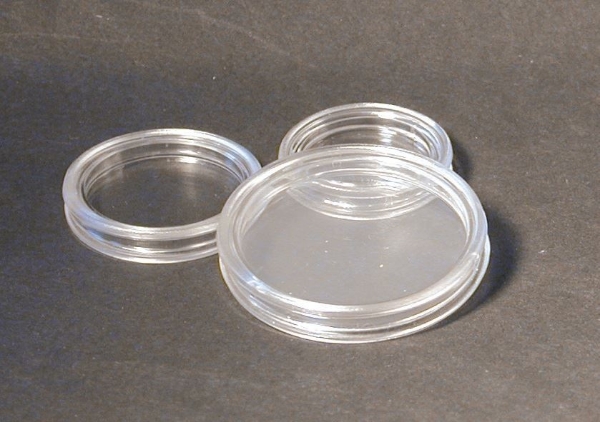
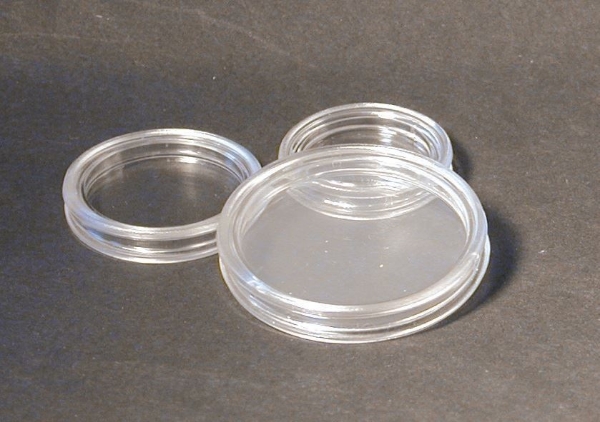
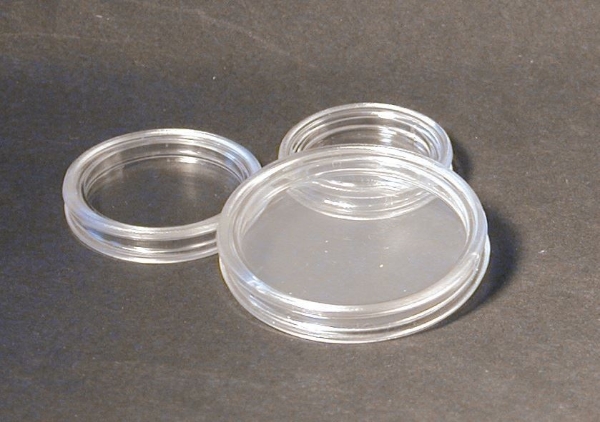
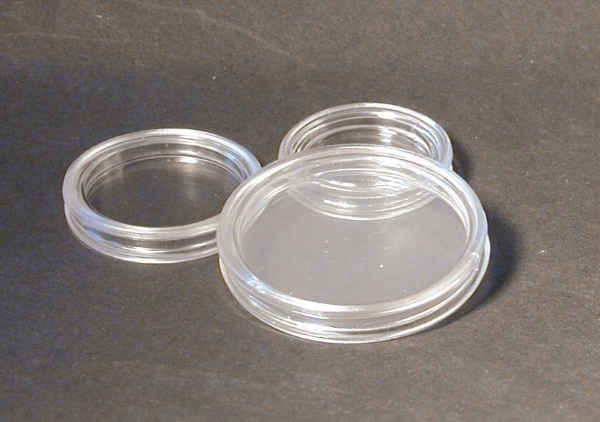
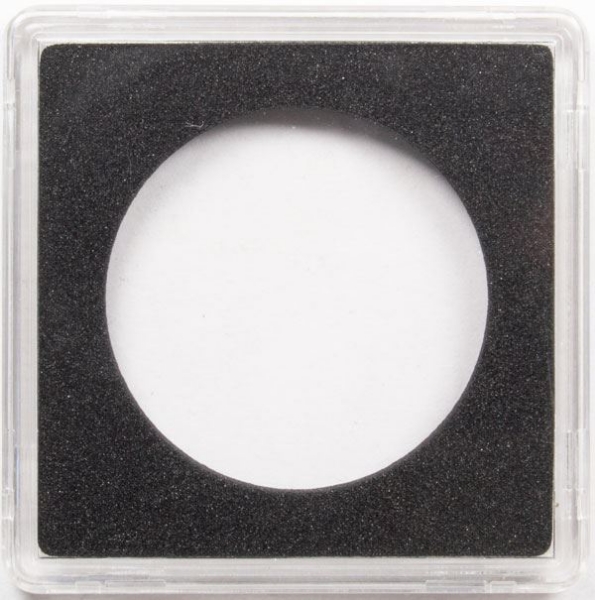
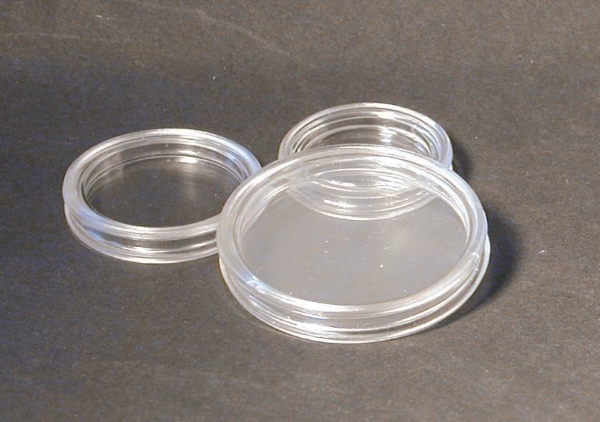
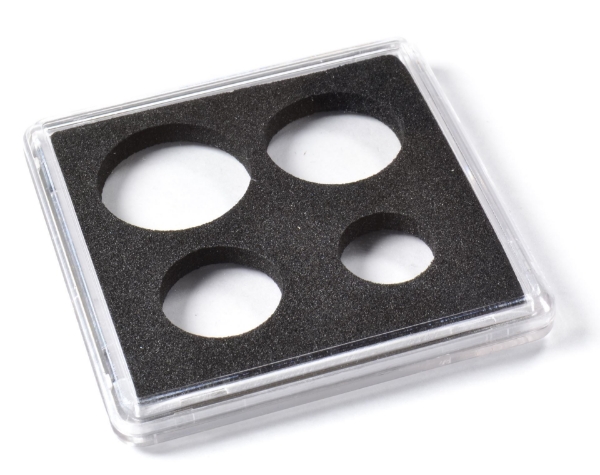
To the untrained eye, a slab might look like a simple plastic box. In reality, it is a sophisticated, sonically sealed capsule that serves multiple critical purposes:
1. Guaranteed Authentication
Both PCGS and NGC offer comprehensive financial guarantees. If a coin they certified is later proven to be counterfeit, they will compensate the owner for its current market value. This promise removes the stress of verification from the buyer.
2. Environmental Protection
Copper, silver, and gold can degrade over time when exposed to humidity, human touch, and corrosive gases. Slabs are made of inert, archival-safe plastics that arrest environmental decay and protect the coin's surfaces from physical scratches.
3. Instant Global Liquidity
Selling a raw coin requires finding a buyer who agrees with your grade. Selling a certified MS-65 coin requires no debate. Buyers, dealers, and auction houses around the globe accept PCGS and NGC grades instantly, facilitating rapid, hands-off transactions.
4. Verified Scarcity and Population Reports
Both services maintain public "Population Reports" detailing exactly how many coins of a specific date, mintmark, and variety have been graded. If a coin is an MS-69 but only three exist in that grade, the population report proves its extreme rarity, justifying a substantial financial premium.
The Dangerous Allure of "Raw" (Ungraded) Coins
It is tempting to buy ungraded, "raw" coins. They are often significantly cheaper than their certified counterparts, and there is an undeniable thrill in trying to spot an undergraded bargain. However, for most collectors, buying raw coins without expert numismatic training carries massive risks:
The Hidden Scourge of Cleaning
A coin that has been polished, scrubbed, or chemically dipped is considered damaged. Cleaning strips away the microscopic metallic flow lines that create original mint lustre, permanently ruining the coin's numismatic premium. Unscrupulous sellers often use advanced chemical baths to make a cleaned coin look "brilliant uncirculated" to an untrained eye. A grading service will spot this immediately and refuse to give it a numeric grade, labelling it as a "Details - Cleaned" coin instead.
Sophisticated Counterfeits and Alterations
Modern counterfeiting technology has reached terrifying levels of sophistication. Fake silver dollars and gold sovereigns are struck using high-pressure dies that mimic genuine coins perfectly down to their weight and metal composition. Furthermore, some fraudsters alter genuine coins—adding a rare mintmark or removing a digit of a date—to fabricate a rare variety. Third-party graders use advanced microscopic analysis and metallurgical scanning to weed these out.
Artificial Toning
Naturally toned silver coins can develop breathtaking rainbow colours over decades of slow oxidation, driving huge market premiums. Unfortunately, dishonest sellers artificially tone coins in minutes using chemicals or heat. Grading services reject artificially toned coins as altered.
Environmental Degradation (PVC Damage)
Storing raw coins in soft plastic flips made with polyvinyl chloride (PVC) causes a chemical reaction that deposits a green, acidic residue on the coin. Over time, this acid eats into the metal, permanently etching the surface. Certified slabs eliminate this threat entirely.
Frequently Asked Questions (FAQs)
Q: Are PCGS and NGC grades directly comparable? A: Yes. Both companies use the same $1$-to-$70$ Sheldon scale. An MS-65 from PCGS is universally considered equivalent in quality to an MS-65 from NGC.
Q: What is a "Details" grade? A: A "Details" grade is assigned to a genuine coin that has surface damage (such as cleaning, deep scratches, corrosion, or environmental damage). The label will describe the amount of detail remaining on the coin (e.g., "AU Details") followed by the issue (e.g., "Improperly Cleaned").
Q: Why does the physical condition of the slab matter? A: Scratched, scuffed, or cloudy slabs obscure the coin's details and reduce its visual appeal. Experienced collectors utilise individual slab sleeves and dedicated storage boxes to keep their holders pristine, as heavily damaged slabs can devalue the coin's marketability.
Q: Does it cost money to verify a certified coin? A: No. Both PCGS and NGC offer free online verification tools and mobile apps. By typing in the coin's unique certification number, you can view its official records, grading history, and often high-resolution photos taken during the grading process.
Bibliography
PCGS Official Site: PCGS Coin Grading Standards. (Detailed breakdown of the Sheldon scale as applied by the Professional Coin Grading Service).
NGC Official Site: NGC Grading Scale and Designations. (Resource outlining standard designations, PF/MS prefixes, and details grading criteria).
Sterling Bullion Partners: PCGS vs NGC: A Comparative Analysis. (Detailed breakdown comparing services, labels, fees, and market perception).
Bullion Club UK: Why Graded Coins Outperform Loose Coins. (An analysis of security, liquidity, and value retention of slabbed coins versus raw coins).
Wasserthal Rare Coins: Exploring the Numismatic Landscape: Grading Systems. (Comparison of third-party grading systems, historic context, and the rise of CAC).
Sovara Coins: The Hidden Devaluation of Damaged Slabs. (Industry insights on why slab preservation directly impacts coin value and resale potential).