Picture Source: Canva
The Psychology of the "Error Coin": Why Collectors Pay Thousands for Minting Mistakes
In almost every manufacturing industry on the planet, an error is a defect—an item to be melted down, discarded, or written off as a loss. Quality control exists specifically to prevent the imperfect from reaching the consumer. Yet, in the world of numismatics (coin collecting), a mistake at the mint is not a piece of trash; it is a lottery ticket.
When millions of identical, standardised metal discs are struck by massive presses, the sudden emergence of a "mule," a "doubled die," or an "off-centre strike" that somehow escapes the factory floor sparks a frenzy. Collectors are routinely willing to pay thousands—and sometimes hundreds of thousands—of pounds for these anomalies. But what drives this intense market? The answer lies at the intersection of human psychology, the allure of serendipity, and the uncompromising rules of supply and demand (Belk, 1995).
Key Facts
Error Coin: A coin that was manufactured incorrectly by a mint but managed to escape quality control and enter circulation or public hands.
Mule: A highly rare error where a coin is struck with obverse (front) and reverse (back) dies that were never meant to be paired together.
Doubled Die: An error caused by a misalignment during the creation of the die itself, resulting in overlapping, doubled imagery or text on the final coin.
The "King" of Modern Mules: The 2000 Sacagawea Dollar / Washington Quarter Mule, which has sold at auction for over £192,000.
Authentication: Organisations like the Professional Coin Grading Service (PCGS) and Numismatic Guaranty Company (NGC) are essential for verifying errors, as forgeries are common in the high-stakes error market.
Key Takeaways
The Scarcity Principle: Human psychology assigns higher value to items that are exceedingly rare. In a hobby built on mass-produced objects, an error coin offers a unique exception to the rule.
Defiance of Standardisation: Collectors are drawn to the narrative of an error coin—the idea of a "rogue" piece that somehow survived strict government quality control.
Market Drivers: The value of an error is dictated by its visual drama, its rarity, and the popularity of the base coin series (e.g., an error on a popular Lincoln Cent will garner more attention than an obscure foreign coin).
Condition is King: Even for errors, the physical state of the coin (its "grade") exponentially multiplies its value. An uncirculated error is worth vastly more than a heavily worn one.
The Psychology of the Imperfect
To understand why a collector would spend a year's salary on a visibly defective piece of metal, one must look at the psychology of collecting. The psychologist Russell Belk, a leading expert on consumer behaviour and collecting, notes that collections are often extensions of the collector's identity. People collect to assert control, to preserve history, and to capture the extraordinary (Belk, 1995).
Coins are, by definition, intended to be perfectly uniform. Governments spend millions ensuring that every 2026 quarter looks exactly like the millions of other 2026 quarters. Therefore, when an error occurs, it shatters this manufactured uniformity. The error coin becomes an anomaly, and humans are psychologically wired to notice and value anomalies. It triggers the scarcity heuristic—a mental shortcut where we subconsciously assume that things that are harder to acquire are inherently more valuable (Cialdini, 2006).
Furthermore, error coins offer a compelling narrative. There is a "David vs. Goliath" romance to a doubled die penny that managed to slip past the US Mint's inspectors, survive the sorting machines, get rolled into a paper coin bag, and end up in a high street bank. The coin is a survivor. For collectors, owning an error is like owning a piece of a secret, unauthorised history—a glitch in the matrix of government bureaucracy (Guth & Garrett, 2005).
The Anatomy of High-Value Errors
Not all mistakes are created equal. Minor flaws, like a small die crack or a faint striking anomaly, might only add a few pounds to a coin's value. The massive price tags are reserved for dramatic, highly visible errors. Two of the most legendary types of errors are the Mule and the Doubled Die.
The Mythical "Mule"
In numismatics, a "mule" is a coin struck with two dies not intended to be paired. The name is borrowed from the animal kingdom—a mule is the sterile offspring of a horse and a donkey. In the minting world, a mule happens when a mint worker accidentally installs the obverse die of one denomination and the reverse die of another.
Because dies are carefully categorised and mechanically fitted to specific presses, mules are almost impossibly rare. The most famous modern example is the 2000 Sacagawea Dollar / Washington Quarter Mule. In the year 2000, the US Mint was simultaneously producing the new golden Sacagawea dollars and the Statehood quarters. Somehow, a press was fitted with the obverse (George Washington) of the quarter, and the reverse (the soaring eagle) of the Sacagawea dollar. Struck on a golden dollar planchet (blank), the result was breathtaking. Only about 20 of these are known to exist, and when they surface at auction, they routinely command upwards of £100,000 to £190,000 (PCGS, 2023).
The Doubled Die
A common misconception is that a "doubled die" coin was struck twice by the press. In reality, the mistake happens before the coin is ever minted. It occurs during the hubbing process—when the master hub is transferring the image to the working die. If the hub slips or is misaligned during its multiple impressions onto the die, the die itself will feature doubled text or imagery. Consequently, every coin struck by that defective die will feature the exact same doubling (Bowers, 1999).
The most iconic example is the 1955 Lincoln Cent Doubled Die Obverse. Due to a misalignment at the Philadelphia Mint, roughly 20,000 to 24,000 cents were struck with extreme, highly visible doubling on the date and the words "LIBERTY" and "IN GOD WE TRUST." Because the error was so obvious to the naked eye, it sparked a nationwide treasure hunt. Today, a pristine 1955 Doubled Die cent can sell for over £100,000. The psychology here is driven by visual drama; collectors don't need a magnifying glass to see the error, making it highly desirable to the masses (Travers, 2010).
Market Dynamics: What Drives the Price?
The market for error coins is a micro-economy governed by specific dynamics. Why does an off-centre penny sell for £50, while a mismatched mule sells for £150,000?
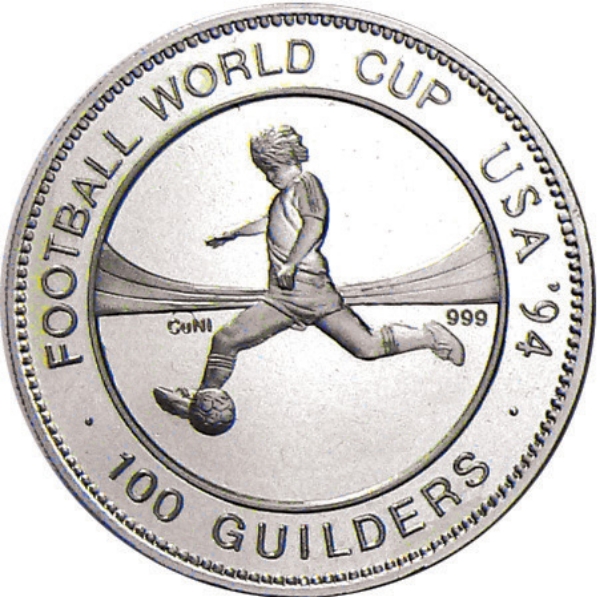
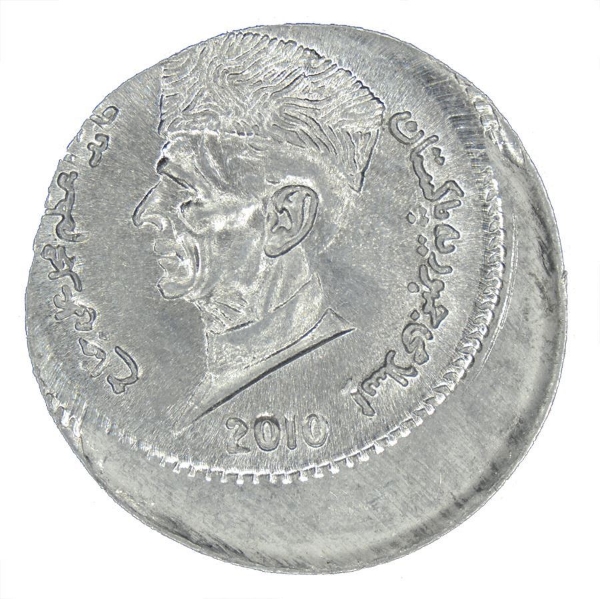
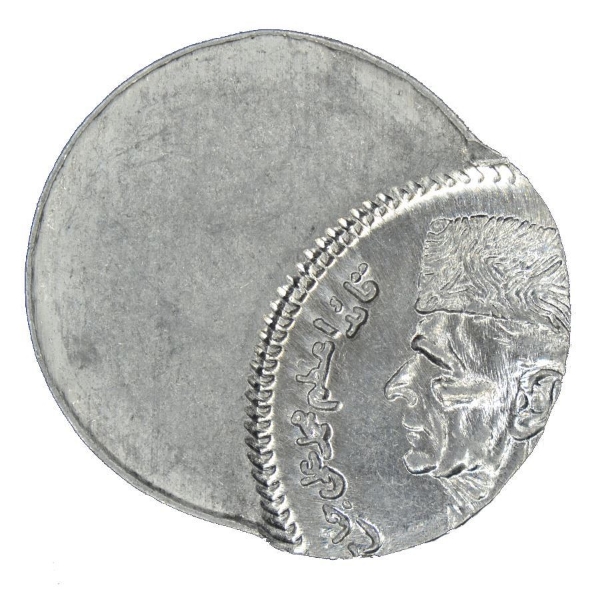
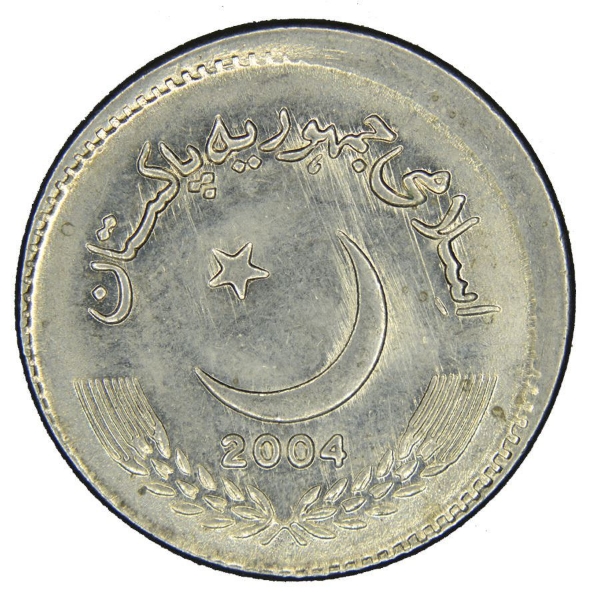
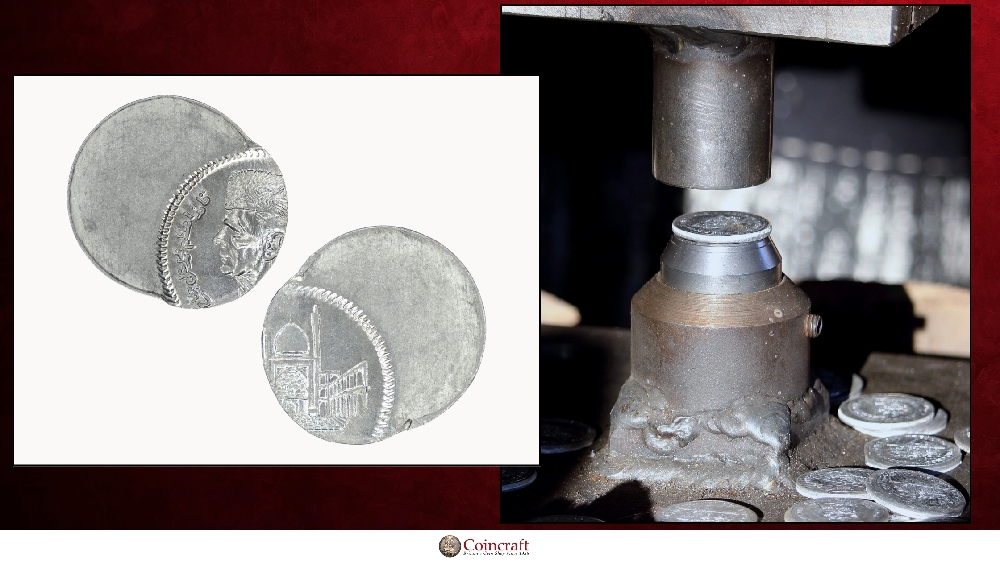
1. The Magnitude of the Error Visual impact dictates market value. An "off-centre strike" occurs when the blank planchet is not fed properly into the press, resulting in a coin that is missing a percentage of its design. A coin that is 5% off-centre is a mild curiosity. A coin that is 50% off-centre, yet still retains its date and mint mark, is a high-value prize. The market pays a premium for errors that are easily verifiable and visually spectacular (Smith, 2018).
2. The Popularity of the Series The law of demand relies on the number of active collectors. The Lincoln Cent and the Washington Quarter are two of the most heavily collected coin series in the world. An error on a Lincoln Cent has a massive built-in audience of buyers waiting to bid on it. Conversely, a severe error on an obscure foreign coin or a highly unpopular denomination (like the Susan B. Anthony dollar) will command a much lower premium, simply because fewer people are fighting for it.
3. Third-Party Authentication (Slabbing) The lucrative nature of error coins inevitably attracts counterfeiters. Unscrupulous individuals will use engineering workshop presses to artificially create "off-centre" strikes or alter coins post-minting. Because of this, the error market relies heavily on third-party grading services like PCGS (Professional Coin Grading Service) and NGC (Numismatic Guaranty Company). These organisations employ experts to examine the metallurgy and strike characteristics to certify that the error occurred inside the mint. Once a coin is authenticated and sealed in a tamper-proof plastic holder (a "slab"), buyer anxiety plummets, and auction prices skyrocket (PCGS, 2023).
The Thrill of the Hunt
Ultimately, the psychology of the error coin market is tied to the concept of the treasure hunt. While high-end collectors battle at prestigious auction houses like Heritage Auctions or Stack's Bowers, the foundation of the hobby is built on everyday people checking their loose change.
The knowledge that a multi-thousand-pound mule or a doubled die could be sitting at the bottom of a jar of loose change provides a powerful, intermittent psychological reward—much like playing a fruit machine. Every time a collector receives change at the supermarket, there is a microscopic chance of a massive payout.
Minting errors represent a rare collision of immense industrial scale and human fallibility. For the collectors willing to pay thousands for these mistakes, the coins are more than just currency or investments. They are metal monuments to chaos, proving that no matter how advanced or regulated our machinery becomes, perfection is an illusion, and mistakes are beautiful.
Frequently Asked Questions (FAQs)
How can I tell if an error coin is real or just damaged? Post-mint damage (PMD) is common. Coins run over by cars or altered by tools are often mistaken for errors. Genuine mint errors show specific metallurgical signatures—for example, metal flows smoothly in a genuine off-centre strike, whereas a smashed coin will show sheer marks and compromised rims. If you suspect a valuable error, it must be evaluated by a professional grading service like PCGS or NGC.
Are error coins still being made today? Yes, but they are increasingly rare. The US Mint and other global mints have vastly improved their quality control technology, utilising automated laser scanning and weight-check systems to catch anomalies. This modernisation makes modern errors even more valuable due to their extreme scarcity.
What is the most expensive error coin ever sold? While prices fluctuate at auction, combinations of errors on historical gold pieces tend to hold the records. However, in the modern era, the 2000 Sacagawea Dollar / Washington Quarter Mule is often considered the king of errors, with private sales and auction records repeatedly breaching the £100,000 to £190,000 threshold.
Is a coin with no mint mark an error? Usually, no. For most of US history, coins minted at the primary facility in Philadelphia did not feature a mint mark. However, there are a few exceptions, such as the 1922 "No D" Lincoln Cent or the 1982 "No P" Roosevelt Dime, where the mint mark was accidentally polished off the die. These specific exceptions are highly valuable.
Bibliography
Belk, R. W. (1995). Collecting in a Consumer Society. Routledge.
Bowers, Q. D. (1999). The Official Red Book of United States Coins. Whitman Publishing.
Cialdini, R. B. (2006). Influence: The Psychology of Persuasion. Harper Business.
Guth, R., & Garrett, J. (2005). United States Coinage: A Study by Type. Whitman Publishing.
PCGS (Professional Coin Grading Service). (2023). PCGS Error Coin Guide and Population Report.
Travers, S. L. (2010). The Coin Collector's Survival Manual. House of Collectibles.