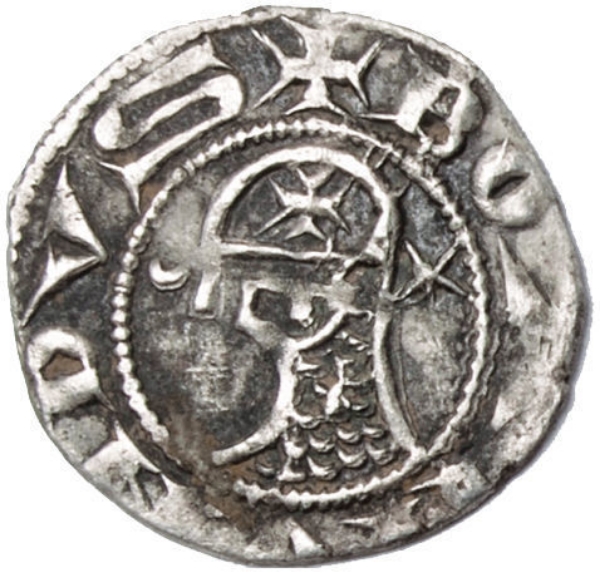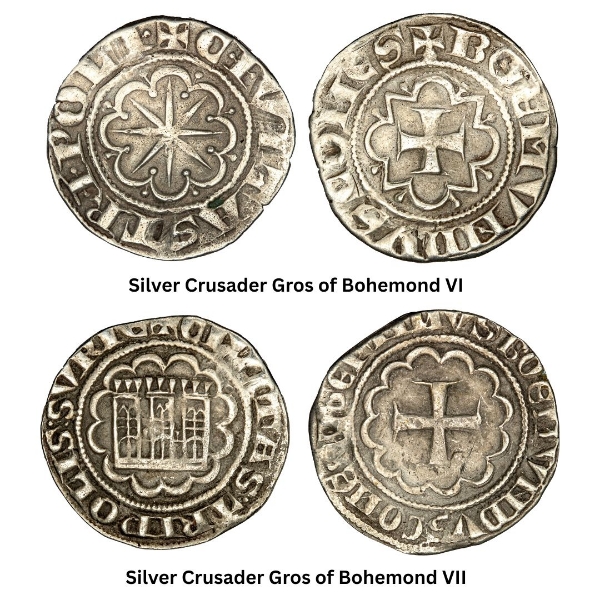
Picture Source: Canva

Coins of the Crusades: Cultural Hybridity, Imitation Dinars, and Economic Pragmatism in the Levant
Introduction
The Crusades are predominantly remembered as an era of intense religious conflict, military campaigns, and ideological strife between Western Christendom and the Islamic dynasties of the Near East. However, beneath the martial confrontation lay a complex reality of economic interdependence and commercial necessity. Following the capture of Jerusalem in 1099 and the establishment of the Latin East—comprising the Kingdom of Jerusalem, the Principality of Antioch, the County of Tripoli, and the County of Edessa—European rulers confronted a sophisticated, highly monetization-driven Mediterranean economy dominated by Islamic gold and silver currencies 1.
To integrate into regional trade networks and maintain commercial viability alongside Italian maritime republics, Crusader authorities engaged in one of the most intriguing numismatic practices of the Middle Ages: striking accurate imitations of Islamic gold dinars and silver dirhams 2. These coins, known in medieval Europe as besants sarracenatos (Saracen besants), featured pseudo-Kufic and authentic Arabic script, complete with Islamic religious declarations. This article explores the monetary history of the Crusader states, examining how economic pragmatism triumphed over religious dogma, the theological controversies that ensued, and the eventual creation of hybrid Christian-Arabic coinage 3.
Key Takeaways
Monetary Integration: Crusader rulers produced pseudo-Islamic coins to fit into the established gold-standard trade networks of the Levant, as European silver deniers were inadequate for large-scale Mediterranean commerce 1.
The Saracen Besant: Christian mints in Acre, Tripoli, and Tyre struck exact gold copies of Fatimid dinars, complete with Arabic Kufic script praising Allah and the Prophet Muhammad 2.
Papal Intervention: In 1250, Pope Innocent IV expressed outrage that Christian princes were issuing coins bearing Islamic declarations of faith, leading to a strict papal prohibition 4.
Hybrid Christian-Arabic Coinage: Following reform enforced by King Louis IX of France, Crusader mints modified the coins to feature Arabic script proclaiming Christian doctrine, including references to the Holy Trinity and cross devices 5.
Pragmatism Over Ideology: The Crusader imitation coinage serves as a prominent historical example of economic realpolitik superseding religious conflict during the High Middle Ages 3.
Key Facts
Feature | Details |
|---|---|
Primary Region | Outremer (Kingdom of Jerusalem, County of Tripoli, Principality of Antioch) 1 |
Active Period | Late 11th Century – Late 13th Century (c. 1099–1291) 2 |
Primary Coin Types | Imitation Fatimid Dinars (Besant Sarracenato), Imitation Ayyubid Dirhams 3 |
Metal Content | Gold (Dinars/Besants) and Silver/Billon (Dirhams/Deniers) 2 |
Script Used | Arabic (Kufic and Naskh scripts), Latin, and Greek 5 |
Key Mints | Acre, Tripoli, Tyre, Sidon, Antioch 1 |
Major Reformers | Pope Innocent IV, King Louis IX (St. Louis) of France, Odo of Châteauroux 4, 5 |
Numismatic Legacy | Supreme example of medieval cross-cultural currency and trade adaptation 3 |
The Monetary Landscape of Outremer
When Western knights and merchants settled in the Levant at the turn of the 12th century, they encountered a monetary system vastly superior in volume and sophistication to that of Western Europe. While Europe relied heavily on a monometallic silver standard dominated by small, thin silver pennies (deniers), the Middle East operated on a bi-metallic and multi-denominational standard 1. High-purity gold dinars struck by the Fatimid Caliphate of Cairo dominated maritime and long-distance luxury trade, while high-grade silver dirhams facilitated regional market transactions 2.
┌─────────────────────────────────────────────────────────────┐
│                 MEDITERRANEAN TRADE LANDSCAPE               │
└──────────────────────────────┬──────────────────────────────┘
                               │
            ┌──────────────────┴──────────────────┐
            ▼                                     ▼
   WESTERN EUROPEAN SYSTEM              LEVANTINE / ISLAMIC SYSTEM
   - Monometallic (Silver Deniers)       - Bimetallic (Gold & Silver)
   - Localized, small-scale trade        - Global trade (Dinar & Dirham)
            │                                     │
            └──────────────────┬──────────────────┘
                               │
                               ▼
                   THE CRUSADER DILEMMA
      Need for high-value currency to trade with Levantine,
      Egyptian, and Italian merchants -> Adoption of Imitation Coinage
Western European deniers were poorly suited for purchasing Syrian silk, spices, grain, and sugar, nor were they accepted by local Arab, Jewish, and Syrian merchants accustomed to standard Islamic metrology 3. Recognizing that attempting to impose unfamiliar Western coin types would cause economic isolation, the rulers of the Crusader states chose to adapt to local custom rather than enforce monetary conformity 1.
The Saracen Besant: Minting Islamic Designs
Beginning in the early-to-mid 12th century, Crusader mints—most notably in Acre and Tripoli—began striking gold coins that copied the weight, fineness, and visual appearance of Fatimid gold dinars, specifically those of Caliph Al-Amir (reigned 1101–1130) and Caliph Al-Mustansir 2. In Western Europe, these coins were called besants sarracenatos (Saracen besants) or dinaris de saracenis 3.
Inscriptions and Theological Paradox
The extraordinary feature of these early Crusader gold besants was that they were direct, deliberate copies of Islamic religious items. The coins featured concentric bands of Arabic Kufic text 2. On the obverse and reverse, they frequently included the Islamic Shahada:
"There is no god but Allah; Muhammad is the messenger of Allah."
In addition, many pieces retained the name of the Fatimid Caliph and the Islamic date according to the Hijri calendar, despite being struck decades later by Christian authorities in Acre 2, 3.
To ensure commercial acceptance across Muslim-held territories such as Damascus, Cairo, and Aleppo, Crusader die-cutters initially reproduced the Arabic characters as faithfully as possible. Over time, as local die-engravers who lacked knowledge of Arabic were employed, the inscriptions evolved into "pseudo-Kufic"—stylized letter-like forms that retained the visual aesthetic of Arabic without forming legible words 5.
   TYPICAL CRUSADER IMITATION DINAR (c. 1150–1250)
   ┌──────────────────────────────────────────────┐
   │  Outer Ring:  Pseudo-Kufic / Arabic Legend  │
   │  Inner Ring:  Mint & Date Formula (Hijri)    │
   │  Center:      "Muhammad is the Messenger"    │
   │                                              │
   │  * Minted by Christian authorities in Acre   │
   │  * Used for trade across the Near East       │
   └──────────────────────────────────────────────┘
Papal Interdict and the Christianised Arabic Coinage
For over a century, this practice continued uninterrupted due to its economic utility. However, during the Seventh Crusade (1248–1254), King Louis IX of France (St. Louis) arrived in the Holy Land accompanied by the Papal Legate, Cardinal Odo of Châteauroux 4.
When Odo of Châteauroux discovered that Christian rulers in Acre and Tripoli were manufacturing coins that explicitly denied the divinity of Christ and praised the Prophet Muhammad, he was scandalized. In 1250, Odo sent an urgent report to Pope Innocent IV in Rome 4.
The Papal Response and Reform of 1251
Pope Innocent IV reacted swiftly, issuing a bull of excommunication against anyone involved in striking coins bearing the name of Muhammad or Islamic religious formulas 4. The threat of papal excommunication presented an economic crisis for the Kingdom of Jerusalem: ceasing Arabic coin production entirely would cripple foreign commerce, yet continuing meant spiritual severance from Rome 4, 5.
King Louis IX and local officials devised an innovative compromise in 1251:
Retain Arabic Script: The coins would continue to use the Arabic language and Naskh/Kufic calligraphy so that Levantine and Arab merchants could read and accept them 5.
Transform the Inscriptions: The Islamic declarations were purged and replaced with fundamental Christian dogma written in Arabic 5.
Incorporate Christian Symbols: A small Christian cross was added to the center or top of the coin design 5.
   CHRISTIANISED ARABIC BESANT / DIRHAM (Post-1251 Reform)
   ┌──────────────────────────────────────────────┐
   │                                              │
   │                   ┼                          │
   │            "One God, One Faith,              │
   │             One Baptism"                     │
   │            (Written in Arabic)               │
   │                                              │
   │  * "Father, Son, and Holy Spirit"            │
   │  * Minted under Louis IX in Acre             │
   └──────────────────────────────────────────────┘
These reformed coins, known to numismatists as "Christian Arabic Dinars" or "Christian Dirhams," bore Arabic legends such as:
"One God, One Faith, One Baptism"
"Father, Son, and Holy Spirit, One God"
"Praise be to God, His glory is eternal"
Dates were updated from the Islamic Hijri calendar to the Christian era, calculated from the birth of Christ but written in Arabic words 5.
Economic Realpolitik vs. Religious Ideology
The evolution of Crusader coinage provides an extraordinary case study in medieval economic history. It demonstrates that when financial survival and international commerce were at stake, medieval states operated with a high degree of realpolitik 3.
The Italian maritime republics—Venice, Genoa, and Pisa—were key drivers of this coin production. Maintaining massive quarter-districts in port cities like Acre and Tyre, Italian merchants relied on the steady production of high-standard imitation gold besants to purchase Eastern commodities 1, 2. The acceptability of the coin in the bazaars of Damascus or Cairo was paramount; iconographic purity was secondary until papal oversight forced a structural redesign 4.
Furthermore, the willingness of Muslim merchants to accept Christian-Arabic coins bearing crosses and Trinitarian formulas after 1251 illustrates that economic pragmatism was mutual across the religious frontier 3, 5. As long as the weight and gold or silver purity met standard specifications, trade continued uninterrupted.
Frequently Asked Questions (FAQs)
What is a "Saracen Besant"?
A Saracen besant (besant sarracenato) is a gold coin struck by Crusader authorities in the Levant that imitated the design, weight, and Arabic script of Islamic Fatimid dinars to facilitate trade with Mediterranean and Eastern merchants 2.
Why did Christian Crusaders put Islamic prayers on their coins?
Crusader states needed their currency to be universally accepted in regional markets where Islamic gold dinars were the trusted standard. To avoid trade disruptions, Crusader mints copied the existing Fatimid coins as closely as possible, including their Arabic Kufic legends 1, 3.
How did the Pope react to these coins?
In 1250, Pope Innocent IV, alerted by Papal Legate Odo of Châteauroux, condemned the practice as blasphemous and threatened to excommunicate any Christian authority who minted coins praising Muhammad or invoking Islamic creed 4.
What were "Christian Arabic Dinars"?
Created after the papal ban in 1251 under the direction of King Louis IX of France, these were coins written in Arabic script but carrying Christian theological statements, such as references to the Trinity, alongside cross symbols 5.
Where were these Crusader coins minted?
The primary mints were located in major Crusader trade hubs, including Acre, Tripoli, Tyre, Sidon, and Antioch 1.
Bibliography & References
1. Metcalf, D. M. (1995) Coinage of the Crusades and the Near East. 2nd edn. London: Royal Numismatic Society, pp. 9–42.
2. Malloy, A. G., Preston, I. F. and Seltman, A. J. (1994) Coins of the Crusader States, 1098–1291. New York: Attaniotis Publications, pp. 115–138.
3. Porteous, J. (1989) 'Crusader Coinage with Arabic Inscriptions', in Setton, K. M. (ed.) A History of the Crusades: Volume VI. Madison: University of Wisconsin Press, pp. 354–420.
4. Blancard, L. (1878) Le Besant d'Or d'Acre et le Dirhem d'Argent. Marseilles: Barlatier-Feissat, pp. 12–29.
5. Bates, M. L. and Metcalf, D. M. (1989) 'Crusader Coinage with Greek or Latin Inscriptions', in Setton, K. M. (ed.) A History of the Crusades: Volume VI. Madison: University of Wisconsin Press, pp. 421–482.