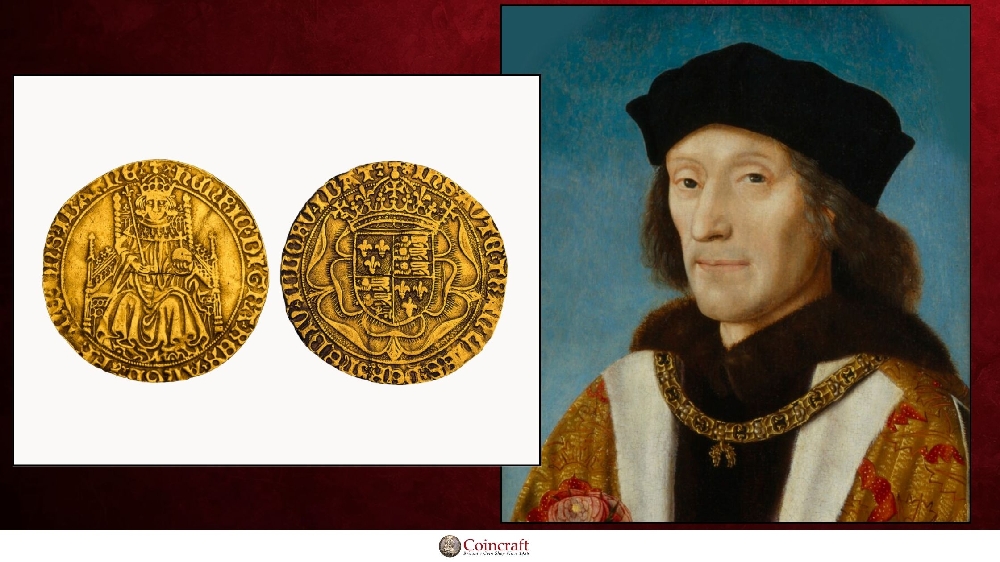
Picture Source of Henry VII: Wikipedia
The First Sovereign: A Biography of the World’s Pre-eminent Gold Coin
For over five centuries, a single gold coin has captured the political ambitions, economic dominance, and artistic heritage of the British Monarchy. Known historically as the "chief coin of the world," the English Sovereign is much more than mere currency; it is a masterclass in political propaganda, a triumph of neoclassical art, and the literal anchor of the nineteenth-century global financial system.
From its origins under the first Tudor monarch to its modern status as a flagship bullion piece, the Sovereign’s history is a mirror to the rise and transformation of Great Britain itself.
Key Facts
Feature | Tudor Sovereign (1489) | Modern Sovereign (1817–Present) |
|---|---|---|
Monarch at Debut | Henry VII | George III |
Nominal Value | £1 (20 shillings) | £1 (20 shillings / 100 pence) |
Gold Content ($Au$) | 23 Carat (95.83%) | 22 Carat (91.67%) |
Gross Weight | 240 Grains (~15.55 g) | 7.988 Grams |
Pure Gold Weight | ~14.90 Grams | 7.322 Grams (0.2354 oz t) |
Diameter | 42 mm | 22.05 mm |
Reverse Design | Tudor Double Rose & Royal Arms | St. George and the Dragon (by B. Pistrucci) |
Primary Use | Diplomatic gift / State presentation | Circulating currency, global trade, bullion |
Key Takeaways
Dynastic Propaganda: The original 1489 Sovereign was commissioned by Henry VII to advertise the wealth and legitimacy of the young Tudor dynasty to the rest of Europe.
The "Crown Gold" Standard: Henry VIII's debasement of the coin to 22-carat gold unintentionally established the incredibly durable alloy standard still used for Sovereigns today.
An Artistic Triumph: The 1817 redesign featured Benedetto Pistrucci's neoclassical depiction of St. George slaying the dragon, widely considered one of the most beautiful coin designs in history.
Global Financial Engine: During the 19th-century Classical Gold Standard, the British Sovereign was trusted worldwide, minted across multiple continents, and used as the primary currency of international commerce.
An Enduring Legacy: While no longer used as everyday money, the Sovereign remains highly prized by investors for its gold content and by numismatists for its historical and artistic value.
1. The Tudor Genesis: A Sovereign is Born (1489)
On October 28, 1489, King Henry VII issued a royal decree to his officers at the Royal Mint to strike "a new money of gold." Henry VII was the first of the Tudor monarchs, having secured the crown on the battlefield of Bosworth Field in 1485, ending the decades-long civil war known as the Wars of the Roses. His hold on the throne was young, and his treasury was depleted. To legitimise his dynasty, assert his authority internationally, and project an image of absolute stability, he needed an extraordinary currency.
The result was the first gold Sovereign. It was the largest and most valuable coin ever minted in England at the time. Unlike previous gold coins such as the noble or the ryal, this new coin was designated to have a nominal value of exactly one pound sterling (20 shillings).
  Tudor Sovereign (1489) Specifications:
  ┌───────────────────────┬────────────────────────┐
  │ Weight                │ 240 grains (~15.55 g)  │
  ├───────────────────────┼────────────────────────┤
  │ Gold Purity           │ 23 carats (95.83%)     │
  ├───────────────────────┼────────────────────────┤
  │ Diameter              │ 42 millimeters         │
  └───────────────────────┴────────────────────────┘
The coin's design was a masterpiece of political iconography. The obverse side (the front) depicted Henry VII seated majestically on a throne, wearing his coronation gown and holding the orb and sceptre—a direct declaration of supreme sovereign power. On the reverse, the coin displayed the Royal Arms of England superimposed over a double Tudor Rose, symbolising the union of the rival Houses of York and Lancaster.
This coin was too valuable to see day-to-day circulation. One pound in 1489 was equivalent to more than a month’s wages for an experienced craftsman. Instead, these massive, intricate pieces of fine gold ($Au$) served primarily as diplomatic gifts, handed to foreign dignitaries and monarchs to advertise England’s growing wealth, prestige, and sovereign authority.
2. Metamorphosis and "Crown Gold"
Under Henry VII’s successor, King Henry VIII, the Sovereign underwent structural changes that would define the coin's metallurgy for centuries. During his reign, Henry VIII initiated "The Great Debasement" to fund his extravagant lifestyle and foreign wars. In 1526, he reduced the gold content of the Sovereign from the traditional 23-carat fine standard down to 22-carat gold (a millesimal fineness of 916.7).
This 22-carat alloy—composed of 11/12 pure gold and 1/12 copper or silver—became known as "Crown Gold." Ironically, while the debasement was born out of financial desperation, the addition of copper made the coins much harder and more durable, a necessary trait for a coin destined to circulate widely. Today, the 22-carat crown gold alloy remains the global standard for sovereign gold.
Despite its prestige, the original line of Sovereigns did not survive the tumultuous seventeenth century. Under King James I and Charles II, the coinage was altered, and the Sovereign was eventually phased out in favour of the Guinea (valued at 21 shillings) in 1663. For over 150 years, the Sovereign vanished from production, waiting for the right moment to be reborn.
3. The Great Recoinage and the Modern Masterpiece (1817)
Following the defeat of Napoleon Bonaparte at the Battle of Waterloo in 1815, Great Britain emerged as the world’s leading industrial and military power. However, the decades of war had left the nation’s currency system in disarray, with paper banknotes having temporarily replaced gold.
To restore stability, the British Parliament passed the Great Recoinage Act of 1816. This historic legislation formally established the gold standard in Britain. It retired the 21-shilling guinea and brought back the 20-shilling gold Sovereign as the nation's primary coin of account.
The first modern Sovereign was struck in 1817 at the Royal Mint's new, steam-powered facility on Tower Hill, under the guidance of William Wellesley Pole. The coin was smaller than its Tudor predecessor, precisely engineered to fit the machinery of the Industrial Revolution:
Gross Weight: 7.9881 grams
Pure Gold Weight ($Au$): 7.3224 grams (or 0.2354 troy ounces)
Purity: 22 carats (91.67% gold, 8.33% copper)
To ensure this new coin was immediately recognisable, the Master of the Mint commissioned a brilliant but volatile Italian gem-engraver named Benedetto Pistrucci to design the reverse.
Pistrucci bypassed traditional heraldic shields and instead drew inspiration from classical Greek art, carving an image of St. George and the Dragon. His design showed a muscular, classical warrior riding a rearing horse, slaying a mythical beast. This dynamic masterpiece was widely praised by artists and the public alike. To this day, Pistrucci’s St. George and the Dragon remains the definitive, iconic reverse of the Sovereign, symbolising courage, British determination, and triumph over adversity.
4. The Currency of Empire: The Global Gold Standard
As the nineteenth century progressed, the British Empire expanded to encompass nearly a quarter of the globe. Alongside British gunboats and merchant vessels went the gold Sovereign. Because the coin was minted to incredibly strict weight and purity standards, it quickly earned a reputation for flawless reliability. It became trusted in every major port, trading post, and financial capital on Earth.
                  ┌───────────────────────────────┐
                  │    THE SOVEREIGN EMPIRE       │
                  │   Global Branch Mint Network  │
                  └───────────────┬───────────────┘
                                  │
         ┌────────────────────────┼────────────────────────┐
         ▼                        ▼                        ▼
  Sydney (1855)             Perth (1899)            Pretoria (1923)
  Melbourne (1872)          Ottawa (1908)           Bombay (1918)
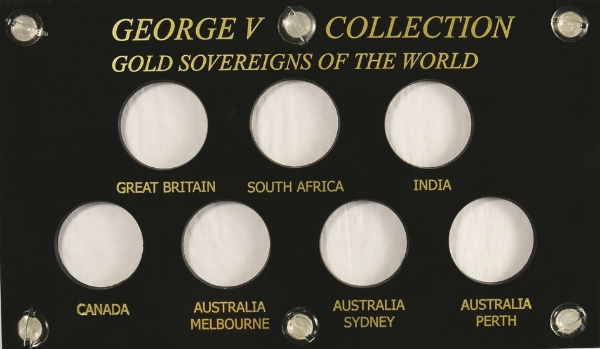
The gold discoveries in Australia, North America, and South Africa flooded the Empire with raw bullion. To handle this influx, the Royal Mint opened branch mints across the globe. Each branch struck Sovereigns to the exact same specifications as the London mint, distinguished only by a tiny, single-letter mintmark:
S for Sydney, Australia (established 1855)
M for Melbourne, Australia (established 1872)
P for Perth, Australia (established 1899)
C for Ottawa, Canada (established 1908)
I for Bombay, India (established 1918)
SA for Pretoria, South Africa (established 1923)
During this "Classical Gold Standard" era (1870–1914), international trade balances were often settled by physically shipping crates of Sovereigns across oceans. If a merchant in New York, Canton, or Cairo received a British Sovereign, they knew they held an exact, unvarying quantity of pure gold. It was, in essence, the world's first truly global currency.
5. The Modern Era: Bullion, Rarity, and Royalty
The golden era of the circulating Sovereign came to an abrupt end in August 1914 with the outbreak of the First World War. To preserve the nation’s gold reserves to pay for the war effort, the British government appealed to the patriotism of its citizens, asking them to exchange their gold Sovereigns for paper Treasury notes. By 1919, the Sovereign had vanished from active daily circulation in the United Kingdom.
Though it ceased to be everyday pocket change, the Sovereign never truly died. The Royal Mint continued to strike them periodically for international trade, and in 1957, revived regular production to meet global demand for gold bullion and to combat counterfeiting.
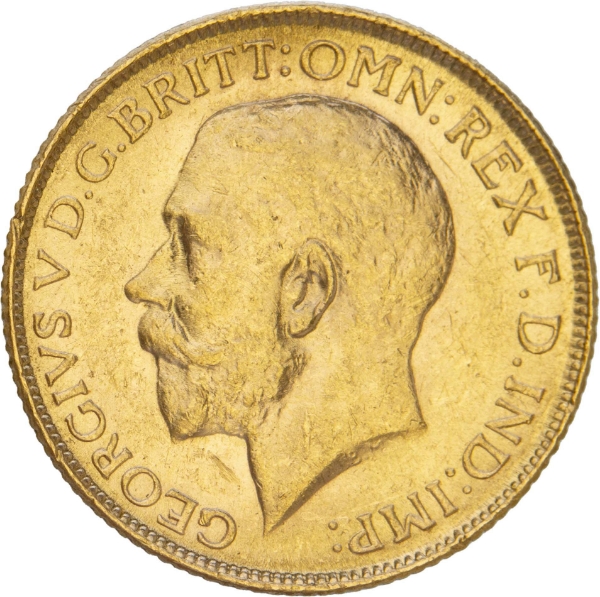
Today, the Sovereign is struck as a premium collector's coin and a trusted bullion asset. It continues to feature the reigning monarch on the obverse—most recently transitioning to the portrait of King Charles III—paired with Pistrucci’s legendary St. George and the Dragon design.
For collectors, specific historical Sovereigns are among the most valuable numismatic treasures in existence. For instance, the 1937 Edward VIII Sovereign—struck only as a trial pattern before the King abdicated the throne—is incredibly rare. In 2020, one of the six surviving specimens was sold by the Royal Mint for a record-breaking £1 million, making it the most expensive British coin ever sold.
Frequently Asked Questions (FAQs)
What is a gold Sovereign worth today?
The nominal face value of a modern Sovereign is technically £1, but its real value is determined by two factors: its gold bullion weight and its numismatic (collector) value. Containing 7.32 grams of pure gold, its base value fluctuates daily alongside the global spot price of gold ($XAU$). Rare, historic issues can command thousands—or even millions—of pounds at auction.
Is the gold Sovereign legal tender?
Yes. The gold Sovereign is legal tender in the United Kingdom. Because it is classified as official British currency, investment-grade gold Sovereigns are exempt from Capital Gains Tax (CGT) for UK residents, making them a highly popular vehicle for local gold investors.
Why does St. George and the Dragon appear on the coin?
The reverse design, created by Benedetto Pistrucci in 1817, depicts Saint George, the patron saint of England. In the aftermath of the Napoleonic Wars, the imagery of St. George slaying the dragon was a powerful metaphor for Britain's victory over the tyranny of Napoleon’s empire.
Where can I identify where my Sovereign was minted?
You can identify the mint of origin by looking for a tiny "mintmark" letter on the coin's reverse. On most Sovereigns, this letter is located on the ground line just above the year of minting, or in the buckle of the band on earlier designs. If there is no mintmark, the coin was struck at the main Royal Mint in London.
Bibliography & References
Clancy, Kevin. The Queen's Assay Master: A History of the Sovereign. Royal Mint Museum Publications, 2017.
The Royal Mint. "The History of the Gold Sovereign." Royal Mint Website.
The Royal Mint Museum. "The Modern Sovereign." Royal Mint Museum Denominations Guide.
Wikipedia Contributors. "Sovereign (English Coin)." Wikipedia, The Free Encyclopedia.
Wikipedia Contributors. "Gold Standard." Wikipedia, The Free Encyclopedia.