Picture Source: Canva
The Proper Way to Handle a Coin: A Numismatist’s Guide to Preservation and Care
Coins are far more than mere units of currency; they are physical touchstones of human history, art, and metallurgy. For collectors, investors, and museum curators, the condition of a coin—often referred to as its "grade"—is the primary determinant of both its historical legibility and its financial value [1]. A single fingerprint, an improper grip, or exposure to the wrong storage material can cause irreversible chemical degradation, instantly devaluing a rare specimen by hundreds or even thousands of pounds.
Preserving these delicate metallic artifacts requires a disciplined approach rooted in materials science and archival best practices. This guide details the essential techniques, scientific principles, and storage protocols necessary to handle coins safely, ensuring their longevity for generations to come.
1. Key Facts About Coin Damage and Preservation
The table below summarises the critical variables, chemical hazards, and mechanical risks associated with handling and preserving numismatic specimens:
Factor / Hazard | Impact on Coins | Scientific or Practical Explanation |
|---|---|---|
Skin Sebum & Sweat | Severe chemical corrosion | Human skin naturally secretes oils (sebum), lactic acid, and sodium chloride (salt), which etch metal surfaces [2]. |
Latex Gloves | Tarnishing and discolouration | Latex contains sulphur compounds that react aggressively with silver and copper to form dark metal sulphides [3]. |
PVC (Polyvinyl Chloride) | Irreversible "green slime" damage | Plasticisers in cheap PVC flips degrade over time, releasing hydrochloric acid which corrodes coin surfaces [4]. |
Improper Cleaning | Permanent surface abrasion | Over 95% of cleaned coins suffer micro-abrasions (hairlines) that strip away original mint lustre, destroying up to 90% of their value [1][5]. |
Optimal Environment | Preventative stabilisation | Archival standards recommend a relative humidity (RH) below 35% to 45% and a stable temperature of 15°C to 21°C (59°F to 70°F) [6]. |
2. Key Takeaways
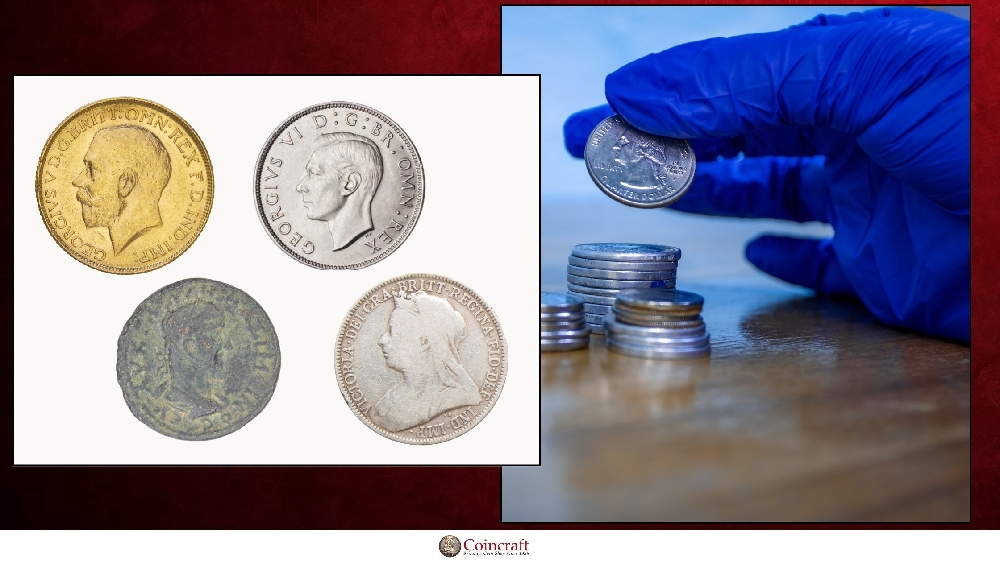
The Rim-Only Rule: Never touch the obverse (front) or reverse (back) faces of a coin. Always hold a coin securely by its outer edge (the rim) using your thumb and index finger [2].
Nitrile Over Cotton: While pure cotton gloves are classic, powder-free nitrile gloves are the modern curatorial standard because they prevent fibres from transferring and offer superior physical grip and dexterity [3].
Never Clean a Coin: Cleaning, polishing, or wiping a coin with a cloth, tissue, or metal polish creates micro-abrasions. This destroys the coin's original "mint lustre" and ruins its numismatic value [5].
Prepare the Workspace: Always handle coins over a clean, softly padded surface (such as a velvet pad or microfibre towel) to cushion the coin in the event of an accidental drop [1].
Control Your Breath: Avoid talking, coughing, or breathing heavily directly over an exposed coin. Microscopic saliva droplets contain corrosive enzymes that cause localised spotting [2].
3. The Science of Coin Degradation: Why Fingers are the Enemy
To understand why handling protocols are so rigid, one must examine the biochemistry of the human hand. The skin on our fingertips is covered in friction ridges containing thousands of eccrine sweat glands. These glands constantly exude a cocktail of water, amino acids, lactic acid, urea, and salts (principally sodium chloride) [2]. Additionally, we routinely transfer sebaceous lipids (oils) to our fingers by touching our face or hair.
When a bare finger presses against a coin's surface, these compounds are deposited onto the metal. Over time, a series of chemical reactions occur depending on the metallurgy of the coin:
Silver
Silver is highly reactive to sulphur. Atmospheric hydrogen sulphide reacts with silver to form silver sulphide, commonly known as tarnish or "toning" [3]. When skin oils are present on the coin, they accelerate this reaction locally. The result is a permanent, dark fingerprint etched into the silver that cannot be removed without stripping away the microscopic top layer of original metal.
Copper
Copper and its alloys (such as bronze and brass) are highly chemically active. Lactic acid and ambient moisture react with copper to form copper carbonates and oxides. This can escalate into dangerous "verdigris"—a green, acidic crust (basic copper carbonate) that actively eats into the coin's metal matrix, destroying fine details irrevocably [4].
Gold
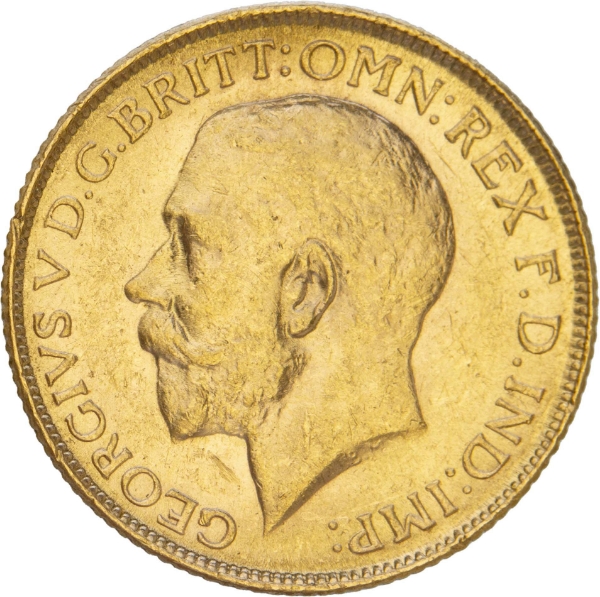
While pure gold (24-carat) is chemically inert and does not corrode, historical circulating gold coins are typically alloyed with copper or silver (usually 90% gold, 10% copper) to increase hardness [1]. The copper within these gold alloys can still oxidise, creating reddish "copper spots" if contaminated by skin contact. Furthermore, pure gold is extremely soft and easily scratched by microscopic dust particles.
4. Proper Handling Technique: Step-by-Step
Before opening any coin container or holding a specimen, establish a clean, controlled environment. Follow this operational checklist:
                  ┌────────────────────────────────────────┐
                  │      Pre-Handling Preparation          │
                  └───────────────────┬────────────────────┘
                                      │
            ┌─────────────────────────┼─────────────────────────┐
            ▼                         ▼                         ▼
┌───────────────────────┐ ┌───────────────────────┐ ┌───────────────────────┐
│   Padded Workspace    │ │   Clean & Glove Up    │ │    Environmental Check│
│ Spread a soft velvet  │ │ Wash hands, dry fully,│ │ Work in a draughts-   │
│ or microfibre pad over│ │ and put on powder-free│ │ free room; avoid talk │
│ a flat, low table.    │ │ nitrile gloves.       │ │ directly over coins.  │
└───────────────────────┘ └───────────────────────┘ └───────────────────────┘
Step 1: Prepare the Drop Zone
Never handle coins over bare wood, glass, or metal tables. If a coin slips from your fingers, a hard landing can nick the rim, scratch the surface, or dent the metal. Lay down a dedicated numismatic velvet tray, a thick felt pad, or a clean microfibre towel. Keep your hands low to this surface (no more than 5 to 10 cm above the pad) while holding the coin [1].
Step 2: Glove Selection
If you must handle bare coins, wear gloves.
Nitrile Gloves (Recommended): Use medical-grade, powder-free nitrile. They are chemically inert, fit snugly to prevent slippage, and leave no fibres behind [3].
Cotton Gloves (Alternative): Use 100% lint-free white cotton. However, be aware that cotton reduces tactile sensitivity and can drop tiny threads.
Warning: Avoid latex (contains sulphur) and powdered gloves (the powder acts as an abrasive) [3].
Step 3: The Edge Grip
When lifting the coin, touch only the outermost rim. Squeeze the rim gently between your thumb and index finger. This is the only safe grip. The coin's faces (the obverse and reverse fields, which contain the critical design elements, legends, and original mint lustre) must remain untouched.
       NO! (Faces)              YES! (Edge/Rim only)
     ┌─────────────┐             ┌─────────────┐
     │  ┌───────┐  │             │  ┌───────┐  │
     │  │  (X)  │  │             │ ◀│  (O)  │▶ │
     │  └───────┘  │             │  └───────┘  │
     └─────────────┘             └─────────────┘
  (Bare fingers touching       (Gloved fingers holding
     flat surfaces)                 only the rim)
Step 4: Examination and Speech Discipline
When examining the coin, hold it at a slight angle to a single, incandescent or LED light source to evaluate its lustre and surface conditions. Do not talk, laugh, or cough directly over the coin. Microscopic droplets of saliva can travel surprisingly far and land on the metal, initiating rapid oxidation [2]. If you must speak or explain the coin to someone else, turn your head away or wear a mask.
5. Cleaning Coins: The Ultimate Taboo
If there is a single golden rule in numismatics, it is this: Never clean your coins. Amateurs often believe that a bright, shiny coin is more valuable than a dirty or dark one. In numismatics, the exact opposite is true. An original, uncleaned coin with decades of natural, dark patina (toning) is highly prized. When a coin is chemically dipped, polished, or wiped:
Lustre Destruction: The chemical cleaners strip away the microscopic, delicate ridges created during the minting process (known as the flow lines), which create the spinning "cartwheel" effect of light [1][5].
Hairlines: Wiping a coin with even the softest tissue or cloth drags microscopic grit across the metal, leaving thousands of tiny scratches known as "hairlines" [5]. Professional grading services like PCGS or NGC can instantly detect cleaned coins under magnification and will refuse to assign them a numeric grade, labelling them "Cleaned" or "Details", which severely ruins their market value.
When is Cleaning Permissible?
True conservation is restricted to non-destructive methods to remove active, damaging foreign substances (like PVC residue or organic dirt). This should ideally be left to professional conservation services (e.g., NCS) [4].
If absolutely necessary to remove loose dirt from an archaeological or circulated coin, one may soak the coin in a bath of pure, analytical-grade acetone (not commercial nail polish remover, which contains water, oils, and fragrances). Acetone is an organic solvent that dissolves organic matter, grease, and PVC slime without reacting with the coin's metal [4]. Afterward, the coin should be rinsed in distilled water and allowed to air-dry on a soft towel. Never rub or wipe the coin dry.
6. Archival Storage and Environmental Controls
Proper handling is useless if the coin is returned to an unsafe storage environment. Most damage occurs when coins are kept in poor-quality holders over long periods of time.
Safe Archival Materials
Mylar-Lined Cardboard Flips: Ensure they are rated as "acid-free".
Hard Plastic Capsules: Made of inert polymers like polymethyl methacrylate (PMMA) or polystyrene (e.g., Air-Tite capsules).
Slabs: Sonic-sealed hard plastic holders used by professional grading companies (PCGS, NGC, ANACS). These provide the highest level of physical and chemical protection [1].
Dangerous Materials to Avoid
Soft PVC Flips: These are highly pliable and smell like plastic pool toys. They off-gas plasticisers that destroy metals [4].
Wood Cabinets (Unsealed): Many woods (especially oak) naturally release acetic acid fumes, which corrode copper and silver coins.
Glue and Tape: Adhesives contain acids and sulphur compounds that permanently stain coins.
7. Frequently Asked Questions (FAQ)
Q1: Is it okay to handle coins with bare hands if I wash them first?
While washing your hands with soap and drying them thoroughly removes surface grease, your skin begins secreting oils and moisture almost immediately. For common, low-value circulating coins, bare, freshly washed hands holding only the rim are acceptable. However, for high-grade uncirculated coins, proof coins, or rare precious metal specimens, gloves (nitrile or cotton) are mandatory [3].
Q2: Why are professional coin graders sometimes seen handling coins without gloves?
Professional graders at companies like PCGS and NGC occasionally work without gloves because cotton gloves can reduce dexterity, increasing the risk of dropping a coin, and can deposit tiny lint fibres. However, these experts have spent years mastering the "rim-only" grip and work in climate-controlled clean rooms. For average collectors, wearing nitrile gloves remains the safest option [1][3].
Q3: My silver coin has turned black/purple/blue. Is it ruined?
Not necessarily. This coloration is called "toning" (silver sulphide formation). If the toning is even, natural, and displays vibrant colours (often referred to as "rainbow toning"), it can actually increase the coin's value and appeal to collectors. If the toning is dark, blotchy, or caused by a greasy fingerprint, it is considered damage [5].
Q4: How do I identify "PVC damage" on my coins?
PVC damage typically manifests as a sticky, green residue or a cloudy, oily film on the surface of the coin, often accompanied by a distinct chemical smell similar to a new plastic shower curtain [4]. If left untreated, the acidic compounds will permanently pit the metal. If you spot PVC residue, store the coin in an inert holder immediately and consider conserving it with a pure acetone bath [4].
8. Bibliography and Sources
[1] Halperin, James L. How to Grade U.S. Coins: The Official Guide to the ANA Grading System. Heritage Publishing, 2011. Available on Heritage Auctions.
[2] Travers, Scott A. The Coin Collector's Survival Manual. 7th ed., House of Collectibles, 2015. Find at Penguin Random House.
[3] National Park Service. "Curatorial Care of Numismatic Collections." NPS Museum Handbook, Part I, Chapter 19, 2005. Read the PDF Manual at NPS.gov.
[4] Schweikert, John. "The Chemistry of Coin Preservation and the Perils of PVC." Journal of Numismatic Conservation, vol. 14, no. 2, 2018, pp. 45–52. Archived Reference on Numismatic Conservation.
[5] Bressett, Kenneth. Official ANA Grading Standards for United States Coins. Whitman Publishing, 2013. Available via the American Numismatic Association.
[6] Padfield, Tim. "The Role of Relative Humidity in the Conservation of Metal Artifacts." Conservation Science Quarterly, vol. 3, no. 1, 2012, pp. 12–18. Read Online at Conservation Physics.