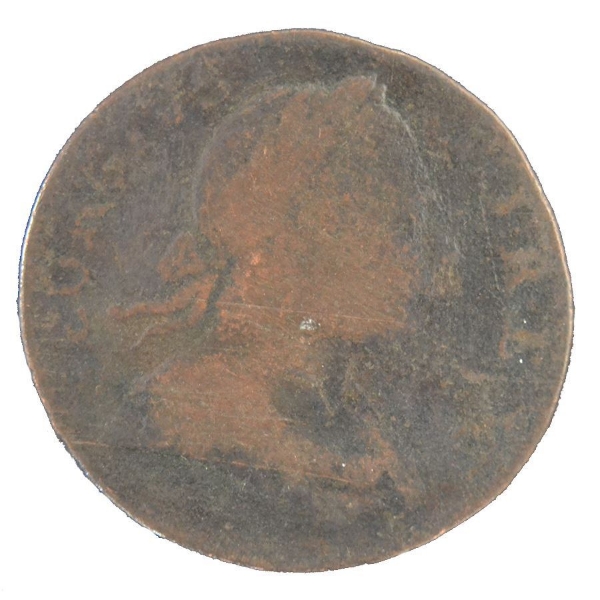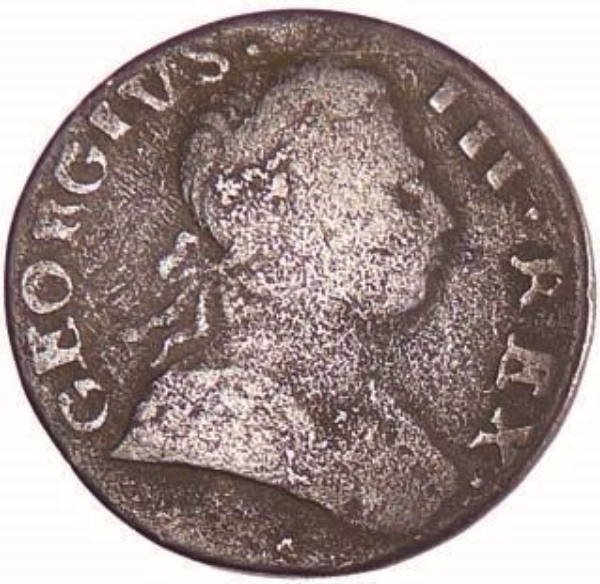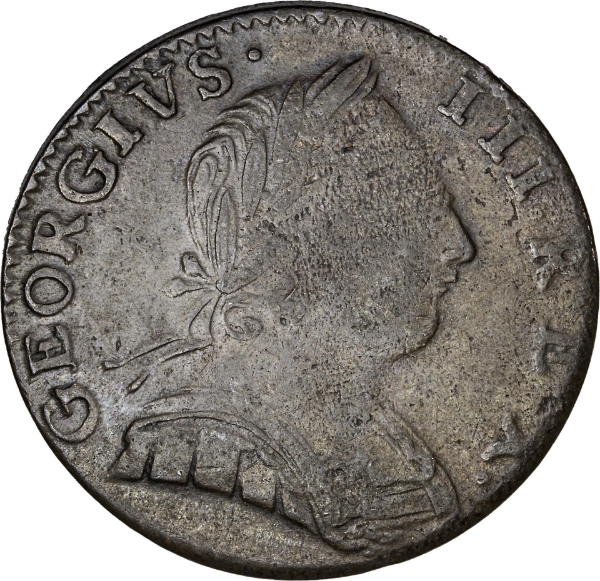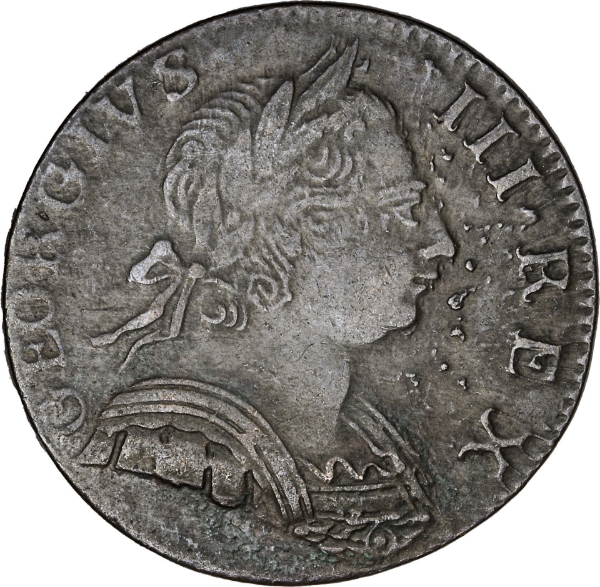
Picture Source: Canva
The Naked Eye Detective: A Beginner's Guide to Spotting Counterfeit Coins Without a Microscope
Introduction
The global market for rare coins and precious metal bullion is larger and more accessible than ever before. Unfortunately, this growth has been accompanied by a rise in increasingly sophisticated counterfeit coins. While high-end counterfeit operations use advanced metallurgy to fool unsuspecting buyers, the vast majority of fake coins circulating on secondary markets can be identified using basic principles of physics, simple tools, and careful observation.
You do not need an expensive laboratory or a high-powered microscope to protect yourself. By mastering a few fundamental physical tests—specifically analyzing weight and dimensions, inspecting edge details, and conducting acoustic resonance tests—you can filter out more than 90% of counterfeit coins. This guide provides a step-by-step framework for beginners to confidently evaluate coins using affordable, everyday tools while explaining the science behind why these tests work.
Key Facts: Specifications of Common Bullion Coins
To detect a fake, you must first know what the real coin is supposed to look like. Every sovereign mint produces coins to razor-thin physical tolerances. Below is a reference table for some of the world's most widely collected and counterfeited bullion coins.
Coin Name | Metal Content | Nominal Weight | Diameter | Thickness |
|---|---|---|---|---|
American Silver Eagle | 99.9% Silver (0.999 fine) | 31.103 g (1 oz t) | 40.60 mm | 2.98 mm |
Morgan Silver Dollar | 90% Silver, 10% Copper | 26.73 g | 38.10 mm | 2.40 mm |
Gold Sovereign (UK) | 91.67% Gold, 8.33% Copper | 7.988 g | 22.05 mm | 1.52 mm |
Krugerrand (South Africa) | 91.67% Gold, 8.33% Copper | 33.93 g (1 oz t gold content) | 32.77 mm | 2.84 mm |
American Gold Eagle | 91.67% Gold, 3% Silver, 5.33% Cu | 33.93 g (1 oz t gold content) | 32.70 mm | 2.87 mm |
Key Takeaways
The Principle of Density is Absolute: Counterfeiters cannot simultaneously match both the exact weight and the exact dimensions of a genuine gold or silver coin using cheap base metals.
Never Overlook the Third Side: The edge of a coin is the most difficult area for counterfeiters to replicate. Looking for casting seams and irregular reeding is the fastest way to expose a cast fake.
Listen for the Ring of Truth: The acoustic "ping" test exploits the unique elasticity and speed of sound in precious metals. Base metals produce a short, dead thud rather than a sustained, musical ring.
Begin with Physics, Conclude with Professionals: While DIY physical tests are excellent filtering tools, high-value purchases should always be backed by professional third-party grading (TPG) or verified by a reputable dealer using advanced diagnostic scanners.
Test 1: Weight and Dimension (The Physics of Density)
The most reliable, non-destructive diagnostic test you can perform at home relies on the fundamental physics of density. Density (represented by the symbol ρ) is defined as mass (m) divided by volume (V):
Density = Mass / Volume
Precious metals are incredibly dense. Gold has a density of approximately 19.3 g/cm³, while pure silver sits at 10.49 g/cm³. In contrast, common base metals used by counterfeiters are far less dense: copper is 8.96 g/cm³, zinc is 7.14 g/cm³, and steel/iron is roughly 7.87 g/cm³.
Because of this physical reality, a counterfeiter cannot replicate both the correct weight and the correct volume (thickness and diameter) of a precious metal coin using base metals.
To exploit this physical law, a beginner needs only two inexpensive tools:
A digital pocket scale accurate to 0.01 grams.
A set of digital vernier calipers accurate to 0.01 millimeters.
The Mathematical Catch-22 for Forgers
If a counterfeiter manufactures a fake American Silver Eagle out of copper-nickel alloy:
Scenario A: If they make the fake coin have the exact diameter (40.60 mm) and thickness (2.98 mm) of a genuine Silver Eagle, it will be significantly underweight (weighing roughly 24 to 26 g instead of the required 31.10 g).
Scenario B: If they force the coin to weigh exactly 31.10 g using copper-nickel, they must increase its volume. Consequently, the coin will be visibly thicker, wider, or both.
[ Counterfeiter's Dilemma ]
  ├── Match Dimensions Exactly ──> Underweight Coin (Detected by Scale)
  └── Match Weight Exactly     ──> Oversized/Too Thick (Detected by Calipers)
How to perform the test:
Clean your scale and place it on a flat, draft-free surface. Calibrate it to zero.
Weigh the coin. Check the reading against the coin's official specifications. For modern bullion, the weight should be within ±0.05 g of the standard. For older, circulated coins (like Morgan Dollars), allow for a slight variance (up to 1% to 2% loss) due to honest wear and tear.
Use the calipers to measure the diameter and thickness. Measure the thickness at the rim, not the center design.
If either the weight is off, or the coin's dimensions are swollen to make up for a weight deficiency, the coin is a fake.
Test 2: Edge Inconsistencies (The "Third Side" of the Coin)
While counterfeiters spend immense effort perfecting the faces (obverse and reverse) of a coin, they often neglect the edge. The edge is incredibly difficult to strike cleanly without industrial-grade minting presses.
There are three primary types of edges on coins: reeded (vertical grooves), lettered (words or symbols engraved into or raised on the edge), and plain (smooth). When inspecting a coin with the naked eye under a strong light source, look closely for these common red flags:
1. The Casting Seam
Most cheap counterfeits are made by casting molten base metal into a mold rather than striking it with a die. When the two halves of a mold are joined, molten metal often seeps into the tiny gap where the molds meet. This leaves a raised, thin line running along the center of the coin’s edge, known as a casting seam.
The Rule: Genuine sovereign coins are struck under hundreds of tons of pressure, never cast. Any sign of a raised seam around the edge of a coin is an absolute indicator of a fake.
2. Irregular, "Mushy," or Missing Reeding
A genuine reeded edge features razor-sharp, perfectly spaced vertical ridges.
On counterfeits, the reeds are often unevenly spaced, shallow, or "mushy" and rounded at the borders.
Sometimes, counterfeiters will attempt to grind down a casting seam manually, which results in flat spots or interrupted reeding along certain sections of the edge.
3. Misaligned Edge Lettering
If a coin features edge lettering (such as the British Sovereign or the US Saint-Gaudens Double Eagle), check the font style, depth, and orientation. Fake edge lettering is often hand-engraved or poorly cast, resulting in crooked characters, uneven spacing, or incorrect historical typefaces.
Test 3: The "Ping" Test (Acoustic Resonance)
The "ping" test is an ancient, highly reliable physical test based on acoustic resonance. Pure gold and silver are highly elastic and dense metals. When tapped, they vibrate at specific high frequencies and sustain those vibrations, producing a clear, high-pitched, bell-like ring.
In contrast, base metals like copper, lead, zinc, and steel have different acoustic properties. When struck, they dampen vibrations rapidly, producing a flat, dull "clunk" or "thud" with almost no sustain.
How to Safely Perform the Manual Ping Test
To avoid damaging your coin (especially rare or proof specimens), follow these steps:
Balance the coin flat on the very tip of your index finger. Ensure that no other part of your hand or skin touches the coin, as this will dampen the sound.
Alternatively, place the coin gently on a soft, non-absorbing surface like a piece of dry wood or a cloth-covered finger.
Take a wooden pencil, a plastic pen, or another coin of known authenticity.
Gently tap the edge of the coin. Do not strike the face of the coin.
Listen carefully:
Genuine Silver/Gold: A distinct, bright, crystal-clear musical ring that resonates and rings out for 1 to 3 seconds.
Counterfeit Base Metal: A short, flat, lifeless "clink" or "thud" that dies out instantly.
Going Modern: Digital Acoustic Analysis
If you worry that your hearing is subjective, you can use technology to remove human error. There are several free and low-cost smartphone applications (such as Pingcoin or Bullion Test) designed specifically for this purpose.
These apps utilize your phone's built-in microphone to record the sound of your coin's ping. The software performs a Fourier transform to analyze the sound wave's exact frequency signature (measured in Hertz, Hz) and matches it against a mathematical database of genuine coin dimensions. If the resonance frequency matches the expected physics of pure gold or silver, the app verifies the coin.
Supporting Diagnostic Tests
If a coin passes the weight, caliper, and ping tests, but you still harbor doubts, you can employ two simple supporting tests at home.
1. The Slide Test (Using Neodymium Magnets)
Pure gold and silver are completely non-magnetic. In fact, silver is diamagnetic, meaning it produces a weak, opposing magnetic field when exposed to a moving magnet.
The Static Test: Touch a strong neodymium magnet to the coin. If the coin sticks or shows any magnetic attraction, it contains an iron, nickel, or steel core. It is a fake.
The Slide Test: Hold a genuine silver bar or large coin at a 45-degree angle. Place a small neodymium magnet on the surface. The magnet should not slide off instantly like a rock; instead, it should glide down the silver surface slowly, as if moving through syrup, due to electromagnetic braking (Lenz's Law).
2. The Thermal Conductivity Test (The Ice Cube Method)
Silver is the most thermally conductive element on Earth. It transfers heat energy far faster than copper, iron, or lead.
How to do it: Place your suspect coin flat on a room-temperature table. Place a fresh ice cube directly on top of it.
The Result: If the coin is genuine 0.999 fine silver, the ice cube will begin to melt almost instantly, slicing down into the metal as if the coin were sitting on a warm stove. Simultaneously, if you touch the uncovered edge of the coin, it will feel freezing cold within seconds because the silver is rapidly drawing heat away from your hand to melt the ice.
When to Seek Professional Authentication
While the tests described in this guide are excellent for ruling out cheap fakes, they are not foolproof. Sophisticated counterfeiters can occasionally bypass basic physical tests:
The Tungsten Threat: Tungsten has a density of 19.25 g/cm³, which is almost identical to gold's density of 19.30 g/cm³. A gold-plated tungsten counterfeit can easily pass weight and dimensional checks.
Silver-Plated Copper: A copper-alloy fake plated in silver can sometimes produce a deceptive "ping" that sounds semi-authentic to an untrained ear.
For expensive numismatic coins or large bullion purchases, you should rely on professional authentication.
       [ Unverified Coin ]
                │
        ┌───────┴───────┐
   Passes DIY      Fails DIY
  Physical Tests   Physical Tests
        │               │
  ┌─────┴─────┐     [ REJECT ]
  │ High Value?│
  └─────┬─────┘
   ┌────┴────┐
  Yes        No
   │         │
[Professional TPG] ──> [Keep / Enjoy]
(PCGS / NGC Slabs)
Professional Standards:
Third-Party Grading (TPG) Companies: Submission to reputable grading services like the Numismatic Guaranty Company (NGC) or the Professional Coin Grading Service (PCGS) is the gold standard. These companies authentic, grade, and encapsulate coins in tamper-evident plastic holders ("slabs") with unique serial numbers.
XRF (X-Ray Fluorescence) Scanners: Professional coin shops possess XRF analyzers. These devices fire high-energy X-rays at the coin, analyzing the secondary X-rays emitted to provide an exact elemental breakdown of the coin’s alloy down to fractions of a percent, without damaging the coin.
Sigma Metalytics: This device uses electromagnetic sensors to penetrate deep into the coin, verifying the resistivity and metal composition of the core to ensure a gold coin does not contain a hidden tungsten center.
Frequently Asked Questions (FAQs)
Q: Can a coin be authentic if it weighs slightly less than its official specification?
A: Yes, but only under certain conditions. For highly circulated, historic coins (like a well-worn silver coin from the 1800s), honest wear and tear can cause a weight loss of up to 1% to 2%. However, for modern, uncirculated bullion coins (like an American Silver Eagle or Gold Maple Leaf), there is virtually no wear, so any deviation greater than 1% is a major red flag indicating a counterfeit.
Q: Why shouldn't I clean a suspect coin to see if it's fake?
A: Cleaning a coin using abrasive cloths or harsh chemicals can destroy its original "luster" and introduce microscopic scratches. In numismatics, cleaning can instantly reduce a rare coin's market value by up to 50% to 80%. It is always better to evaluate the coin in its original state.
Q: Does passing the magnet test prove a coin is real silver?
A: No. While a coin that sticks to a magnet is definitely fake, a coin that does not stick is not guaranteed to be real. Counterfeiters frequently use non-magnetic base metals like brass, lead, copper-nickel alloys, or pewter, which will also show no magnetic reaction.
Q: What is a "contemporary counterfeit"?
A: A contemporary counterfeit is a fake coin created during the time the coin was actively circulating, designed to defraud the public rather than modern collectors. For example, silver-plated brass half-dollars made in the 19th century are contemporary counterfeits. Ironically, some of these historic fakes have their own active collector markets and historical value!
Bibliography
American Numismatic Association (ANA). (2020). Official Guide to Detecting Counterfeit and Altered Coins. Colorado Springs: ANA Publications.
Halperin, James L. (2023). The How-To Guide for Grading Coins. Dallas: Heritage Publishing.
Schechter, David. (2018). The Acoustic Verification of Precious Metals: Using Resonance in Bullion Authentication. Journal of Numismatic Science, 14(3), 112–121.
Travers, Scott A. (2015). The Coin Collector's Survival Manual (7th ed.). New York: House of Collectibles.
Yeoman, R. S. (2025). A Guide Book of United States Coins (79th ed.). Pelham: Whitman Publishing. (Commonly known as the "Red Book").