Articles
Sort by
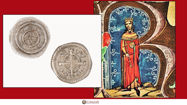
Hungarian Denar Dedicated to Béla II of Hungary -Wednesday, 25 June 2025
Béla II of Hungary, often remembered as a pivotal figure in the nation's history, was a monarch whose reign significantly influenced the course of Hungarian affairs. Born into a period of political instability, Béla II's ascent to power marked the beginning of a transformative era for Hungary. His rule, though fraught with challenges, laid the groundwork for the kingdom's future prosperity and stability. next...
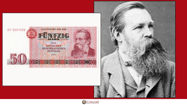
East Germany twenty marks dedicated to Friedrich Engels (Former German Philosopher) -Tuesday, 24 June 2025
Friedrich Engels remains a pivotal figure in the history of political thought, particularly in the domain of socialism. Born in the early 19th century, Engels' intellectual pursuits and collaborations have had a lasting influence on the development of socialist ideologies. His partnership with Karl Marx is well-documented, yet his individual contributions often remain overshadowed. This article seeks to highlight Engels' visionary ideas and the profound impact they have had on modern political discourse. next...
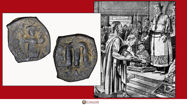
Roman Numi Dedicated to Constans II (Former Roman Emperor) -Monday, 23 June 2025
Constans II, also known as Constantine the Bearded, was a notable Byzantine Emperor whose reign spanned from 641 to 668 AD. Ascending to the throne during a period of great turbulence, Constans II inherited an empire beset by both internal strife and external threats. His rule marked a significant era in Byzantine history, characterised by military challenges, religious discord, and administrative reforms. Despite the controversies surrounding his reign, Constans II left an indelible mark on the Byzantine Empire, shaping its future trajectory. next...
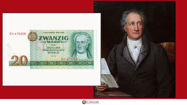
East Germany ten marks dedicated to Johann Wolfgang von Goethe -Friday, 20 June 2025
Johann Wolfgang von Goethe, a luminary in the literary world, remains a towering figure whose influence transcends time and geography. Born in the heart of Germany, Goethe's works and thoughts have left an indelible mark on literature, philosophy, and the arts. His multifaceted contributions continue to inspire scholars, artists, and readers worldwide, establishing him as a beacon of intellectual exploration and creativity. next...
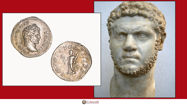
A Roman Denarius Honouring Caracalla (Former Roman Emperor) -Thursday, 19 June 2025
Caracalla, an emperor who ruled the Roman Empire from 211 to 217 AD, remains one of the most controversial figures in ancient history. Known for his ambitious policies and military campaigns, his rule is marked by both significant achievements and notorious actions. This article seeks to explore Caracalla's life, his policies, and his enduring legacy, shedding light on why he continues to be a subject of fascination and debate among historians. next...
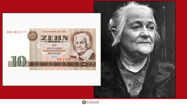
East Germany ten marks dedicated to Clara Zetkin -Wednesday, 18 June 2025
Clara Zetkin stands as a towering figure in the annals of women's rights and social justice. Her relentless pursuit of equality and justice laid the groundwork for many modern feminist movements. As a trailblazer, Zetkin's efforts transcended national borders and inspired a global movement. Her life's work remains a beacon for those dedicated to the cause of gender equality and social change. next...
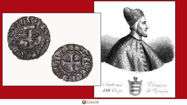
Billon Tornesello Honouring Antonio Venier (former Doge of Venice) -Tuesday, 17 June 2025
Antonio Venier, a name that echoes through the corridors of Venetian history, served as the Doge of Venice from 1382 to 1400. His tenure as Doge marked a pivotal time for the Venetian Republic, a period characterised by both political challenges and economic prosperity. Venier's leadership is often viewed through the lens of his ability to navigate the complexities of Venetian politics and his contributions to the stability and growth of Venice during a time of significant change. next...
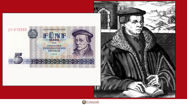
East Germany five marks dedicated to Thomas Muntzer -Monday, 16 June 2025
Thomas Müntzer remains a pivotal yet complex figure in theological and revolutionary history. Known for his radical ideas and fervent opposition to established religious norms, he played a significant role in shaping the socio-political landscape of the early 16th century. Born around 1489 in what is now central Germany, Müntzer’s life spanned a period of great change and turmoil, marked by the Reformation and the Peasants' War. next...
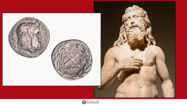
Achaean League Silver Hemidrachm Dedicated to Zeus (King of the Greek Gods) -Monday, 16 June 2025
Zeus, the paramount deity in Greek mythology, is revered as the King of the Gods. His dominion over the heavens and earth, as well as his role as the enforcer of justice, has made him a central figure in ancient narratives and religious practices. As the ruler of Mount Olympus, Zeus commands respect and reverence from both mortals and deities alike. His legend is not only a tale of power but also a reflection of the values and beliefs of ancient Greek civilisation. next...
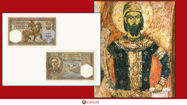
Dinara Banknote Honouring King Marko Kraljevic (former Prince of Serbia) -Thursday, 12 June 2025
King Marko Kraljević stands as one of the most fascinating figures in Balkan history, whose actual life has been eclipsed by his legendary status in folklore and epic poetry. Though historically a ruler of modest significance, Marko has become an enduring cultural icon across the South Slavic nations, particularly among Serbs, Macedonians, and Bulgarians. next...
Get in touch icon icon

- icon
45 Great Russell St, London WC1B 3JL
- icon
